Food Delivery, Convenience Stores & Supermarkets in China (2026): A Foreigner's Guide
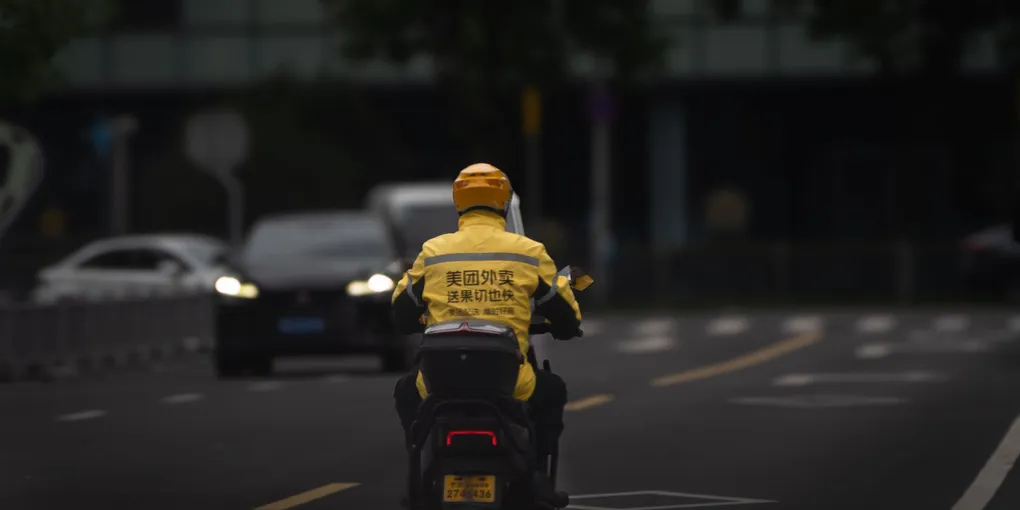
Getting fed in China is the single most useful skill a short-stay visitor can learn — and the one English-language advice gets most badly wrong. You will not starve; China has more restaurants per block than most cities have per district. But between jet lag, a hotel room, a temple 40 minutes out of town, and a menu you cannot read, delivery and convenience stores are what actually carry a trip.
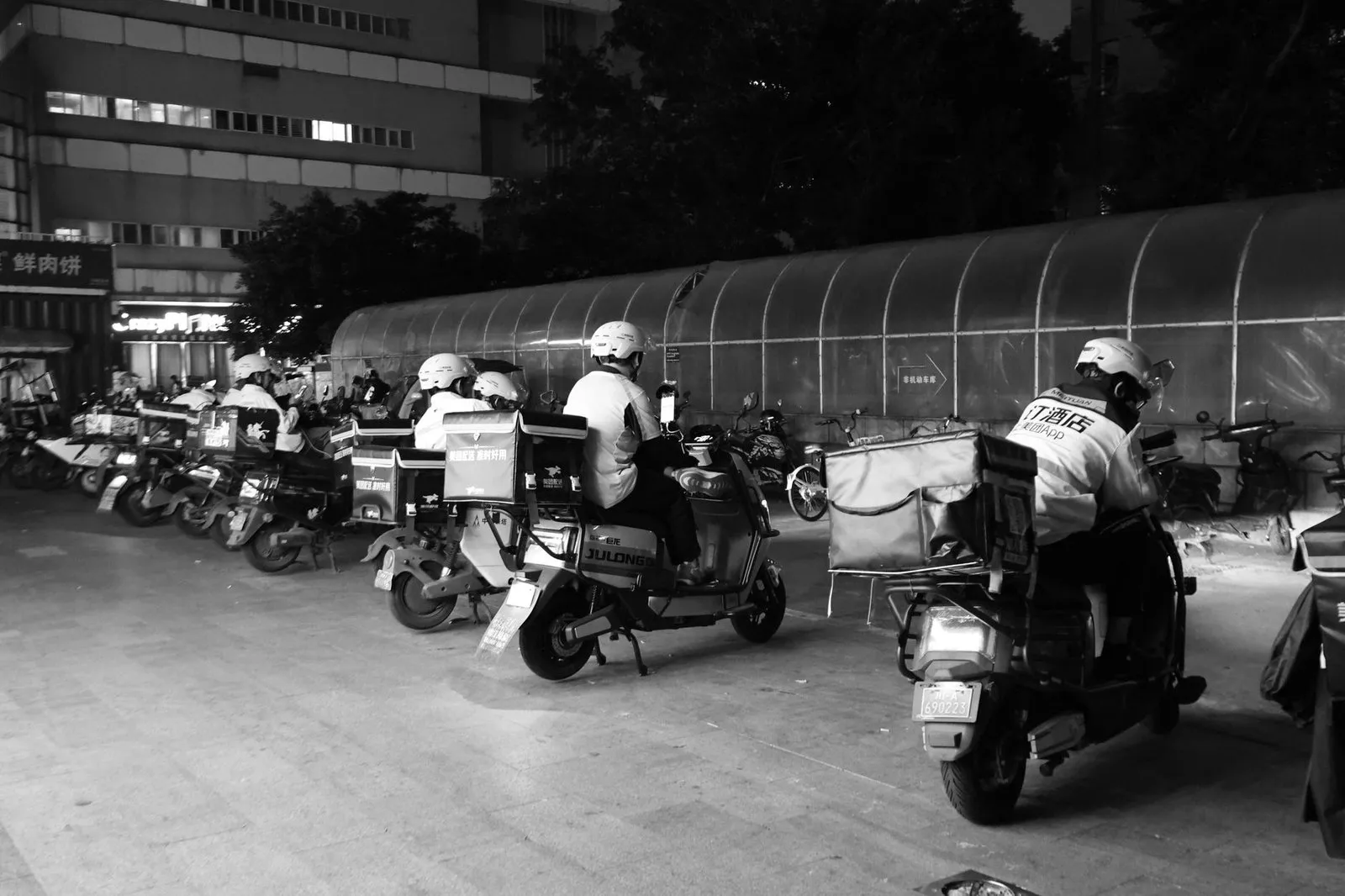
This guide covers what to install, which of the three delivery platforms matters, how to pay with a foreign card, what to do when the rider calls and speaks only Chinese, and where to find food at 11pm or inside a scenic area. It assumes you have already set up mobile payment — if you have not, read our Alipay setup guide and how to pay in China first, because almost everything below depends on it.
How we verified this: SinoWander reads Chinese-language sources English guides miss — platform filings, CBN and Economic Daily market reporting, the Shanghai municipal government’s own press conference record, and the national regulator’s rule on what delivery apps may require from users. We cross-check figures and flag anything we could not confirm. We have not personally placed every order described here. Last verified: 2026-10-01. See our methodology.
Why most English advice on this is out of date
Three claims appear in nearly every English guide to eating in China. All three are now wrong or incomplete.
“It’s Meituan versus Ele.me.” That was true until 2025. Ele.me has been folded into Alibaba’s Taobao Shangou (Taobao Instant Retail) brand, and JD.com entered the market in February 2025 with a subsidy war that burned through at least ¥80 billion across the three platforms. The 2026 market is a three-way split, not a duopoly.
“You need a Chinese phone number.” Half true. The national rule governing what delivery apps may collect says they need “the registering user’s mobile phone number or other real identity information (where the app offers options, the user chooses one)”. Whether the standalone apps accept a foreign number in practice depends on the platform and the current build. More importantly, there is a route that avoids the question entirely — see the next section.
“Bianlifeng convenience stores are everywhere.” Bianlifeng was a well-funded, app-driven chain that Western travel blogs noticed around 2019. By mid-2026 it had shrunk to roughly 700 stores. Meanwhile the chain that actually dominates by store count is one almost no English guide mentions.
The 2026 delivery landscape
Three platforms matter, and the honest answer to “which should I use” is: whichever has the restaurant you want.
| Platform | Share (2026) | Rough daily orders | Character |
|---|---|---|---|
| Meituan (美团) | 43–52% depending on tracker and quarter | 65–80 million | The default. Widest restaurant coverage, strongest logistics in smaller cities. |
| Taobao Shangou (淘宝闪购) | 42–46% | 50–66 million | Alibaba’s brand, absorbing Ele.me. Strongest on instant retail — groceries, medicine, convenience items in 30 minutes. |
| JD Waimai (京东外卖) | 8–15% | 9–16 million | Entered Feb 2025. Pitched on quality and lower commissions; fewer restaurants, stronger on chains. |
Two things follow from this for a visitor. First, shares are contested — iResearch, Analysys and Goldman Sachs all publish different numbers for the same quarter, which is why this guide gives ranges with the source and period attached rather than a single confident figure. Second, the subsidy war is over: regulators halted the worst of the price-cutting in March 2026, and platforms shifted to competing on delivery reliability and rider conditions. The ¥1 milk-tea era has ended; expect normal prices plus a delivery fee.
None of this changes what you do on your phone. It changes what you should expect to pay, and it explains why a 2023 blog post telling you to “download Ele.me” will send you to a brand that no longer fronts its own app.
Three ways to order as a foreigner
The single most important distinction is which door you enter through. The standalone apps and the mini-programs inside Alipay or WeChat are different registration systems, and they treat foreign users very differently.
| A. Standalone app | B. Alipay / WeChat mini-program | C. Shanghai EasyGo | |
|---|---|---|---|
| Phone number | Usually expects a mainland Chinese number | Not needed — you log in with your Alipay or WeChat account | Not needed — one-tap registration |
| Payment | Alipay or WeChat Pay | Whatever your Alipay/WeChat wallet already has, including a foreign Visa/Mastercard | Alipay international version |
| Language | Chinese only, no language switch | Chinese, but with built-in translation (Alipay’s floating 🔤 icon; WeChat’s ⋯ → Translate) | English-first, plus real-time translation |
| Best for | Long stays, residents with a local SIM | Most visitors | Visitors landing in Shanghai |
Route B is the one to try first. Open Alipay, search for the delivery mini-program, and it logs you in with the account you already set up — no separate registration, no new phone number, and the payment step goes through the foreign card you already linked. Meituan’s food-delivery mini-program went live inside Alipay in 2024 specifically so users could sign in with an Alipay account. WeChat works the same way through its mini-program search.
Route A, the standalone Meituan or Taobao Shangou app, remains the smoothest experience once you are set up — full feature set, saved addresses, order history. But it is the route most likely to ask for a mainland number at signup, and the interface will be entirely Chinese.
If registration fails on either route, the fallback is unglamorous and reliable: ask your hotel front desk to order for you. Reception staff do this constantly, will pay from their own account, and you settle in cash or by transfer. Desperate but effective.
Shanghai’s EasyGo: the one official English option
If you are arriving in Shanghai, there is a government-built shortcut that almost no English travel content mentions.
EasyGo (入境通) launched on 2 July 2025. It was built by the Shanghai Municipal Foreign Affairs Office together with the People’s Bank of China Shanghai Head Office and other city departments, and it runs on top of Alipay’s international version. Instead of installing six apps, you register once and get access to roughly 30 mini-programs covering food, transport, sightseeing and shopping — including food delivery, restaurant recommendations, public transit, ride-hailing, attraction tickets, luggage storage, and a tax-refund map with a “tap to refund” function.
Two details matter. It operates primarily in English with real-time multilingual translation, and it was upgraded in 2026 with AI that reads your command in your language and calls the right service — so typing “order food” in English routes you to delivery rather than to a wall of Chinese. It is also being bundled with Shanghai Pass as a combined inbound-travel package with an NFC card.
The important limit: EasyGo is a Shanghai municipal platform. We found no evidence it has been extended nationwide, so treat it as a Shanghai asset and use Route B everywhere else in China.
One clarification, because these get confused: Nihao China is a different app from a different company. It is UnionPay’s product, not Alipay’s — the Shanghai government’s own press record describes UnionPay serving inbound visitors “through the Nihao China app”. It is a payment wallet (register with a foreign phone number, email or Apple ID; top up with an international card). Alipay’s separate Travel Wallet, launched April 2026, is the one aimed at small everyday spending: ordering food, buying coffee, riding the metro, buying tickets.
Payment: what actually works
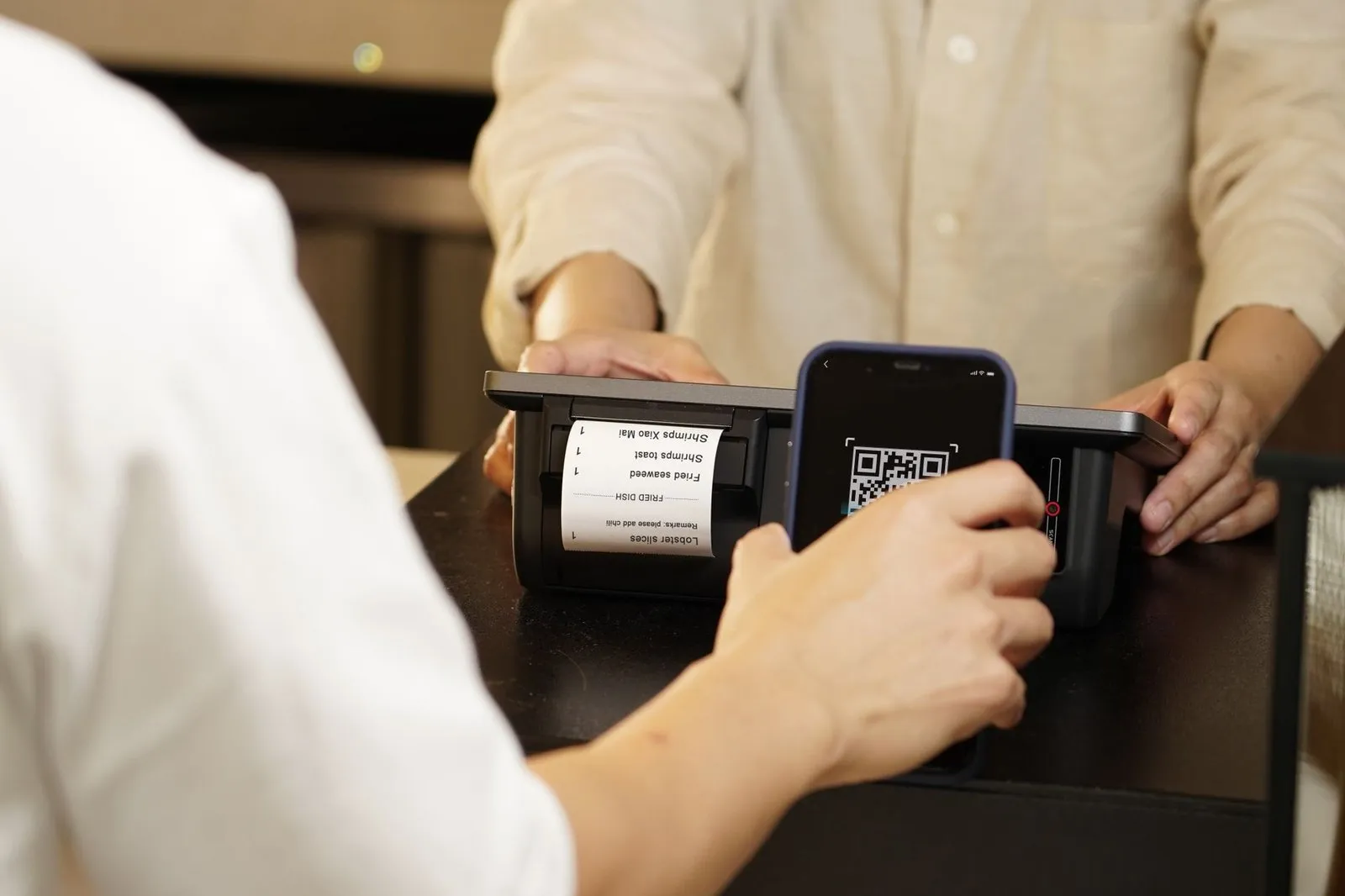
Delivery checkout runs through Alipay or WeChat Pay. Whether your foreign card clears depends on what you linked before you flew — our how to pay in China guide covers the setup, but the practical summary is:
- Alipay accepts Visa, Mastercard, JCB, Amex and UnionPay international cards, with passport verification. Its Travel Wallet (April 2026) is built for exactly the small-ticket spending that delivery represents.
- WeChat Pay accepts foreign cards with passport verification, and generates multilingual itemised bills, which is genuinely useful for checking what a restaurant charged you.
- Coverage is broad but not universal. Chain restaurants, branded coffee and large merchants are safe. Very small independent stalls may only accept a mainland wallet. Cash still settles anything, which is why keeping a few hundred yuan in notes is not paranoia.
Two setup details that cause failed orders more than anything else: tell your bank you are travelling before you try to bind the card, and turn off your VPN while binding — an IP address that does not match your card’s country is a common trigger for fraud checks.
Ordering step by step
Assuming Route B, the flow is short. The hard part is not the tapping; it is the address.
1. Get your address in Chinese, from a human. Ask the front desk to write it out — hotel name, building, room number — or copy it from your booking confirmation. Do not translate it yourself. An address the rider’s map cannot resolve is the number one cause of cancelled orders.
2. Set the address first, before browsing. In a hotel, put the room number in the remarks field. In an apartment, use compound name + building number + unit.
3. Browse by photo, decide by volume. Menus are Chinese; photos are international. Before ordering, check two things: monthly sales (a restaurant with thousands of orders is reliably producing food) and reviews with photos (which show what actually arrives).
4. Check the options on each dish. Portion size and spice level are usually separate selectors, and the default is often the standard portion at the house spice level. If you cannot eat chili, this is where you prevent the problem — not after it arrives.
| What you see | What it means |
|---|---|
| 起送价 | Minimum order — you cannot check out below it |
| 配送费 | Delivery fee |
| 包装费 | Packaging fee (usually charged per item) |
| 备注 | Remarks — put your room or gate number here |
| 下单 | Place order |
| 外卖 / 自取 | Delivery / pick up yourself |
5. Expect three charges, not one: delivery fee, packaging, and the food. All vary by restaurant, city and time of day.
6. Track the rider. After payment you get a live map and an ETA.
When delivery goes wrong
The rider will probably call. Riders often phone on arrival rather than knocking, and the call may be entirely in Chinese. You have three options, all of which work: answer and say your room or gate number in English (numbers are universal); say “hotel lobby” slowly; or hand the phone to the front desk. If you are in an apartment, go down to the gate when the map shows the rider one minute away.
In scenic areas, write the address as the gate. This is the single most useful piece of advice in this guide and no English source covers it. Large scenic zones commonly restrict vehicles — at Shanghai’s Yu Garden, riders used to walk the whole site, orders averaged over an hour and the overtime rate hit 70–80%. A “relay delivery” system launched there in October 2025 (now running in 20+ cities and around 100 locations) split the job in two: an outer rider drops the order at a collection point and an inner rider who knows the site finishes it. Yu Garden’s delivery time fell to about 10 minutes.
But that is not universal. At Longmen Grottoes, vehicles are barred during opening hours and the administration has said it will add lockers at a car-park entrance. At some parks, delivery is allowed in but riders refuse orders with vague addresses. Riders on complaint forums describe telling customers that the pickup point is 3–4 km from where they are standing.
So: address the gate, the car park or the visitor centre — never a spot inside the site. Better still, order to your hotel and eat before you go. If a scenic area has lockers, use them, but do not count on it.
Cancellations and refunds go through the platform. Meituan’s delivery hotline is 1010-9777; we could not confirm English-language service on it, so do not rely on it as an English support channel.
Convenience stores
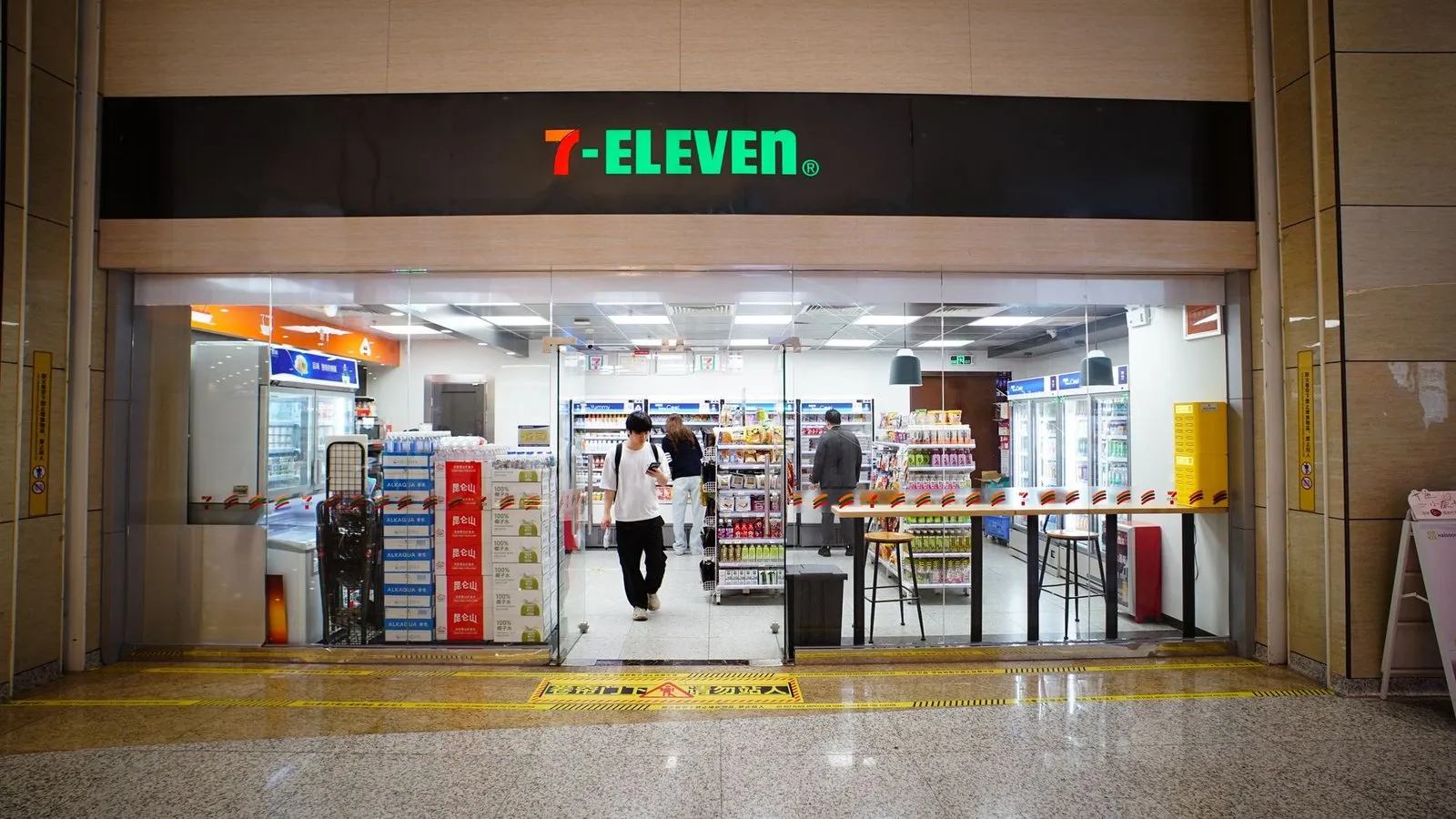
China’s convenience stores are not a curiosity — they are the reliable answer at 11pm, near a metro exit, or when you want coffee before anything else is open. But the brand you see depends entirely on which province you are in.
| Chain | Stores (mid-2026) | Where you’ll actually see it |
|---|---|---|
| Meiyijia (美宜佳) | ~45,000 | The giant. 22 provinces, but densest in Guangdong and spreading into Hunan, Guangxi, Chongqing, Sichuan. Number one by a wide margin. |
| Lawson (罗森) | ~7,100 | East and north China, plus southwest and south |
| Tianfu (天福) | ~4,600 | Mostly south China |
| Shizu (十足) | ~4,500 | Regional, Zhejiang |
| Hongqi (红旗连锁) | ~3,600 | Mostly Sichuan |
| FamilyMart (全家) | ~2,800 | Heavily East China — Shanghai, Hangzhou, Suzhou. 96% of its stores are in higher-tier cities. |
| Bianlifeng (便利蜂) | ~700 | Beijing, Shanghai, Tianjin, Nanjing, Hangzhou — and shrinking sharply |
The practical takeaways: in Shanghai and the Yangtze delta you will see FamilyMart and Lawson constantly; in Guangdong and the deep south it is overwhelmingly Meiyijia; in Sichuan look for Hongqi. Expect 24 hours at most chain locations, hot food (onigiri, bento, skewers, steamed buns), and freshly made coffee at a fraction of café prices. Many also handle parcel collection, top-ups and bill payment, though the exact service mix varies by chain and city — ask, don’t assume.
If you read that Bianlifeng is the chain to look for, that advice is about five years stale.
Supermarkets and warehouse clubs
For water, fruit, snacks and anything you would rather not pay restaurant prices for, a normal supermarket is what you want — Hema Fresh (盒马), Yonghui, RT-Mart and similar need no membership and are everywhere in cities.
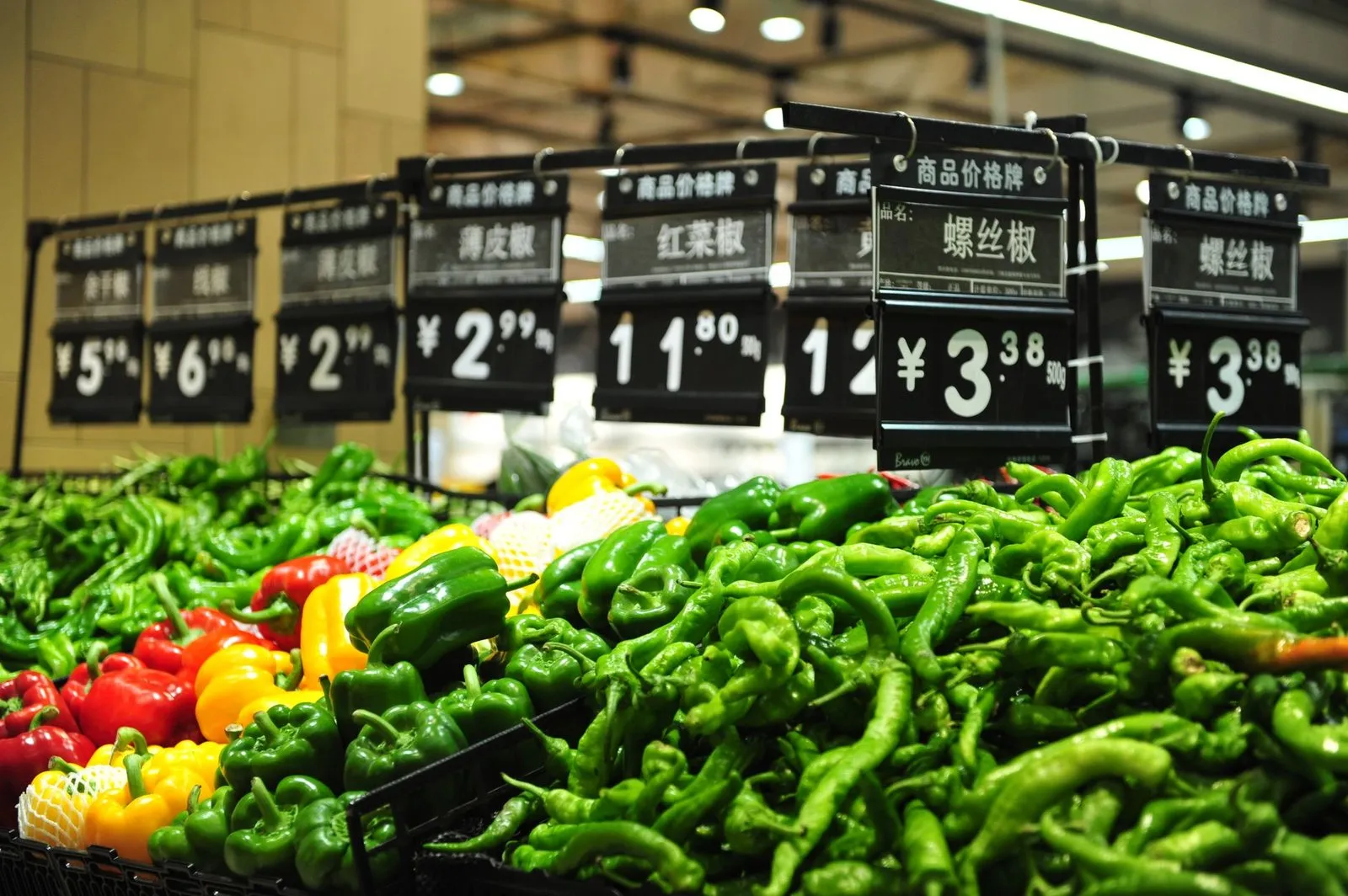
The warehouse clubs are a different proposition and mostly a poor one for a visitor.
| Sam’s Club | Costco | |
|---|---|---|
| Stores | 67 (as of mid-2026), 20+ cities | 7 in mainland China — Yangtze delta and Greater Bay Area only |
| Access | Paid membership | Paid membership |
| Scale | ¥140+ billion sales, 10.7m paying members, ~92% renewal | Renewal around 62%; expanding slowly, with 9 more planned to 2030 |
Both require an annual membership fee, sell in bulk, and are built for households with a car and a freezer. Unless you are staying a month, living in an apartment, or specifically want to buy gifts in quantity, the membership fee will cost more than it saves. Costco has partnered with JD to extend delivery reach nationwide, but that serves existing members ordering online — it does not get you into a store.
Hema is the useful middle ground: no membership, normal-store browsing, but also app-based delivery with English-friendly photo browsing — and it was one of the first brands to join Shanghai’s EasyGo.
Scenario playbook
Late-night arrival. Order to the hotel before you leave the airport, or plan on a convenience store near the metro exit. Delivery keeps running late in big cities; restaurant dining rooms close earlier than you expect.
Breakfast. Convenience stores, street stalls, and mini-program pre-orders with pickup. Hotel breakfast buffets are usually not worth the markup unless included.
Inside a scenic area. Order to the gate (see above), or bring food. Do not plan on delivery finding you at a viewpoint.
Long train rides. Stock up before boarding, or use 12306’s onboard ordering — covered in our train ticket guide and high-speed rail guide. Our sleeper train guide covers what to buy before an overnight trip.
You cannot read the menu at all. This is what our surviving China without Chinese guide is for — translation apps, photo translation, and the handful of characters that carry you. For ordering food specifically, browse by photo and check sales volume; you do not need to read the dish name to know it sells.
FAQ
Do I need a Chinese phone number to order food? Not necessarily. Ordering through the Alipay or WeChat mini-program logs you in with the account you already have, so no separate number is required. The standalone apps usually expect a mainland number. The national rule on required personal information only specifies “mobile phone number or other real identity information”, so the strictness you hit is a platform choice, not a law.
Is there an English version of Meituan? No. The standalone app is Chinese-only with no language switch. Translation comes from the mini-program route (Alipay’s floating translate icon, WeChat’s ⋯ → Translate) or from Shanghai’s EasyGo, which is English-first.
Can I pay with a foreign credit card? Not directly to the platform — payment goes through Alipay or WeChat Pay, and whether your card works depends on what you linked before arriving. Visa and Mastercard are accepted by both, with passport verification.
What if the rider calls and I don’t speak Chinese? Answer and say your room or gate number in English; numbers work in any language. Say “hotel lobby” if you can get there. Or hand the phone to reception.
Are convenience stores open 24 hours? Most chain stores in cities are, yes. Independent stores and smaller cities vary.
Is it cheaper to cook or buy from a supermarket? For a short stay, neither — Chinese restaurant food at the low end is cheaper than supermarket shopping in most Western countries. Supermarkets are for water, fruit, snacks and dietary specifics.
Related Articles
- How to Set Up Alipay in China — the prerequisite for everything above
- How to Pay in China 2026 — cash, ATMs, cards and mobile payment
- What Apps to Download Before Going to China — the full pre-trip install list
- Surviving China Without Chinese — translation apps and the words that carry you
- Chinese Food Guide for Foreigners — what to order once you can
- How Foreigners Book Hotels in China — where your delivery will arrive