China Travel Insurance in 2026: What It Costs, How Much Cover You Need, and What to Do If You Get Sick
Most China travel insurance articles stop at “buy a policy, here are six plans.” They rarely tell you what a policy actually costs for a two-week trip, whether your $50,000 medical limit is the number that matters, or what happens when you are standing at a hospital cashier in Chengdu with a Chinese invoice and no idea how to file it. This guide is the second half. Our travel insurance guide explains why your home-country cover fails in China and compares six international plans; this one covers the money, the claims, and the things that only come up once you are already in the country.
Quick answer: China does not require travel insurance — not for an L tourist visa, not for 240-hour visa-free transit (57 countries as of 20 August 2026), not for the Tibet Travel Permit. But public hospitals bill you before they treat you, and you pay everything yourself because you are not in the Chinese insurance system. Budget roughly $32 per day for a comprehensive plan (average total $476 for a 15-day trip); $159 for 4–7 days. Buy at least $50,000 medical — but the number that actually saves you is $100,000 of medical evacuation, because evacuation can reach $200,000. You generally cannot buy a mainstream Chinese travel policy after you arrive (Ping An’s overseas-travel wording starts cover “from the moment the insured leaves the Chinese border”), though inbound-visitor products do exist. And no, your Chinese medical receipts do not need notarising or certifying to claim.
How we verified this: SinoWander reads the original Chinese documents rather than recycling English summaries: the State Council’s own policy text on hospital deposits (国卫办财务发〔2025〕5号), National Immigration Administration pages dated 20 August 2026, Ping An’s published policy clauses, the Chinese consular service network’s visa materials list, and 2024 government medical price schedules from four cities. We then ran two separate fact-check passes with different search paths on 14 September 2026, which corrected 14 points in the draft — including a 55→57 country update, a misread “183-day” clause, and a policy change that invalidated our original hospital-deposit estimate. Prices are averages, not quotes. Each guide is date-stamped: last verified 2026-09-14. See our methodology.
 The cashier window is where travel insurance stops being a checkbox. You pay first; the claim comes later.
Is Travel Insurance Required for China?
No. This is one of the most repeated errors in English China content, usually imported from Schengen habits, where €30,000 of medical cover is a visa condition. China has no equivalent.
| Entry route | Does it require insurance? | Source we checked |
|---|---|---|
| L (tourist) visa | No — materials list is passport, photo, proof of legal stay, previous Chinese visa, flight and hotel bookings or an invitation letter. No insurance line item. | Chinese consular service network (page updated 6 May 2026); Chinese Embassy in the US visa notice, signed 22 September 2025, which lists “core materials: none” for the L category |
| 240-hour visa-free transit | No — the rule asks for a valid passport and an onward ticket with a confirmed seat and date. | National Immigration Administration, 20 August 2026 (both Chinese and English versions) |
| Tibet Travel Permit | No — the permit application asks for your passport copy, visa page copy and itinerary. Agencies strongly recommend insurance, which is not the same thing. | Tibet-licensed agency pages, May 2026 |
| Chinese visa application centres (CVASC) | No — their site advertises insurance as an optional add-on, not a required document. | CVASC visa process page, 24 August 2026 |
Two details worth knowing. The 240-hour transit scheme grew to 57 countries on 20 August 2026 (Kyrgyzstan and Vietnam were added; Indonesia had brought it to 55 in June 2025) — any article still saying “55 countries” is working from a page that has since 404’d. And the scheme does not apply in seven provincial-level regions: Inner Mongolia, Jilin, Tibet, Gansu, Qinghai, Ningxia and Xinjiang. If your itinerary touches those, the transit exemption is not your route. Our 240-hour transit guide and entry requirements guide cover the mechanics.
So the reason to buy is not legal. It is arithmetic, which is the next section.
What China Travel Insurance Actually Costs in 2026
 What a claim actually needs: itemised bills, a medical report from the attending doctor, and proof of payment.
The figures below come from Squaremouth’s own sales data for the twelve months to 1 September 2026 (their page states the window and says it updates daily). They are averages across ages, nationalities and trip lengths — your quote will differ, sometimes by a lot.
| Trip profile | Average premium | Notes |
|---|---|---|
| Comprehensive plan, 15-day trip | ~$476 total, ~$32/day | Covers medical, evacuation, trip cancellation, baggage |
| Basic travel medical plan | ~$5/day | Medical and evacuation only, no cancellation |
| 4–7 day trip | ~$159 | Short-hop average |
| 8–14 day trip | ~$308 | The most common China booking window |
| $5,000 trip cost | $200–500 | Roughly 4–10% of prepaid non-refundable trip cost |
For context, the average international traveller spends over $7,621 on a trip, so a $476 policy sits at around 6% of what you are already risking. The average emergency medical claim runs above $1,600 — which is why even the cheap plans pay for themselves on a single bad evening.
How to read a quote. Three numbers matter, in this order: medical maximum, evacuation maximum, and deductible. A $1,000,000 medical limit with a $500,000 deductible is worse than a $100,000 limit with a $0 deductible for anything short of a catastrophe. Check whether the deductible is per-incident or per-policy, and whether evacuation is a separate limit or carved out of the medical maximum — that carve-out is common and it is how people end up under-insured.
How Much Cover You Need — and Why Evacuation Is the Real Number
Most advice says “at least $50,000 medical.” That floor is fine, but it is the wrong thing to optimise. Here is the actual cost structure you are insuring against.
Outpatient care in China is cheap. A public hospital general outpatient consultation fee runs ¥5–11 in smaller cities, according to 2024 government price schedules from Yantai, Liaocheng, Nandan and Jining. In first-tier teaching hospitals expect more like ¥20–50. Since 31 March 2026 the standalone registration fee (挂号费) has been folded into the consultation fee (诊查费), so old price lists split them and new ones do not. A routine visit costs you pocket change.
Inpatient care is where it turns. A bed in a public ward costs tens of yuan a day. A bed in an international or VIP wing runs roughly ¥1,000–5,000 per night (about $140–700); suites at the top hospitals cost more. International departments generally bill 2–5× the public rate, and up to about 10× for premium inpatient services — though outpatient consultation is only about 1.5–2×.
Surgery is the third tier. A laparoscopic appendectomy in a public hospital runs about ¥15,000–30,000; open surgery is cheaper (roughly ¥8,000–15,000). At a high-end private hospital the same operation can reach ¥50,000–100,000.
Evacuation is the number that actually ruins people. A medical evacuation from China can reach $200,000 (US State Department figure). Squaremouth’s own recommendation is $100,000 of evacuation cover, and that is the one we would not trim. Note that these are averages and indicative ranges, not official hospital price lists — confirm at the hospital on the day.
The practical conclusion: $50,000 medical is a floor, not a target. If you have to choose between adding $100,000 of medical limit and adding $100,000 of evacuation limit, take the evacuation. A bad week in an international ward costs maybe ¥30,000–70,000. Getting flown home on a stretcher with a doctor beside you costs six figures, and no public hospital in China will arrange or fund that for you.
One change worth knowing, and it is good news: Chinese public hospitals stopped collecting outpatient deposits on 31 March 2025, and from 30 June 2025 inpatient deposits are set by diagnosis and published, rather than being an open-ended demand (State Council policy 国卫办财务发〔2025〕5号, issued 25 March 2025). Private hospitals are only “encouraged to follow.” The catch: those reductions are calibrated for patients in the Chinese insurance system. You are not in it. You still pay the full estimated cost up front and claim it back. Just do not expect a fixed “¥10,000–50,000 deposit” figure — that number is obsolete.
Can You Buy Insurance After You Land in China?
Short answer: you can buy something, but not the thing you probably mean. The distinction matters and most guides blur it.
Mainstream Chinese travel insurance is built for residents leaving China. Ping An’s overseas travel accident policy defines the insured as a person “whose habitual residence is within the People’s Republic of China… travelling abroad,” and sets the cover period as “from the time the insured leaves the Chinese border… until returning to the Chinese border.” Read literally — and it is the operative wording — the policy insures you outside China. It is the mirror image of what a visiting foreigner needs. Several long-term medical and critical-illness products add a residence requirement; one issuer, Hexie Health, requires at least six months of continuous residence in China before you apply. Some older products carried a 183-day residence clause that is widely quoted in English blogs — an older version has since been discontinued, so do not treat 183 days as the general rule. (A widely circulated claim that a major insurer imposes a 183-day residence threshold for foreign buyers is a misreading: that 183 days refers to the maximum length of a single trip under an annual plan, and Chinese legal guidance confirms no such residence requirement exists in the Insurance Law.)
Inbound-visitor policies do exist, and you can buy them with a passport. These are the products actually designed for you:
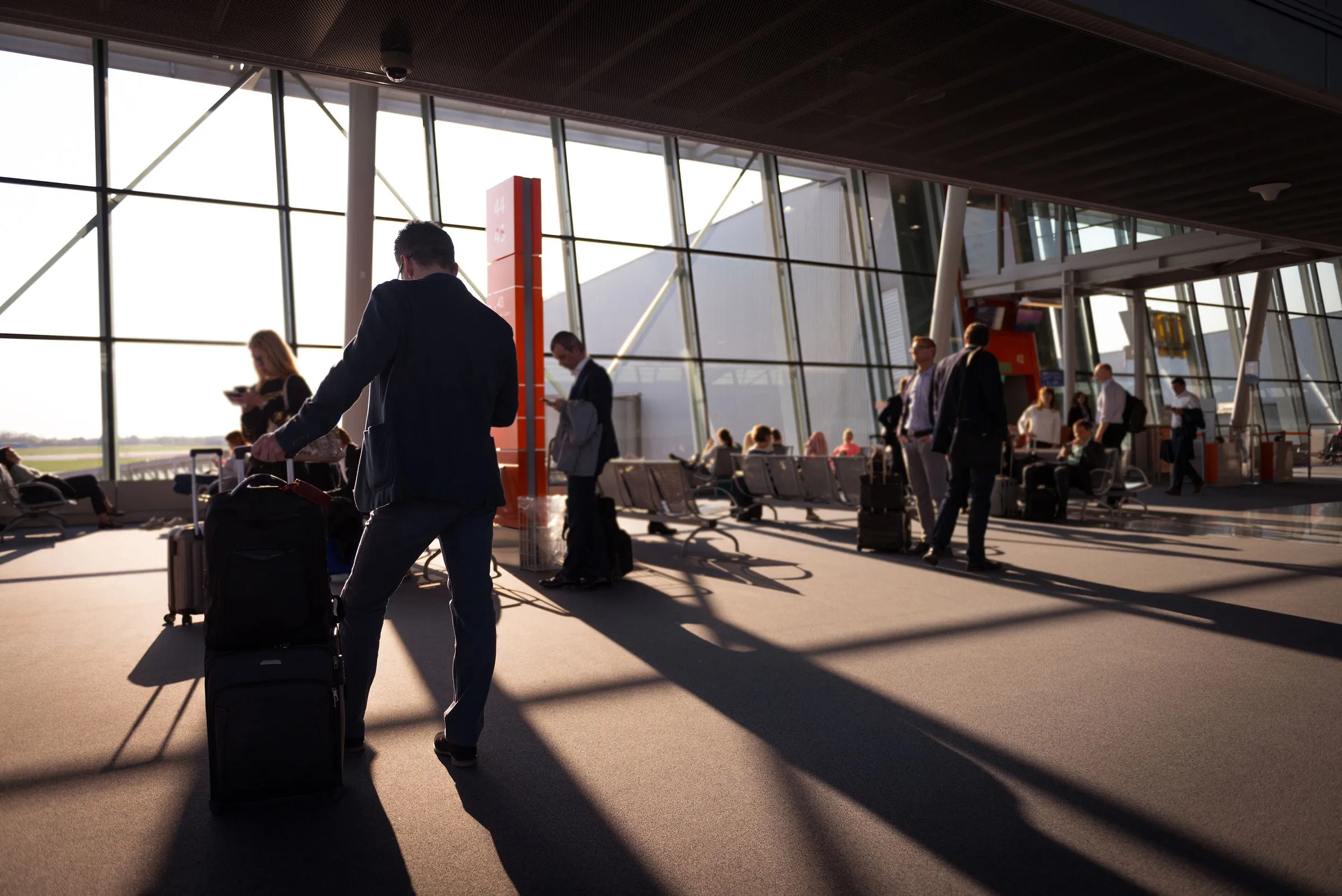 Arrived without cover? Inbound-visitor policies can be bought with a passport after you land — but they are a backstop, not a replacement.
| Product | Issuer | What we could verify |
|---|---|---|
| Ping An Travel · Foreign Visitor Accident Insurance | Ping An | Ages 0–80; cover from 3 to 366 days; restricted to foreign visitors; includes accident medical, inpatient and outpatient, hospitalisation allowance, medical evacuation and repatriation, ambulance, 24-hour global assistance (+86 95511 ext. 9), document loss and third-party liability. FAQ states all non-Chinese citizens visiting (except HK/Macau/Taiwan) may apply. |
| Baoyou Zunxiang (inbound) | Baoyou (broker brand) | Passport accepted; ages 0–85; covers business and academic visits; accidental death cover stacks up to ¥1.8m. Note: this is a broker product, not an insurer product, despite how it is sometimes labelled. |
| Charming China Tour | JD Allianz | Built for foreign tourists and HK/Macau/Taiwan residents; ages 60 days–90; flat premium from ¥45. |
| ”Rujing Wuyou” inbound cover | Three-institution co-insurance pool guided by the Beijing financial regulator | Announced 10 September 2026 at the China International Fair for Trade in Services; accident, medical and rescue cover for short-stay foreign visitors. |
You do not need a Chinese ID card to buy these. Your passport — or a foreign permanent residence card — is the identity document; a residence permit with a valid visa also works in practice.
Should you buy one? Only as a backstop. These products are thin by international standards — coverage maxima are modest, the claims process runs in Chinese, and evacuation limits are well below the $100,000 we would want. If you arrived without cover, or your policy lapses mid-trip, or you have extended your stay, an inbound policy is a reasonable safety net for a few hundred yuan. But the default should still be: buy a proper international plan in your home country before you fly. That is where the deep limits, English-language claims handling and genuine evacuation networks are.
If You Get Sick: Paying, Documenting, and Getting Reimbursed
This is the part almost no English guide covers properly, and it is where travellers lose money.
The flow at a public hospital. Registration → deposit → treatment → settlement. Since the 2025 reform there is no standard outpatient deposit, but you still pay the full bill yourself at the end and claim it back. Inpatient deposits are now tied to your diagnosis and published by the hospital. Settle within three working days of discharge under the same policy, and keep every piece of paper.
Get your paperwork in English at the source. This single move saves you the most hassle. International departments and private hospitals — Beijing United Family, Peking Union Medical College’s international service, and comparable units in Shanghai and Guangzhou — routinely issue bilingual or English medical records and itemised bills. Ask at registration, before you are seen. A public hospital’s general outpatient department will give you everything in Chinese, and you will be translating later.
Do you need those Chinese documents notarised or certified? No. We checked the official claims guidance of the major international insurers, and not one of them requires it:
| Insurer | What their official claims guidance actually asks for |
|---|---|
| IMG | Handles documents in other languages; notes that “items requiring translation to English can take longer.” Submit the originals; the claims officer will tell you if something needs translating. |
| World Nomads | Medical report from the attending physician, plus receipts. No mention of translation or notarisation; 24/7 multilingual assistance. |
| SafetyWing | ”SafetyWing will handle the translation during the claims review process.” No pre-translation, no certification. |
| Allianz | Original itemised medical bills plus a medical report completed by the attending physician. |
| Seven Corners | Fully itemised bills showing dates of service, amounts charged, type of service, diagnosis — plus proof of payment. |
We also ran the reverse test: searching for insurers that do require notarised or certified translations returns nothing but commercial translation companies’ SEO pages. No mainstream travel insurer’s official policy demands it. If someone tells you otherwise, they are selling translation services.
What a Chinese insurer would want, for comparison (useful if you end up on an inbound policy): claim form, copies of the claimant’s ID and bank details, original medical records plus the discharge summary, an invoice from a recognised hospital (generally county/city level or above), and an itemised medicine list or stamped insurance-schedule. Decisions come within 30 days of a complete file. Ping An’s own wording requires notification within ten days of the insured event, with payment due within ten days of agreement — and if the amount cannot be determined within 60 days, they pay the minimum determinable amount first and top it up later.
Two habits that prevent most rejected claims. Photograph every document the moment you get it, including the cashier’s receipt and any deposit slip — Chinese hospital paperwork has a way of being re-collected. And get the diagnosis written on the medical record explicitly; a claim for “abdominal pain” with no diagnosis attached is a claim that stalls.
High-Risk Scenarios: Altitude, Driving, and Adventure Sports
Altitude has a hard ceiling in your policy. Heymondo’s base plan covers trekking below 3,000 m; adding the Adventure upgrade extends it to 5,000 m. SportsCover Direct advertises trekking cover to 6,000 m, and specialist high-altitude providers treat 4,600 m as the point where extra cover is normally required. Lhasa sits at 3,650 m and the Everest Base Camp that tourists actually visit — near Rongbuk Monastery — is about 5,000–5,150 m (the often-quoted 5,200 m is the expedition climbing camp, off-limits to ordinary visitors) — so a base plan that looked fine for a city trip can be inadequate on the same itinerary. Seven Corners explicitly lists altitude sickness as a covered example; not every insurer does. If your trip includes Tibet, Qinghai or the Sichuan high plateau, read the altitude clause before you pay. Our Tibet permit guide and Lhasa guide cover the permit and acclimatisation side.
 Above about 3,000 m, your base plan may stop covering you. Check the altitude clause before you book, not after.
Driving is the exclusion that catches people. China does not recognise the International Driving Permit — it is not a party to the 1968 Vienna Convention. To drive legally you need a temporary driving permit (临时机动车驾驶许可), issued for stays up to three months and extendable to a year, usually issued the same day, with a ¥10 fee (Ministry of Public Security Order No. 90). Beijing and Chongqing municipal sites both confirm the three-month framing. Driving on an IDP or a foreign licence alone is treated as driving without a valid permit, which means the collision damage waiver and third-party cover on your rental very likely does not respond — and standard exclusions for “driving without a valid licence” appear in Chinese travel policy wordings too. Full details in our self-driving and rental guide.
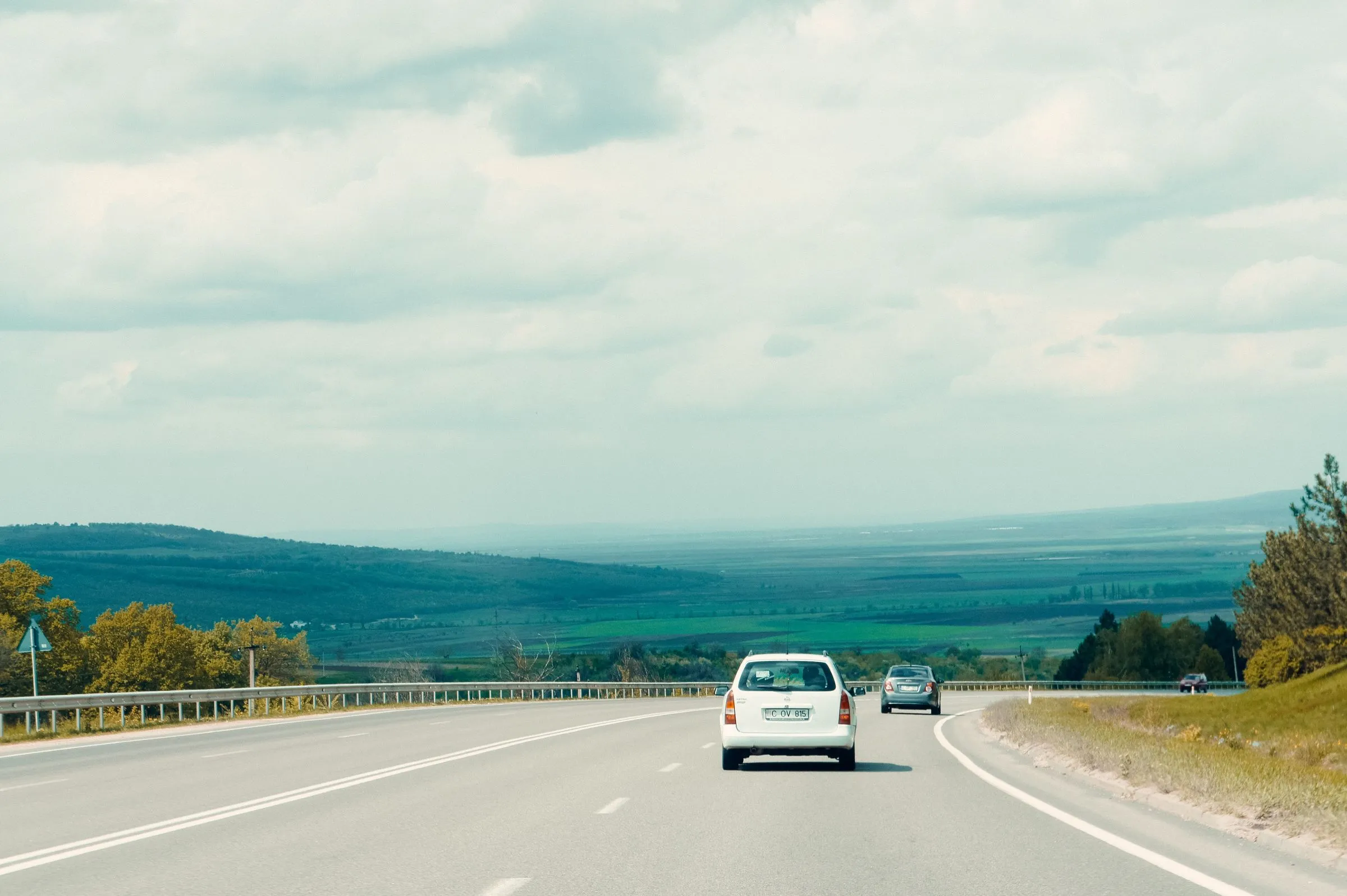 Renting a car without a Chinese temporary driving permit can void both your rental cover and your travel policy.
Adventure sports need the right tier. World Nomads covers 150+ activities but splits Standard and Explorer, and you cannot upgrade mid-trip. Global Underwriters sells medical limits of $50k/$100k/$250k/$500k with adventure and extreme-sports cover as add-ons, and specifically excludes heli-skiing and extreme skiing. Chinese policies typically exclude diving, skydiving, climbing, expedition activities, martial arts and racing outright. If you are doing anything with a helmet, buy the adventure tier up front.
Pre-Existing Conditions and Older Travellers
If you are managing a chronic condition, the pre-existing condition waiver is the clause that decides whether your policy pays. The deal is usually the same shape everywhere: buy within X days of your first trip payment, be fit to travel when you buy, and insure 100% of your non-refundable trip cost.
| Plan | Waiver window (after first trip payment) |
|---|---|
| Generali Global Assistance (US), Premium | Within 24 hours (or before final payment) |
| AXA Assistance USA | 14 days |
| Allianz (US) | 14 days |
| Tin Leg | 15 days (cover applies to the first $30,000 of trip cost) |
| Seven Corners (RoundTrip / Trip Protection Choice) | 20 days (later trip costs must be insured within 15 days) |
| IMG iTravelInsured Travel SE | 20 days |
| Travelex Ultimate | 21 days (requires insuring 100% of prepaid non-refundable cost) |
| World Nomads | Standard: no waiver. Explorer/Epic: 7 days |
| Global Underwriters | No waiver — covers acute onset only |
Where there is no waiver, the fallback is acute onset of a pre-existing condition: a sudden flare-up that requires emergency treatment within 24 hours of symptoms appearing. Global Underwriters caps this at $10,000 (and excludes it entirely for residents of a handful of US states); Seven Corners scales the limit by age, with reduced amounts for older travellers. We could not verify the widely repeated “halved at 70” rule in any official wording — treat age-related reduction as real but unquantified, and read your own policy.
Long Stays and Assignments
If you are moving to China rather than visiting, travel insurance stops being the right product. The five international private medical insurers operating in China — Cigna Global, Bupa Global, Allianz Care, Aetna International and MSH — do not publish fixed annual premiums; all of them quote on application. Market chatter puts individual expat cover in China at roughly $1,500–$8,000+ per year, but that is anecdotal, not published, so treat it as an order of magnitude only. There is no authoritative day count where travel insurance becomes wrong; a reasonable working rule is that past about six months, or once your status shifts to resident or assignee, switch to an international health plan.
FAQ
Does China require travel insurance? No. Not for an L visa, not for 240-hour visa-free transit, not for the Tibet Travel Permit. Agencies and embassies recommend it; none of them require it.
How much is travel insurance for China? Around $32/day for a comprehensive plan (average $476 for 15 days), or about $5/day for basic travel medical. Short trips price lower: about $159 for 4–7 days, $308 for 8–14 days. These are 2025-09–2026-09 averages, verified 14 September 2026.
What’s the cheapest option that’s still sensible? A basic travel medical plan at roughly $5/day, provided it carries at least $50,000 medical and $100,000 evacuation and a deductible you could actually pay. Cheapest is only a bargain if the evacuation limit survives.
Can I buy travel insurance once I’m in China? Yes, but only inbound-visitor products — Ping An’s foreign-visitor accident policy, Baoyou’s inbound plan, JD Allianz’s Charming China Tour (from ¥45), and Beijing’s “Rujing Wuyou” pool announced in September 2026. Mainstream Chinese travel policies cover you leaving China, not arriving in it. These are a backstop, not a substitute for a proper plan bought at home.
Do Chinese medical receipts need to be translated or notarised? No certification, no notarisation. IMG accepts documents in other languages, SafetyWing handles translation during review, and World Nomads, Allianz and Seven Corners ask only for itemised bills, a medical report and proof of payment. The cheapest workaround is to go to an international department or private hospital and ask for English records at registration.
Is Tibet covered by standard policies? Often not. Base plans commonly cap trekking at 3,000–4,500 m; Lhasa is 3,650 m and the Everest tourist camp near Rongbuk is 5,000–5,150 m. Check the altitude clause — Heymondo’s Adventure upgrade reaches 5,000 m, SportsCover Direct advertises 6,000 m, and World Nomads (US) covers trekking to 6,000 m on Standard.
What if I drive? Get a Chinese temporary driving permit. An IDP is not recognised, and driving on one can void both your rental cover and your travel policy. See our self-driving guide.
Related Guides
- Travel Insurance for China 2026: Do You Need It, What It Costs, Best Plans Compared — why your home-country cover fails here, and six plans compared
- 240-Hour Visa-Free Transit — who qualifies, and the seven regions where it doesn’t apply
- China Entry Requirements 2026
- Self-Driving and Car Rental in China
- Tibet Travel Permit and Lhasa