Where to Go in China in Winter (2026–27): The Cold North, the Warm South, and the Four Dates Nobody Has Announced Yet
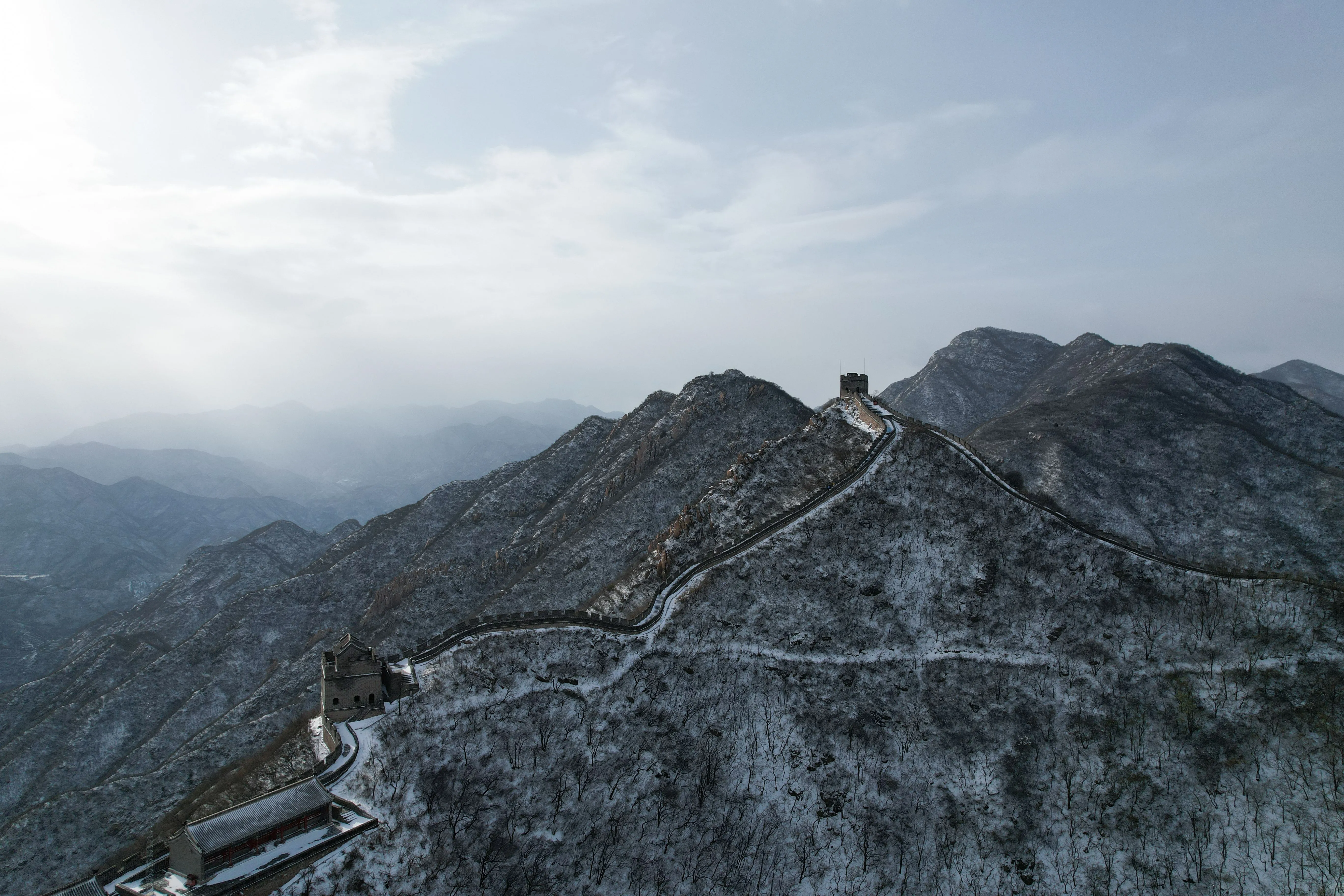
Winter in China Is Two Countries, Not One Season
In January, Harbin averages about −13°C high and −24°C low. Sanya, on the same day in the same country, averages 26.6°C high and 19.6°C low. That is a 40-degree spread inside one border, and it is the single most important fact about travelling China between December and February.
Most winter advice for China either assumes you are going to Harbin or assumes you are going to the beach. Very little of it tells you that you have to choose, and that the choice determines your packing list, your transport strategy, and how far ahead you need to book. This guide covers the 2026–27 winter window (December 2026 to February 2027) and is written for people holding a foreign passport travelling independently.
The other thing English-language guides get wrong is the calendar. Winter in China is bracketed by two holidays that behave nothing like Western ones: New Year’s Day (a single statutory day, not a season) and Chinese New Year (a nine-day rearrangement of the entire country). Between them sits the largest human migration on earth. And as of this writing, several of the dates you would want to plan around have not been officially announced yet — this guide flags every one of them rather than guessing.
The Calendar: What 2027 Has and Has Not Announced
Start here, because the holiday calendar drives prices, transport, and whether anything is open at all.
| Date | What it is | Status |
|---|---|---|
| 1 January 2027 (Friday) | New Year’s Day, one statutory day | Confirmed. The connected rest days have not been announced |
| 5 February 2027 (Friday) | Chinese New Year’s Eve — the 29th day of the twelfth lunar month, not the 30th | Confirmed by calendar |
| 6 February 2027 (Saturday) | Chinese New Year, Lunar New Year’s Day | Confirmed |
| 20 February 2027 (Saturday) | Lantern Festival (not a public holiday) | Confirmed |
| Late Jan – early Mar 2027 | Chunyun, the Spring Festival travel rush | Estimated — roughly 22 Jan to 3 Mar |
Four things follow from this table:
The 2027 holiday notice does not exist yet. The State Council normally publishes the following year’s holiday schedule in November. As of 22 September 2026, no 2027 notice has been issued. Anything you read giving exact rest-day ranges for New Year or Spring Festival 2027 is an extrapolation, not policy.
2027 has no “Chinese New Year’s Eve on the 30th.” The twelfth lunar month of that year has only 29 days, so New Year’s Eve falls on 5 February, the 29th. This is worth knowing because Chinese New Year’s Eve dinners and hotel pricing are built around that specific evening. (The years 2025 through 2029 all lack a 30th day of the twelfth lunar month — five years running.)
Chunyun is about 40 days, but the dates are not official. The convention is 15 days before New Year’s Eve and 25 days after, centred on the eve. For 2027 that gives roughly 21 January to 2 March. The Ministry of Transport typically confirms actual dates about a month ahead. Plan on “late January to early March” and check before booking.
New Year’s Day does not come with free highways. China’s toll-free holiday policy covers Spring Festival, Qingming, Labour Day and National Day only. New Year’s Day and Mid-Autumn are excluded. Do not build a 1 January road trip around free tolls.
For the mechanics of the Spring Festival period itself — what closes, what stays open, and how the nine days behave — see the dedicated Chinese New Year 2027 guide, and New Year’s Eve in China for the 31 December side of things.
The Deep Freeze: Harbin, Snow Town and Mohe
Harbin Ice-Snow World
The single most-photographed winter attraction in China, and the one with the most planning traps.
- Edition 28 (2026–27) has not been announced. As of 22 September 2026 the official site still shows edition 27. No opening date, no theme, no ticket price. Do not trust any site selling you edition-28 dates.
- What you can plan around: the last three editions opened on 18 December 2023, 21 December 2024 and 17 December 2025. All three fall between 17 and 21 December. That is your planning window.
- Edition 27 (2025–26) pricing, for reference: standard adult ¥328, an opening-period discount of ¥298 (17–23 December 2025, reverting to ¥328 on the 24th), and concession tickets at ¥240 for students, children, disabled visitors and Harbin residents with ID.
- Edition 27 closed early on 21 February 2026 because of a warm spell — temperatures hit record highs on 20–21 February and the structures began melting. Full refunds were issued. This is the second-warmest-winter risk in one line: a late-February trip can simply not exist.
- The super ice slide and the snowflake Ferris wheel are included in the ¥328 ticket, but both require a timed in-park reservation. Slots release roughly every 15 minutes and queues of one to three hours are normal.
- Buy only through official channels. In December 2024 Harbin police broke 21 ticket-scalping cases and arrested 23 people who were reselling tickets and reservation codes at markups from ¥20 to ¥2,000. There is no legitimate fast track.
- Foreign passports work. You can buy with a passport or foreign permanent residence ID through the official WeChat account, Ctrip, Douyin, Meituan or Fliggy, or via the Trip app overseas. On-site self-service machines accept foreign card payment, so you do not need to convert cash first.
For the full attraction-by-attraction breakdown, see Harbin Ice-Snow World and our Harbin city guide.
Snow Town (Xuexiang)
🔴 On a 240-hour transit? You cannot come. Snow Town sits in Hailing county, Mudanjiang, and Yabuli is in Shangzhi — both outside Harbin’s administrative boundary. Heilongjiang’s permitted stay area under the 240-hour transit exemption is Harbin city only. Seeing either one requires a regular tourist visa arranged before departure. The mechanics are set out in our Harbin city guide.
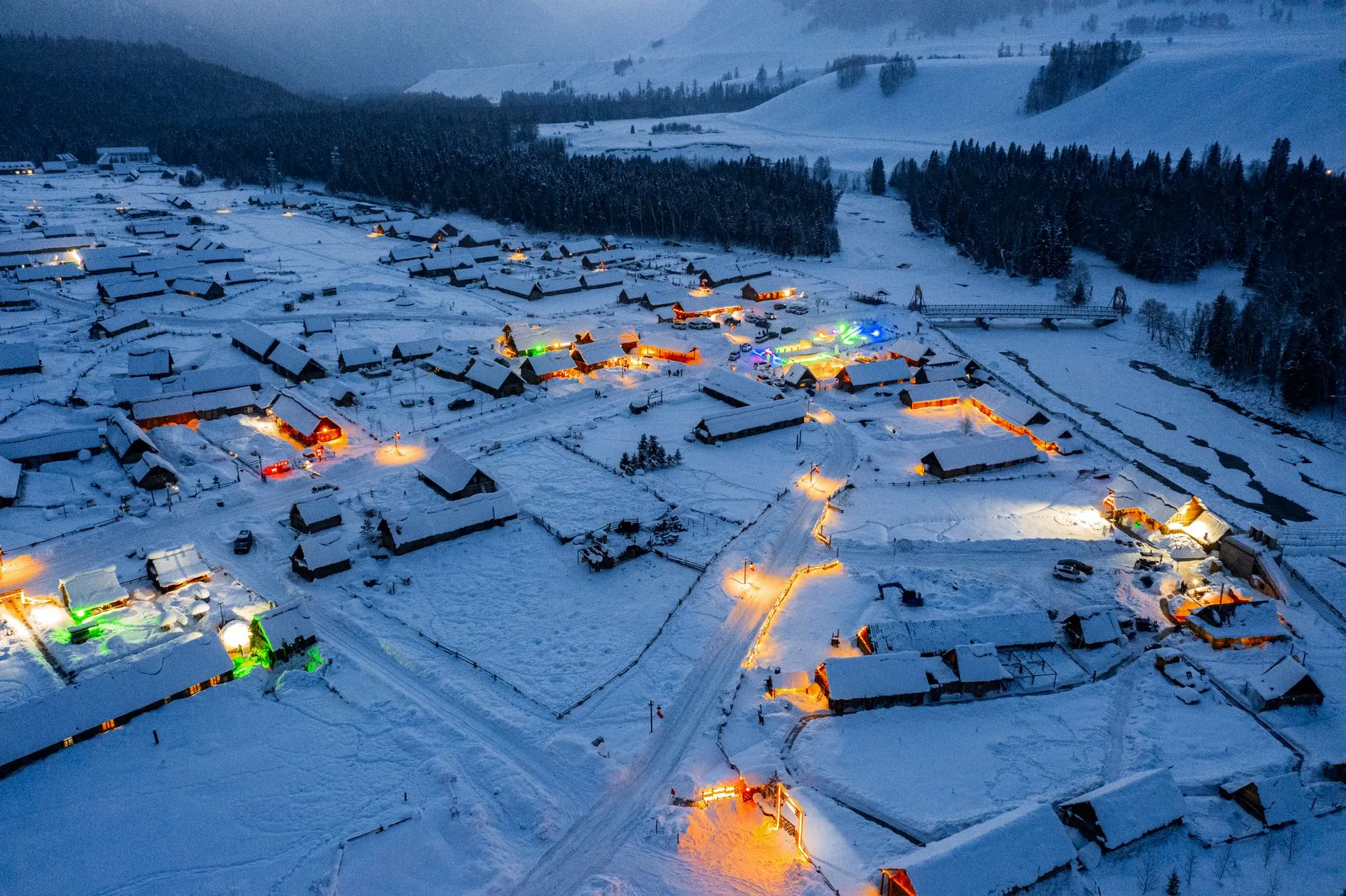
A forestry farm turned snow village, about 280 km from Harbin, famous for the “snow mushroom” caps that form on rooftops and fences.
- Tickets: ¥140 in peak season (1 November – 30 April), ¥70 off-season. The shuttle bus is ¥15 and optional. Re-entry is unlimited within 48 hours, but you enter by ID plus facial recognition — bring the physical passport you booked with.
- Getting there: there is no direct high-speed rail to Snow Town. The common route is Harbin → Yabuli West by rail (about 1.5 hours, ¥72–83) then a shuttle or shared car (about 2 hours, ¥100–150 per person). Official direct coaches take 5–6 hours and cost ¥180–240 return.
- The price trap: Mudanjiang’s culture and tourism bureau publishes reference prices — Harbin–Snow Town two days at ¥800, Harbin–Yabuli–Snow Town two days at ¥900, three days at ¥1,200. Anything more than 30% below the reference price is classified as an unreasonably low-price tour. Tours advertised at ¥188 or ¥199 for two days are the ones that end in compulsory shopping.
Mohe and Arctic Village
China’s northernmost settlement, and the coldest inhabited place you can reach by scheduled transport.
- Record lows: Arctic Village recorded −52.3°C on 13 February 1969, still China’s official extreme. Mohe city hit −53°C on 22 January 2023. January is the coldest month.
- Getting there: train K7041 departs Harbin around 18:25 and arrives roughly 17 hours 20 minutes later, covering 1,194 km. Flights take about 1 hour 45 minutes and do operate in the winter season.
- Do not book Mohe to see the aurora. Arctic Village is the only place in China from which aurora and polar day are theoretically observable, but sightings depend on geomagnetic activity and are rare. “Guaranteed aurora” packages are marketing.
- ⚠️ Border permit: Mohe and Arctic Village sit inside a Chinese border control zone. See the checklist near the end of this article before you build an itinerary around them.
Jilin’s rime ice: a two-hour window
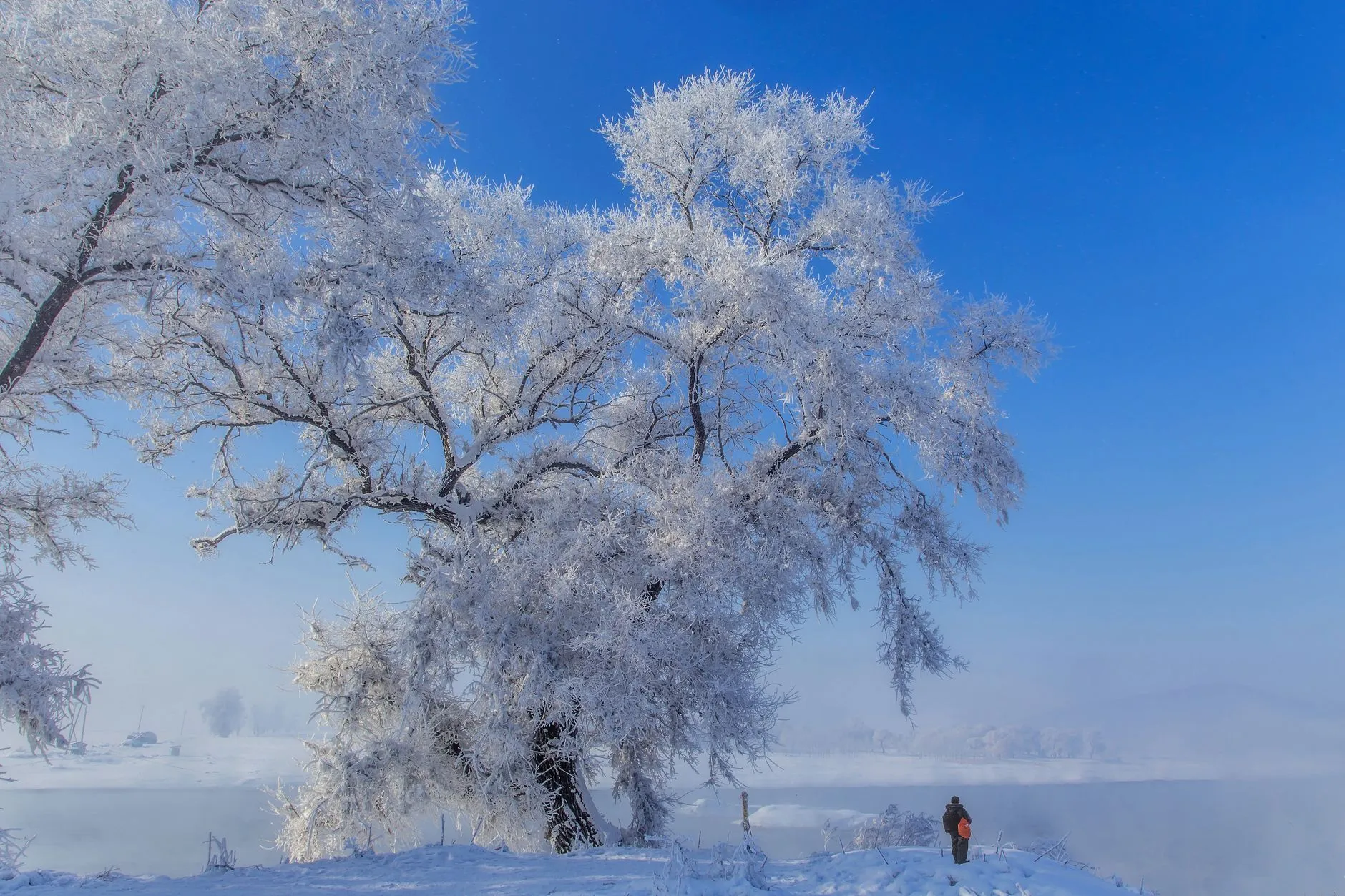
Rime ice — hoarfrost that builds on trees along the unfrozen Songhua River — is the most photogenic winter phenomenon in the northeast and the easiest to miss.
- Season: late December to late February, with January the highest-probability month.
- Time of day: roughly 06:00 to 10:00, fullest in the hour after sunrise. Once the temperature rises, the rime sheds — by 10:00 it is largely gone.
- It does not appear every day. Formation needs about −20°C or below, light wind, and moisture from the unfrozen river. Check the daily rime forecast before travelling; going without checking is the standard way to arrive at nothing.
- Where: the Rime Island area (Hantun / Zengtong) is the core viewing site and requires a ferry. Songjiang Middle Road in Jilin city itself is free and gives you urban rime if you are short on time.
Skiing in China: Chongli, Yabuli and the Rest
China’s skiing is concentrated in two places: Chongli in Hebei (the 2022 Olympic cluster, about 3 hours from Beijing by rail) and the Changbai Mountain / Jilin belt in the northeast.
| Resort | Season (typical) | Reference day-ticket | Note |
|---|---|---|---|
| Chongli — Wanlong | Nov – Apr | ~¥200–350 weekday with board, ~¥400–600 weekend | Longest season; advanced-leaning |
| Chongli — Genting (Secret Garden) | Nov – Apr | similar range | Olympic halfpipe and slopetime terrain |
| Chongli — Thaiwoo | Nov – Apr | similar range | Resort town, family-friendly |
| Chongli — Snow Ruyi | Nov – Apr | lower than the above | Very long beginner runs |
| Yabuli | mid-Nov – late Mar | from ~¥230 for 3 hours | Two Asian Winter Games; full progression |
| Beidahu | Nov – Mar | from ~¥650 day | Advanced-leaning |
| Songhua Lake (Vanke) | from 15 Nov | ~¥340 weekday, ~¥410 weekend | Closest to Jilin city; 50 runs |
| Wanda Changbaishan | mid-Nov – early Apr | roughly ¥268–360 | Beginner-friendly, night skiing |
⚠️ These are third-party and OTA reference ranges, not official list prices. Weekend, New Year and Spring Festival dates run 30–50% higher. Confirm on the resort’s own channel for your dates.
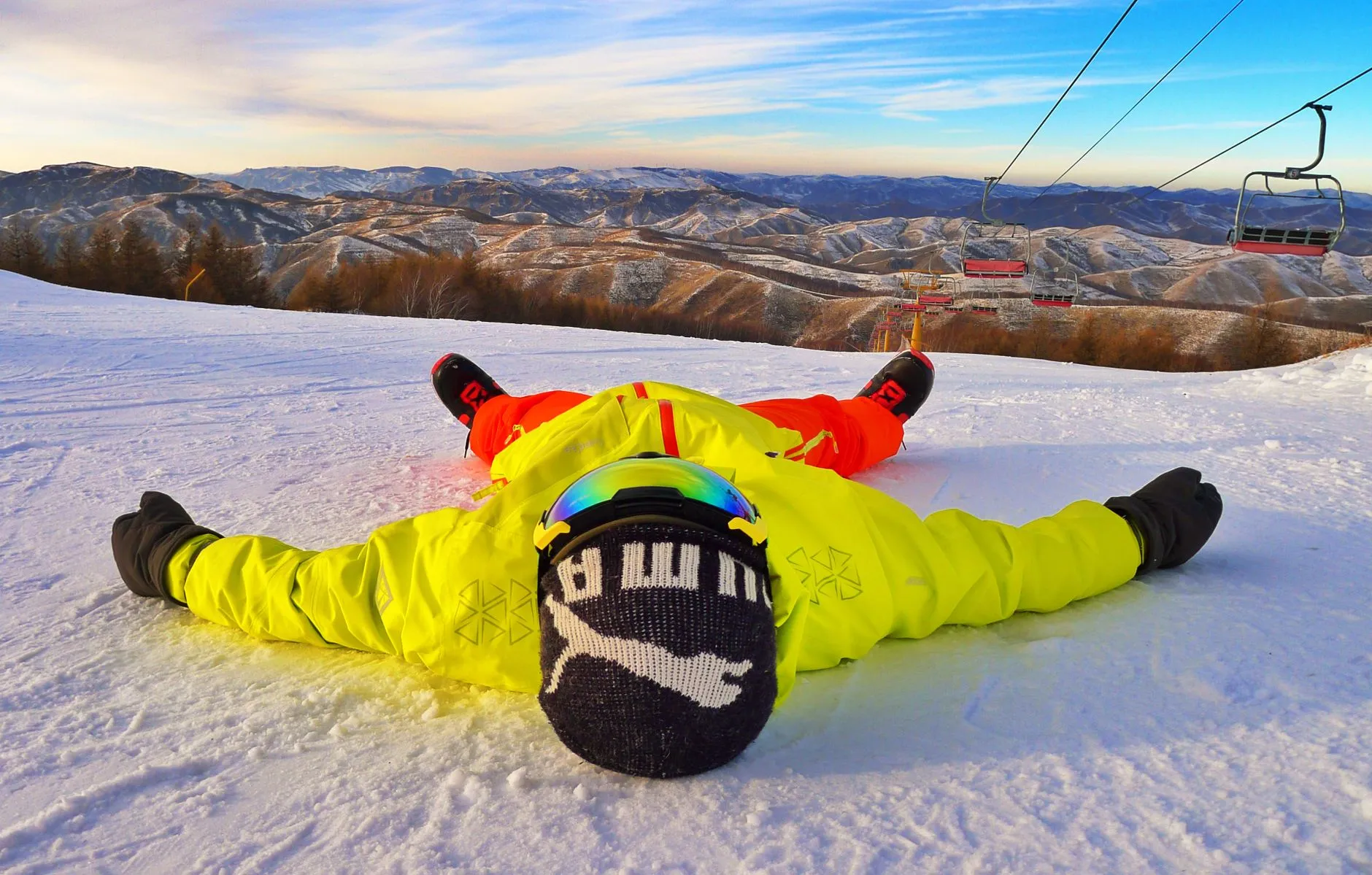
Helmets are not optional. Article 23 of Zhangjiakou’s Ski Area Safety Management Measures states plainly that skiers must wear a helmet both on the slopes and when riding lifts. Hebei’s provincial specification adds that beginner-level skiers may not use intermediate or advanced runs. Resorts are also required to provide bilingual (Chinese-English) skier notices and codes of conduct.
If someone is injured: ski areas are legally obliged to provide rescue personnel and equipment and, where necessary, transfer the injured to a Class II or higher hospital. Chinese courts have split liability by fault — a 2025 judgment put 70% on the resort and 30% on the injured skier where safety briefings and patrols were inadequate; another put only 20% on the resort. Note that most lift tickets do not include personal accident insurance; what resorts carry is typically public liability cover for their own negligence, and standard travel policies often exclude skiing as a high-risk activity. Check your own policy wording.
The Warm South: Sanya, Xishuangbanna and Yuanyang
Sanya, Hainan
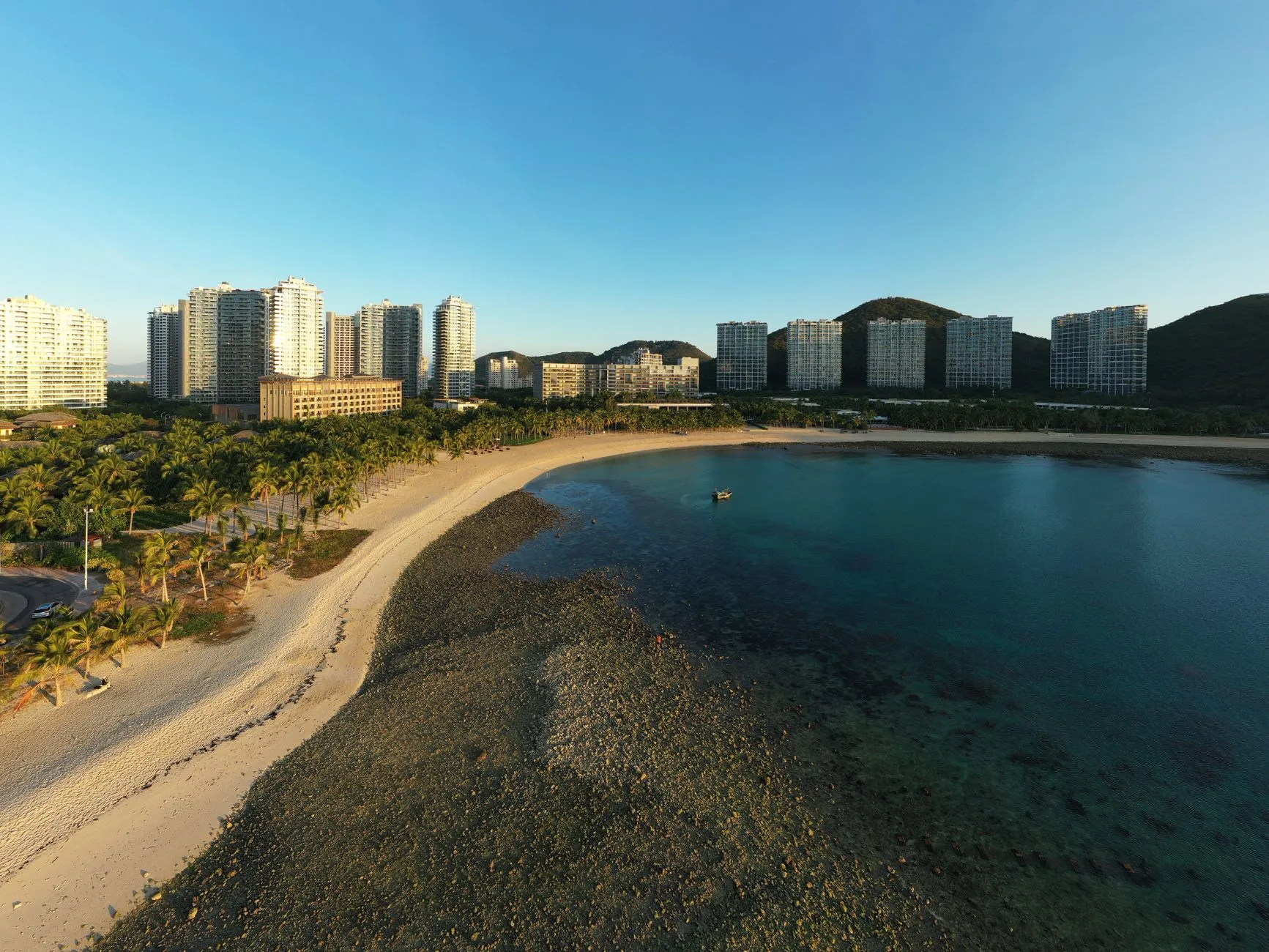
- Winter sea temperature: about 24–26°C in December, 23–24°C in January, 21–22°C in February. All above the swimming threshold. Early afternoon is the most comfortable time to get in.
- Visa: Hainan’s visa-free entry was expanded to 61 countries for stays of up to 30 days, effective 20 August 2026, and it is limited to Hainan. It is not an all-China visa waiver. Passports outside the 61 need a regular visa or to qualify for the 240-hour transit-free policy, which now covers 57 countries and is restricted to designated ports and regions. Always check China’s visa-free countries and the 240-hour transit rules against your passport.
- Duty-free: the offshore duty-free allowance is ¥100,000 per year, expanded to 47 product categories from 1 November 2025, extended to departing travellers, with the minimum purchase age raised from 16 to 18.
- Peak pricing is extreme. Measured over the 2026 Spring Festival: inbound flights to Sanya/Haikou at peak averaged about ¥1,815, up roughly 116% year on year, and hotel averages roughly +200%. One reported resort room went from ¥2,263 to ¥5,263 per night. These are 2026 figures used as a 2027 proxy — the direction is reliable, the exact number is not.
Full destination detail: Sanya and Hainan.
Xishuangbanna
- January averages about 26.1°C high, 14.0°C low. Dry season runs November to April — this is the dry season, not the rainy season (which is May to October).
- The Water Splashing Festival is in April (13–15), not winter. If a guide lists it as a December activity, it is wrong.
- Border access: note that two separate policies are often conflated. There is the ASEAN tour-group visa-free entry to Xishuangbanna (from 10 February 2025: 10 countries, groups of two or more, handled by a Chinese travel agency, limited to Xishuangbanna prefecture, up to 6 days). Whether Mohan is additionally a 240-hour transit port is unconfirmed — verify with the border authority rather than assuming.
Yuanyang, Kunming and Tengchong
- Yuanyang rice terraces: the flooding season runs November to April, and the best photography is December to February when the terraces hold water and mirror the sky. The ¥70 pass covers 72 hours and includes Duoyishu, Bada and Laohuzui. See Yuanyang rice terraces.
- Kunming: black-headed gulls arrive at Dianchi Lake around late October to early November and leave March to April — viewing season is roughly November to March, and it has happened every year since 1985. January averages about 15°C high, 2°C low.
- ⚠️ Tengchong’s ginkgo village does not work in winter. The golden window is mid-November to early December. Leaves drop heavily after about 2 December, so there is no golden ginkgo in January or February. Any winter itinerary promising golden ginkgo is a year out of date.
- Lijiang and Jade Dragon Snow Mountain stay open in winter; between November and April the cable car can suspend in high winds. See Lijiang and Yulong and Kunming and Dali.
Cities in Winter: Beijing, Xi’an and the Off-Season Dividend
Winter is the cheapest and emptiest season in China’s big cities, and Beijing in snow is a genuinely different city.
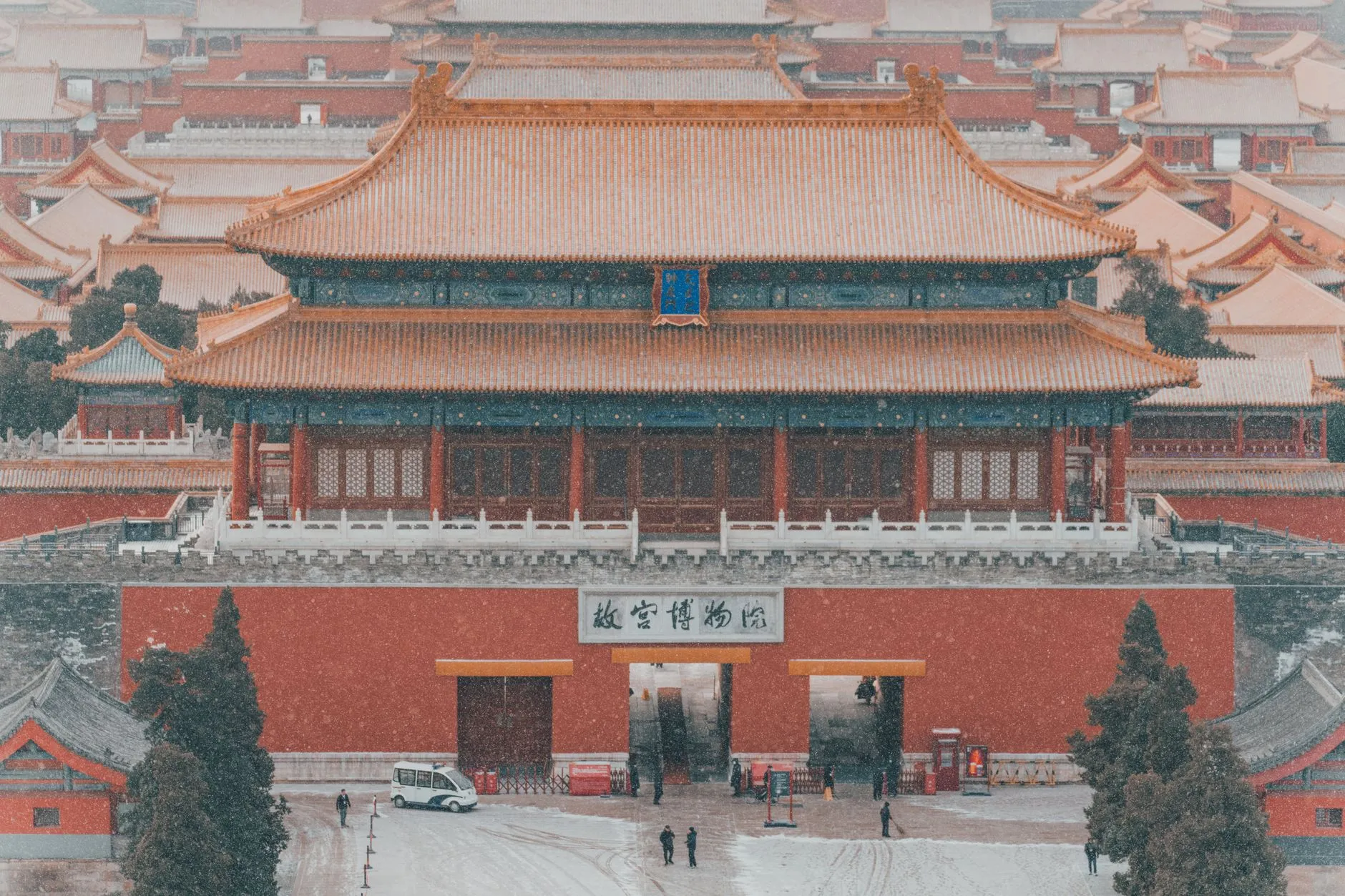
- The Forbidden City: low season runs 1 November to 31 March, tickets drop to ¥40, and it is closed on Mondays. The Palace Museum’s own English visitor page states it limits daily visitors to 40,000 — so this is one of the few attractions where a hard daily cap is officially published. Snow on the yellow roofs is the shot everyone wants, and it is the single best reason to visit Beijing in January. Full guide: Forbidden City.
- Shichahai ice rinks: in the 2025–26 season, Qianhai opened around 10 January (08:00–21:00) and Houhai around 20 January (08:00–17:00). Around ¥100 for general skating, ¥30–40 for speed skating, paid by scanning on site — no reservation. Dates shift with the ice, so treat them as indicative.
- Beijing skiing: Nanshan opens around 4 December (roughly ¥210 weekday / ¥350 weekend), Huabei around 28 November, and Jundushan around 4 December (roughly ¥230 weekday / ¥320 weekend).
- Xi’an: the Terracotta Army is ¥120 year-round; low season hours (16 November – 15 March) are 08:30–16:30. The 2026 city wall lantern festival ran 1 January to 22 March at ¥100 for the core zone / ¥54 for the outer zone — the 2027 edition, like Pingyao’s Chinese New Year programme, should be treated as estimated at roughly late January to mid-February until officially announced.
What Actually Closes in Winter
The useful question is not “is it open” but “is the part I came for open.”
| Place | Winter status | The catch |
|---|---|---|
| Jiuzhaigou | Open | Low season 16 Nov – 31 Mar, ¥80 ticket + ¥80 bus = ¥160. Some boardwalks and primeval forest close to snow; the headline lakes and Nuorilang waterfall stay open. Online real-name booking only, no on-site sales |
| Yading (Daocheng) | Open | Low season 1 Dec – 31 Mar, ¥120. Milk Lake and Five Colour Lake close to snow, roughly 24 Nov – 15 Apr — the two things most people come for |
| Kanas, Xinjiang | Open | Night traffic controls are routine. In January 2026, sections of S232, X852 and the Baihaba road were closed 19:00–10:00 daily. Self-driving needs 4WD and winter tyres. See Kanas |
| Changbai Mountain | Open | ⚠️ The south slope is open June–October only and is closed in winter. Since 26 June 2026 the north slope sells a ¥270 bundled price covering entry, shuttle and summit transfer; in winter the summit transfer becomes a ¥98 snowmobile. Bookings release 7 days ahead at 18:00, not 15 |
| Tianchi (Heavenly Lake) | Not closed, but unreliable | The lake freezes naturally from late November. The north slope stays open and the transfer runs to the summit, but the summit platform closes without notice in high wind or heavy snow. English guides saying “Tianchi is closed in winter” are wrong; saying “you will see it” is also wrong |
| Tibet | Open | There is no winter suspension of the Tibet Travel Permit — it is issued year-round. But foreign passport holders cannot travel independently: you must be part of a group arranged by a licensed agency, with guide and vehicle throughout. Apply 15–30 days ahead (30–45 in peak season). See Tibet permit and Lhasa |
| Huangshan, Anhui | Open | No daily visitor cap is published — holiday crowding is demand, not a quota. Confirm current access on the park’s own channel before travel. See Huangshan |
Winter Reality Check: Cold, Roads and Delays
Cold is a logistics problem, not a clothing problem
- Wind chill is the real number. Below 0°C, every two additional levels of wind force drops the felt temperature by about 6–8°C. Beijing at −11°C with a force-4 wind feels close to −20°C. Wind chill only affects exposed skin — covering it is the whole trick.
- Your phone will die. Apple’s own specification: iPhones operate 0°C to 35°C and store −20°C to 45°C; below the operating range the device may shut down. Most power banks are rated to operate at 0–45°C and will cut out below freezing. Keep both in an inside pocket and charge indoors.
- Heating indoors is aggressive. Northern district heating is designed to 18–24°C, and most providers run 1–6°C above the standard. You will be stripping layers indoors in a way that matters for how you dress.
- Frostbite: do not rub it and do not use snow. No fire, no snow-rubbing, no cold-water soaking. Rewarm in 38–42°C water. Frostbite is graded in four degrees, from superficial reddening through blistering to full-thickness and tissue necrosis.
- Hypothermia grading (rectal temperature): mild 32–35°C, moderate 28–32°C, severe below 28°C. Severe cases need active rewarming and may need CPR.
What you can and cannot fly with
- Disposable heat packs (the iron-and-carbon ones): allowed in both carry-on and checked luggage, no quantity limit. This is the single most reassuring winter rule and it is widely misreported as banned.
- Rechargeable hand warmers, heated gloves, heated insoles: treated as power banks — carry-on only, never checked.
- Liquid-filled plug-in hot water bottles: not allowed in carry-on; if checked, pack against crushing.
- Power banks: never checked. Under 100 Wh in reasonable quantities for personal use; 100–160 Wh requires airline approval and is limited to two per person; above 160 Wh is prohibited. Since 28 June 2025, power banks without a clear 3C certification mark, or from recalled models or batches, are banned on domestic Chinese flights.
- Self-heating food (magnesium/iron powder or calcium oxide): prohibited in both carry-on and checked luggage.
Roads, rails and runways
- Highways close. On 23 December 2025 snow closed 36 sections of Heilongjiang’s expressway network, with more under speed restriction; on 22 February 2026, at the Spring Festival return peak, 18 routes were fully closed. Winter is the closure season, not an exception.
- Speed limits on ice and snow: on icy or muddy roads, 30 km/h maximum. Visibility under 50 m: 30 km/h. Under 100 m: 40 km/h.
- Snow tyres are not nationally mandatory. Jilin’s traffic police have publicly debunked the claim that “not fitting snow tyres means full liability” — there is no such provision in the Road Traffic Safety Law or its implementing regulations. That said, some northern provinces do require chains or winter tyres on specific mountain or expressway sections, and Kanas scenic area in Xinjiang has an explicit local requirement. Fit them, but do not let anyone tell you it is a national law.
- Trains slow down too. Ice on the overhead catenary causes arcing and forces speed restrictions; frozen points and snow on ballastless track do the same. Heilongjiang’s cold-climate lines are designed for it — they still run 300 km/h at −35°C — but they drop to 160 km/h when wind exceeds 20 m/s or snowfall on ballastless track exceeds 50 mm.
- Flights: on 26 November 2024, freezing rain at Changchun Longjia cancelled 15 departures for the whole day, with departures capped at about ten per hour during de-icing. Air China routinely warns about 11 northeastern cities including Harbin, Changchun, Manzhouli and Hailar.
- Booking trains: the 12306 release window remains 15 days including the day of departure, and foreign passports can be used directly to buy and collect tickets. See how to buy train tickets and high-speed rail.
The Foreign-Visitor Winter Checklist
1. Border permits — the one that catches people out. Since 15 April 2026, China issues an electronic border control zone permit and has stopped issuing paper versions (existing paper permits remain valid until they expire). Foreign nationals must apply in person at a county-level exit-entry office or a designated police station. It is free of charge, materials-complete applications are issued on the spot, it must be used together with your passport, and it can be shown on a phone or printed. It cannot be extended — reapply when it expires — and it allows multiple entries within its validity. The hotline is 12367.
⚠️ The honest caveat: the NIA announcement and its service guide do not publish the list of provinces and counties that count as border control zones. Reporting says the first wave of the electronic permit covers Xinjiang and Tibet. Whether Heilongjiang (Mohe, Arctic Village, Heihe, Suifenhe) falls under it in the same way has no official first-hand confirmation. Mohe and Heihe are described in multiple sources as border control areas requiring the permit, but treat that as likely, not confirmed. Call 12367 before you build a trip around Mohe. Anyone offering to obtain the permit for a fee, or to expedite it, is running a scam — it is free.
2. Can you book with a foreign passport? It varies, and this is where itineraries break:
| Booking | Foreign passport online? |
|---|---|
| Harbin Ice-Snow World | ✅ Yes — official WeChat account, Ctrip, on-site machines accepting foreign cards |
| Changbai Mountain | ✅ Yes — the mini-program supports passport numbers for real-name booking |
| Border control zone permit | ❌ No — in person only, and never through an agent |
| Snow Town | ❓ No official statement found. Do not assume; use an OTA or the official WeChat account and confirm before travel |
3. Watch the low-price tours. In January 2026, Mudanjiang authorities reported an unlicensed guide at Snow Town who was also operating an unlicensed vehicle: 12 days’ administrative detention, with tourism and transport cases opened. In January 2026, Changchun opened a case against an unqualified “private ski instructor” selling tour services. The reference-price rule above is your simplest filter.
4. Pay the peak premium knowingly. Harbin’s tourism association puts the peak-season uplift — mid-to-late December, New Year and Spring Festival — at 30–50% over shoulder season. Early-to-mid December is the cheapest window with snow already on the ground.
5. Layer, and protect the electronics. Base layer, fleece or wool, windproof down. Go indoors for 15 minutes after every hour outside. Put a heat pack behind the phone, not in the same pocket as your skin.
What the English Guides Get Wrong
| They say | Actually |
|---|---|
| ”Winter in China is December to February, uniformly cold” | Harbin averages −13°C in January while Sanya averages 26.6°C. You are choosing between two countries |
| ”Chinese New Year’s Eve 2027 is the 30th of the twelfth lunar month” | It is the 29th (5 February 2027) — the lunar month has 29 days, as it does every year from 2025 to 2029 |
| ”Book Harbin for late February, the ice is still up” | Edition 27 closed on 21 February 2026 after a warm spell. Late February is the riskiest window |
| ”Tianchi at Changbai Mountain is closed in winter” | The park is open; the summit platform closes unannounced in bad weather. The south slope is the part that shuts for winter |
| ”You can drive to Mohe on a passport” | Mohe is in a border control zone. Since 15 April 2026 the permit is electronic, free, in person — and confirm the current scope on 12367 |
| ”Heat packs are banned on planes” | Disposable heat packs are allowed in both carry-on and checked bags with no limit. Battery-powered warmers are the restricted ones |
| ”Snow tyres are legally required in northern China” | Not nationally mandatory — Jilin police have formally debunked it. Some sections and Kanas require chains or winter tyres |
| ”Tibet stops issuing permits in winter” | No winter suspension. The real constraint is that foreign visitors must travel in a group |
| ”Yading is a good winter hike” | The park is open, but Milk Lake and Five Colour Lake close roughly 24 Nov – 15 Apr |
| ”Tengchong’s ginkgo village is golden in winter” | Golden is mid-November to early December; leaves are gone after about 2 December |
| ”The 240-hour transit covers Hainan and Xishuangbanna freely” | Hainan has its own 61-country, 30-day, Hainan-only policy. Xishuangbanna’s ASEAN group waiver is a separate policy |
If You Only Remember Three Things
- Choose your winter before you book it. North means −20°C, Ice-Snow World and a border permit question mark. South means 26°C, swimming in January, and Spring Festival price spikes of 100%+.
- Nothing about 2027’s holidays is official yet. New Year’s Day is 1 January (Friday), New Year’s Eve is 5 February (the 29th), Lunar New Year’s Day is 6 February — but the rest days, the Chunyun dates and every lantern festival programme are still unannounced. The State Council notice lands around November.
- The cold breaks devices and roads, not just people. Keep the phone inside, assume the expressway can close on any snow day, and build a buffer day into every northeastern itinerary between December and February.
Related reading: best time to visit China for the month-by-month view, worst time to visit for the regional trade-offs, Chinese New Year 2027 and New Year’s Eve for the holiday mechanics, China’s high-speed rail and buying train tickets for winter transport, what to pack for the layering detail, and China travel safety for the general grounding.
How this was verified
Dates were cross-checked against the lunar calendar and the State Council’s published method; holiday notice status confirmed as unannounced as of 22 September 2026. Pricing and operating windows come from official channels (Harbin Ice-Snow World, Heilongjiang’s culture and tourism department, Zhangjiakou municipal regulations, the National Immigration Administration’s announcements and service guide) or, where marked, from third-party ranges that should be confirmed per date. Where sources conflicted — Snow Town’s ticket, the rime island season, 2027 festival dates — the resolution used is stated in the text. Where no official source exists, the guide says so rather than guessing.