Travel Insurance for China 2026: Do You Need It, What It Costs, Best Plans Compared
Most travelers buy China travel insurance and assume they are covered. The honest version is less reassuring. Your home country health insurance almost certainly does not work in China. You will pay at the counter and claim it back later. And if you are heading to Tibet, the standard policy you just bought may exclude you above 4,000 meters. This guide covers whether you need cover, which of six plans does the job, and where the gaps are. For the full 2026 cost breakdown and the claims paperwork walkthrough, see our China travel insurance cost and coverage guide.
Quick answer: China does not require travel insurance, but you need it anyway. Three reasons:
- Your home cover stops at the border. US Medicare, the UK NHS, the EU EHIC and Australian Medicare all provide zero coverage in China.
- You still pay at the counter. Routine outpatient deposits were abolished at Chinese public hospitals in March 2025, but as a self-paying foreigner you settle the full bill yourself — and inpatient care or surgery still usually needs a deposit up front.
- Evacuation is the real risk. The US State Department puts an air-ambulance evacuation anywhere in the world at $20,000 to $200,000; a long-haul evacuation from China to the US runs $100,000–$200,000 or more.
A dedicated travel medical plan starts around $2 per day. See our 240-hour visa-free guide and entry requirements.
How we verified this: SinoWander reads the original Chinese-language customs and health-system sources, plus the official 2026 policy wordings of each insurer (World Nomads, SafetyWing, IMG, Allianz, Genki, Heymondo), cross-checked against US Medicare.gov, NHS.uk, the European Commission, and medical-evacuation providers. We have not personally tested every claim. Plan details last verified 2026-09-16; pricing is cross-checked against our September 2026 cost guide. See our methodology.
Do You Need Travel Insurance for China?
Legally, no. China does not require travel insurance for a tourist (L) visa, 240-hour visa-free transit, or 30-day unilateral visa-free entry. The Tibet Travel Permit does not list insurance among its requirements either — though some Tibet tour operators, especially for high-altitude treks such as the Kailash kora, impose their own insurance condition as a booking requirement, so check with your agency.
But the US State Department, the CDC, and the UK FCDO all strongly recommend it, and for good reason: a serious incident in a remote area can cost more than a new car to fix. The 240-hour transit guide explains who qualifies for visa-free entry; insurance is optional but foolish to skip.
Why Your Home Country Insurance Fails in China
This is the first surprise for most travelers.
US Medicare does not cover medical care in China, period. Original Medicare pays outside the US only in a few narrow situations, none of which apply here: you are in the US when an emergency occurs and a Canadian or Mexican hospital is closer than the nearest US hospital; you are travelling through Canada by the most direct route between Alaska and another state and a Canadian hospital is closer; or you live in the US and a foreign hospital is closer to your home than the nearest US hospital. Separately, Medicare may pay for necessary care on a cruise ship only if the ship is in a US port or within six hours of one. Care received in China cannot be reimbursed by Medicare.
If you have a Medigap supplement plan (C, D, F, G, M, or N), you get limited foreign-travel emergency coverage: 80 percent after a $250 annual deductible, for the first 60 days of a trip, with a $50,000 lifetime cap. Two things to know. Plans C and F have been closed to anyone who became eligible for Medicare on or after 1 January 2020, so most travelers enrolling today can only get this benefit through D, G, M or N (Plan G is the most common choice). And the cap is small: an ICU bed at Beijing United Family Hospital costs roughly $2,500 to $3,400 per night, so $50,000 runs out fast.
The UK NHS and the EU EHIC do not work in China either. The EHIC is valid only inside the EU/EEA and Switzerland; the UK GHIC works on the same basis. The UK has no reciprocal healthcare agreement with China — China is absent from the GOV.UK list of non-EU reciprocal agreements.
Australian Medicare has Reciprocal Health Care Agreements with 11 countries (New Zealand, the UK, Ireland, Italy, Malta, Finland, Sweden, the Netherlands, Belgium, Norway, Slovenia). China is not on the list.
One nuance worth knowing: China has signed bilateral social security agreements with several Western countries, including Germany, France, Switzerland, the Netherlands, Denmark, Finland, Canada, Spain and Luxembourg. Those agreements coordinate coverage for temporarily posted workers — they let a posted employee stay in their home system and avoid double contributions. They do not give ordinary tourists reciprocal access to China’s public hospitals. As a visitor, your only reliable protection is a travel medical policy.
This matters most for independent travelers off the packaged-tour circuit; our independent travel guide covers the scenarios where insurance earns its keep.
How Chinese Hospitals Bill Foreigners
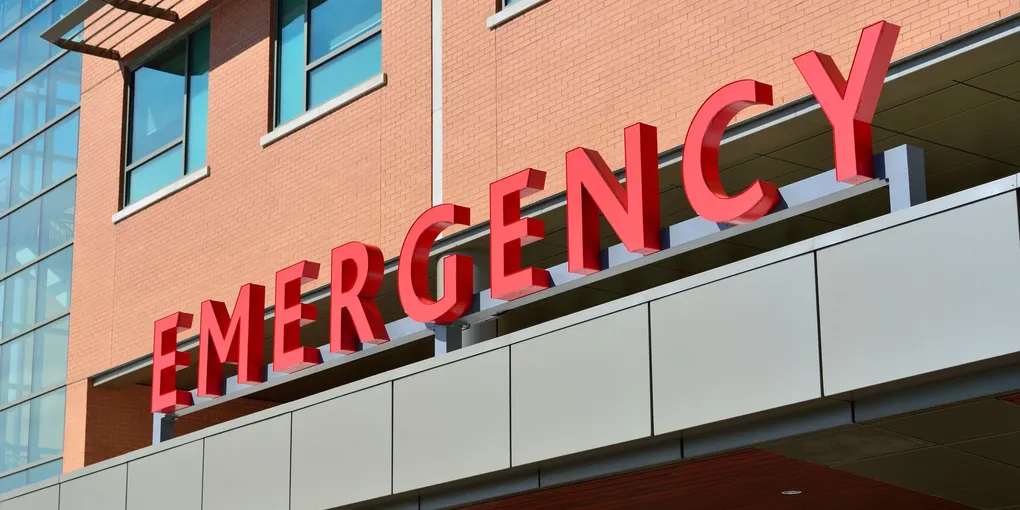
 A modern hospital reception desk. At international hospitals like Beijing United Family, direct billing with some insurers is possible. At most public hospitals, you pay and claim back later.
The old rule — hand over a deposit before anyone sees you — has partly changed. Since 31 March 2025, a national policy (the National Health Commission and five other agencies, Document Guo-Wei-Ban-Cai-Wu [2025] No. 5) abolished the outpatient pre-payment deposit at public hospitals. You register, see the doctor, and pay once at the end of the visit. Since 30 June 2025, inpatient deposits are capped at the average out-of-pocket cost for your condition rather than a large lump sum. Emergency and critical care must legally be given first and billed later — a hospital cannot refuse emergency treatment because you cannot pay.
None of this means the hospital is paying. As a self-paying foreign visitor you still hand over your credit card — or, increasingly, your Alipay or WeChat Pay QR code — and file a claim with your insurer when you get home. For an inpatient admission or elective surgery, expect to be asked for a deposit. International and private hospitals are not bound by the policy at all and still require upfront payment or insurance direct billing. If you are not sure which payment method will actually work at the counter, our how to pay in China guide covers foreign cards, cash, and the ¥200 platform-fee threshold.
Direct billing (where the hospital bills your insurer directly and you pay nothing) exists, but only at a small number of international and private hospitals, and it requires pre-authorisation — a guarantee of payment from your insurer before treatment, not an automatic perk. Beijing United Family Hospital (BJU), Shanghai ParkwayHealth and Jiahui Health all have direct-billing arrangements with major international insurers including Aetna, Cigna, Bupa and Allianz. Allianz Care’s China network covers 450+ medical providers (hospitals, clinics and dental) via MSH China. But if you end up at a public hospital emergency room in a smaller city, expect to pay and claim later.
On cost, the structure is tiered rather than uniformly expensive. A general outpatient registration at a public hospital runs about ¥6–10; an international-department consultation is ¥600–1,200. Inpatient care is where the money is: a bed in a public-hospital international or VIP wing runs roughly ¥300–3,000 per night, rising to ¥3,000–5,000 at top-tier Beijing and Shanghai tertiary suites, and a laparoscopic appendectomy costs about ¥15,000–30,000 at a major-city public hospital (from around ¥8,000 for a simple case) or ¥50,000–100,000 at a high-end private one. Our cost and coverage guide breaks these tiers down and shows what to collect at the cashier window. If your hospital stay runs long, our hotel booking guide covers extended-stay options near major medical centers.
Medical Evacuation: The Number That Actually Matters
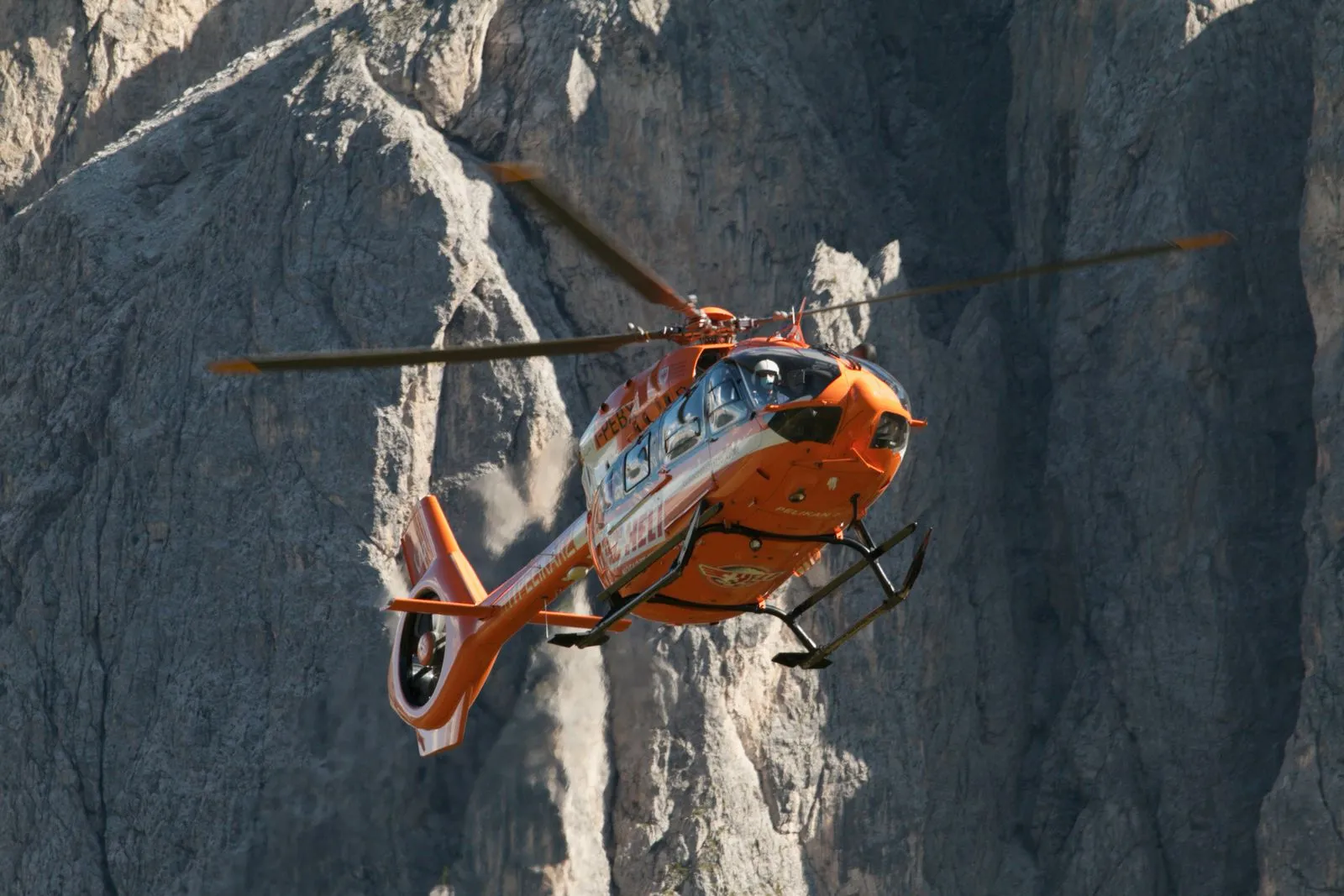 A mountain rescue helicopter. Evacuation from remote or high-altitude China can cost six figures, the core reason to carry travel medical insurance.
If you have a serious accident or illness in a remote part of China, you may need to be evacuated to a major hospital in Hong Kong, Singapore, or your home country. This is where travel insurance earns its keep, because the costs are staggering.
| Route | Typical cost |
|---|---|
| Beijing/Shanghai to Hong Kong or Singapore | $20,000 to $80,000 |
| China to the USA (full ICU air ambulance) | $100,000 to $250,000+ |
| China to Europe | $100,000 to $300,000+ |
| Remote Tibet helicopter rescue | $100,000 to $300,000 |
The US State Department warns that an air-ambulance evacuation back to the United States can cost $20,000 to $200,000 depending on where you are and how sick you are — a global range, not a China-specific cap. For a long-haul evacuation from China, air-ambulance providers typically quote $100,000–$200,000 or more. These are industry and provider-published estimates rather than government figures; confirm with an insurer-approved assistance company such as International SOS or Global Rescue.
Evacuation limits vary hugely between plans, and this is the column to read first. SafetyWing Essential caps evacuation at $100,000 lifetime, the lowest of the six here and thin for western China. IMG Patriot leads at $1,000,000. World Nomads Explorer offers $500,000. When you buy, check the evacuation limit against these numbers first, then the medical limit — our cost guide explains why evacuation cover matters more than an extra $100,000 of medical.
The Tibet Altitude Trap
If your trip includes Tibet, the Tibetan Plateau, or any trekking above 3,000 meters, this is the section to read carefully. Most standard travel insurance policies exclude trekking or mountaineering above an altitude cap, and the caps vary widely by insurer. Tibet’s capital Lhasa sits at 3,650 meters. The Everest Base Camp that tourists actually visit — the camp near Rongbuk Monastery — is about 5,000–5,150 meters; the often-quoted 5,200 m is the expedition climbing camp, which ordinary visitors cannot enter. The Kailash kora crosses Drolma La Pass at about 5,630 meters. You also need a Tibet Travel Permit before you can even enter the region; our Tibet travel permit guide walks through that process separately.
| Insurer | Base plan altitude cap | Upgrade option |
|---|---|---|
| World Nomads Standard | 6,000 m trekking (3,000 m mountaineering) | Explorer 6,500 m / Epic 8,000 m |
| SafetyWing | 4,500m | Adventure Sports rider |
| IMG Patriot | Not covered on base plan | Adventure Sports Rider (age 65 and under) |
| Allianz Australia | 3,000m standard | Adventure Pack to 6,000m (under 75) |
| Allianz US | High-altitude excluded outright | No add-on available |
| Genki Traveler | 4,000m | None |
| Heymondo | ~4,500m | 5,000m with adventure upgrade |
The caps that actually catch people out sit at the bottom of that table. A 4,000 m limit (Genki) or 4,500 m (SafetyWing) excludes the Everest tourist camp entirely. Heymondo’s 5,000 m sits right on the boundary. Allianz US excludes high-altitude activity outright with no add-on, so US policyholders have no EBC route with that insurer at all. World Nomads Standard at 6,000 m does cover the tourist camp — but that cap applies to trekking; its mountaineering sub-limit is 3,000 m, which matters if your itinerary involves ropes and crampons rather than a walking trail.
There is a second trap here. Some insurers treat altitude sickness itself as a pre-existing condition or an assumed risk, separate from the trekking-altitude exclusion. A traveler could be below the trekking cap and still have a claim denied under a pre-existing clause. Read the policy wording before you assume you are covered.
Six Plans Compared Side by Side
 Signing a policy document. Buy your travel insurance within the pre-existing condition waiver window, usually 7 to 20 days of your first trip payment.
All six of these insurers offer plans that cover China. Prices below are for a typical 30-year-old US resident on a short trip and vary by age, state, and trip length. Always get a quote.
| Plan | Price (14-day China trip) | Medical limit | Evacuation limit | Altitude cap | Pre-existing waiver |
|---|---|---|---|---|---|
| World Nomads Standard | ~$109 | $125,000 | $400,000 | 6,000m | None on Standard |
| World Nomads Explorer | ~$211 | $150,000 | $500,000 | 6,500m | Yes, 7 days |
| World Nomads Epic | ~$388 | $250,000 | $700,000 | 8,000m | Yes, 7 days |
| SafetyWing Essential | ~$56 / 4 weeks | $250,000 | $100,000 | 4,500m | None |
| IMG Patriot | From ~$2/day | Plan maximum | $1,000,000 | Rider required | Acute onset, 24 hrs, under 70 |
| Genki Traveler | ~€52 / month | Plan maximum | Plan maximum | 4,000m | None |
| Heymondo | From ~$2/day | Up to $10,000,000 | $500,000 | ~4,500m (5,000m w/ upgrade) | None |
World Nomads sells four US plans: Standard ($109 for a 14-day China trip), Explorer ($211), and Epic ($388), plus an Annual option. Sample quotes are for a 30-year-old California resident; prices are dynamic and vary by state and exact dates. Altitude cover is 6,000 m on Standard, 6,500 m on Explorer and 8,000 m on Epic for trekking — Standard’s mountaineering sub-limit is 3,000 m. The pre-existing condition waiver is available only on Explorer and Epic and requires purchase within 7 days of your first trip payment. US single-trip plans are sold to travellers aged 18–69 (the “49 and under” figure you see in blogs is a pre-existing-condition stability band in some non-US wordings, not a US purchase-age cap). Note: World Nomads is being acquired by IMG (iTravelInsured), announced February 2026, with completion expected between August and December 2026, so plan structures may change.
SafetyWing Nomad Insurance costs roughly $56 per four weeks for ages 10-39 (Essential plan) or $150-$178/month (Complete). It covers 180+ countries including China. The evacuation ceiling is $100,000 lifetime, the lowest of the six and a real concern for remote China — the $250,000 figure often quoted for this plan is the medical limit, not evacuation. Altitude cap is 4,500m without the Adventure Sports rider. Pre-existing conditions are excluded with no stability-window exception, the strictest of the group. Motorcycle riding is covered with a $250 deductible for US residents.
IMG Patriot (Patriot America Plus, Patriot Platinum) starts around $2/day. The standout is the $1,000,000 evacuation limit, the highest here. IMG covers acute onset of pre-existing conditions up to age 70 — but the definition is strict: treatment must be obtained within 24 hours of the sudden onset or recurrence, not within a 20-day window. Direct billing in the US runs through IMG’s IPA network; for China, direct billing at international hospitals such as United Family and Parkway is arranged case by case through IMG assistance, so confirm the hospital is in network before treatment. The Adventure Sports Rider (available to ages 65 and under) covers activities such as abseiling, BMX, bungee jumping, skydiving and white-water rafting — but it does not cover motorcycling, and motorcycle racing is permanently excluded.
Allianz varies sharply by entity. Allianz Australia’s optional Adventure Pack covers hiking and trekking up to 6,000m and is available to travellers under 75 at certificate issue (the excess is chosen at purchase, commonly $200). Allianz US excludes any high-altitude activity outright and offers no equivalent add-on, so US policyholders have no coverage for EBC with that insurer regardless of altitude. Allianz Care’s China network covers 450+ providers with direct billing via MSH China. Pre-existing conditions require a 14-day waiver (buy within 14 days of first trip deposit).
Genki Traveler costs around €52/month. It covers every country and any licensed provider worldwide. Inpatient treatment can be direct-billed through their 24/7 assistance team. The altitude cap is 4,000m, so Tibet is out. Uniquely, Genki covers riding a light motorcycle up to 125cc / 11kW even without a motorcycle license, though under Chinese law you still need a valid Chinese temporary license regardless of insurance.
Heymondo has a dedicated China page and starts around $2/day (priced per trip by destination, age and tier). Medical coverage goes up to $10,000,000 with evacuation at $500,000. COVID-19 is explicitly covered with no gray areas, the clearest wording of the six. The base altitude cap is around 4,500m, extending to 5,000m with the adventure upgrade — right at the boundary for the Everest tourist camp.
Note on price: the plans above are travel-medical-first policies, which is why they sit well below the market average. A comprehensive policy with trip cancellation and baggage cover typically runs about $30–35 per day (around $476 for 15 days) for a mid-tier US provider. See our cost guide for that comparison.
What Most Policies Do Not Cover
Pre-existing conditions are the single biggest trap. Standard plans exclude them. World Nomads offers a waiver on Explorer/Epic only, within 7 days of first deposit. IMG covers acute onset under 70, but only if treatment begins within 24 hours of symptoms. Allianz gives you 14 days. SafetyWing excludes them outright. Genki and Heymondo exclude them. If you take regular medication for anything, read this section of your policy before you buy.
Motorcycles are a minefield. World Nomads effectively excludes them. IMG’s Adventure Sports Rider does not cover them (it covers mountain bikes). SafetyWing covers them with a $250 deductible for US residents. Genki covers up to 125cc. And remember, China does not recognise foreign licences or International Driving Permits — you need a Chinese temporary driving permit (about ¥10, valid 3 months) to ride legally. An accident while riding illegally may be denied on those grounds alone.
High deductibles ($250 is common) mean that a minor clinic visit for food poisoning may not reach the threshold. Carry a credit card buffer for the small stuff.
COVID-19 is covered by most plans in 2026, but the wording varies. Heymondo is the clearest. Allianz US requires an Epidemic Coverage Endorsement. Check your specific plan.
Frequently Asked Questions
Do you need travel insurance for China?
Not legally. China does not require it for a tourist (L) visa, 240-hour visa-free transit, or 30-day visa-free entry, and it is not on the Tibet Travel Permit checklist either. You need it because your home-country health plan almost certainly gives zero coverage here, and evacuation from remote China can reach six figures.
How much is travel insurance for China?
A travel-medical policy starts around $2 per day. A 14-day trip with World Nomads Standard runs about $109; SafetyWing Essential is about $56 for four weeks. A comprehensive plan with cancellation and baggage averages about $30–35/day. Full breakdown in our cost and coverage guide.
What is the cheapest travel insurance for China that is still worth buying?
Roughly $2/day (IMG Patriot, Heymondo, SafetyWing). Cheapest is only a bargain if it carries at least $50,000 medical and $100,000 evacuation cover, plus a deductible you could actually pay. Note that $100,000 is the floor, not a comfortable number for western China. Do not buy on price alone and skip the evacuation limit.
Do you need travel insurance to get a Chinese visa?
No. Insurance is not on the document checklist for an L visa, 240-hour transit, or visa-free entry, and it is not required for the Tibet Travel Permit either. See our entry requirements guide for what actually is required.
Can expats living in China buy travel insurance?
Yes, but read the residency clause. Most travel medical plans are built for people resident elsewhere and exclude cover in your country of residence. Long-stay expat policies and some global health plans are the right tool; a standard travel policy will not cover routine care where you live.
Does travel insurance cover Tibet and Everest Base Camp?
Only if you clear the altitude cap. Lhasa is 3,650m and the Everest tourist camp near Rongbuk is 5,000–5,150m, so a 4,000m cap (Genki) or 4,500m (SafetyWing) excludes both, and Heymondo’s 5,000m sits on the boundary. Allianz US excludes high altitude outright. Look for a cap of 6,000m or more: World Nomads Standard or Explorer, or Allianz Australia’s Adventure Pack.
Can you buy travel insurance after arriving in China?
Usually not from a Western insurer. A few Chinese domestic policies require foreign buyers already living in China to have stayed at least 183 days, but that is not a general rule: purpose-built inbound plans for foreign visitors — such as Ping An’s foreign-visitor accident policy and JD Allianz’s Charming China Tour — can be bought with just a passport and impose no residency requirement. Buy before you fly. Our cost guide explains what inbound-visitor policies exist if you are already here.
The Honest Checklist
- Your home country insurance provides zero coverage in China. Buy a travel medical plan.
- Carry a credit card buffer. Outpatient deposits are gone at public hospitals, but you still settle in full, and inpatient or surgery usually needs a deposit.
- Check the evacuation limit. Some budget plans cap it at $100,000, which is thin for western China. $500,000 to $1,000,000 is safer.
- If you are going to Tibet or anywhere above 3,000m, verify the altitude cap. Caps between 4,000m and 5,000m exclude the Everest tourist camp.
- Read the pre-existing condition clause. Buy within the waiver window if your plan has one.
- Motorcycles need both the right insurance add-on and a Chinese temporary driving permit.
- Get a quote before you trust any price figure in a guide, including this one. Premiums are personalized.
Sources & Verification
This guide was last verified on 2026-09-16. Key sources:
- medicare.gov (official, Publication 11037): Medicare provides no coverage outside the US except three narrow border/transit cases and a cruise-ship clause (US port or within six hours); Medigap Plans C/D/F/G/M/N offer $50,000 lifetime foreign-travel emergency cap, with C and F closed to anyone Medicare-eligible from 2020-01-01.
- nhs.uk / gov.uk / ec.europa.eu: EHIC/GHIC valid only in EU/EEA and Switzerland; the UK’s non-EU reciprocal healthcare list does not include China.
- mohrss.gov.cn: China’s bilateral social security agreements (Germany, France, Switzerland, Netherlands, Denmark, Finland, Canada, Spain, Luxembourg and others) cover posted workers, not tourist access to public healthcare.
- servicesaustralia.gov.au / smartraveller.gov.au: Australian RHCA list (11 countries, China excluded).
- nhc.gov.cn / gov.cn (official, 国卫办财务发〔2025〕5 号): outpatient pre-payment deposits abolished from 2025-03-31; inpatient deposits capped at average out-of-pocket cost from 2025-06-30; emergency care must be provided before payment.
- World Nomads (worldnomads.com): US sample quotes (Standard $109 / Explorer $211 / Epic $388, 30-year-old California resident, 14-day China trip — re-quote at purchase); altitude caps 6,000 / 6,500 / 8,000 m for trekking; pre-existing waiver on Explorer and Epic only, 7-day window; purchase ages 18–69; evacuation limits $400k/$500k/$700k.
- SafetyWing (safetywing.com): Essential $56.28/4 weeks (ages 10–39); $250,000 medical limit but $100,000 lifetime evacuation; 4,500m altitude cap; no pre-existing waiver.
- IMG (imglobal.com): Patriot Platinum 2026 certificate; $1M evacuation; acute onset of pre-existing conditions up to age 70 with treatment within 24 hours; Adventure Sports Rider activity list excludes motorcycling.
- Allianz (allianz.com.au / allianztravelinsurance.com / allianzcare.com): Australia Adventure Pack to 6,000m (under 75); US high-altitude exclusion; Allianz Care China network of 450+ providers via MSH China.
- Genki (genki.world): Traveler altitude cap 4,000m; light motorcycle to 125cc covered even without a licence; COVID treated as any illness.
- Heymondo (heymondo.com): China page; $10M medical / $500k evacuation; ~4,500m base altitude cap, 5,000m with adventure upgrade; COVID explicitly covered.
- Beijing United Family Hospital (beijing.ufh.com.cn / dcu.ufh.com.cn): Official price list (ER ¥1,860-3,920; ICU ¥16,998-22,998/night ≈ $2,500-3,400 at ¥6.76/USD).
- US State Department / travelcareair.com / medcareinchina.com: Medical evacuation cost ranges (State Department global range $20,000–$200,000; provider estimates for long-haul and remote evacuations).
- Tibet altitude figures: Lhasa ~3,650m (Lhasa municipal government); Everest tourist camp near Rongbuk 5,000–5,150m vs 5,200m expedition camp (China Daily / Tibet tourism sources); Drolma La Pass ~5,630m.
See our full verification methodology.
Related Articles
- China Travel Insurance Cost & Coverage 2026 — what a policy costs, how much cover to buy, how to claim
- How to Pay in China (2026) — foreign cards, cash, and the fees that stack up at the counter
- China Customs Declaration & Shipping Souvenirs Home (2026) — duty-free, shipping, and what you can carry
- 240-Hour Visa-Free Transit Guide — enter China visa-free for 10 days
- China Entry Requirements (2026) — visa, customs, and arrival
- China Travel Safety Tips — crime, scams, and health risks
- Self-Driving in China Guide — motorcycle and car insurance on the road
- Worst Time to Visit China 2026 — seasonal risks and when insurance matters most