Iconic Chinese Dishes - Legends, Recipes and Where to Taste Them
An old Chinese saying goes: “To the people, food is heaven.” Behind the Eight Great Culinary Traditions and the thousands of local specialties that make up Chinese cuisine, most dishes come with a legend and a strong sense of place. This guide goes beyond our Chinese food guide for beginners to explore the stories, techniques and cultural meaning behind 21 dishes that define the way China eats.
Quick answer: This guide covers 21 iconic Chinese dishes across eight regional culinary traditions, each with its legend and the city it defines. From Dongpo Pork (Hangzhou) to Sichuan twice-cooked pork, Cantonese roast goose, and Xinjiang lamb skewers, it pairs every dish with where to taste it. Start with our beginner’s food guide for basics, then dive in here for the stories. See also our Guangzhou dim sum guide.
How we verified this: SinoWander reads Chinese-language sources that English guides cannot, including official restaurant histories, provincial government cultural-heritage records, and the Shanghai International Services Portal. We cross-check them before writing. We have not personally visited every location. Each guide is date-stamped when last verified: 2026-08-06. See our methodology.
East China and Jiangnan: Poetic Flavors, Refined Technique
1. Dongpo Pork (东坡肉): Hangzhou
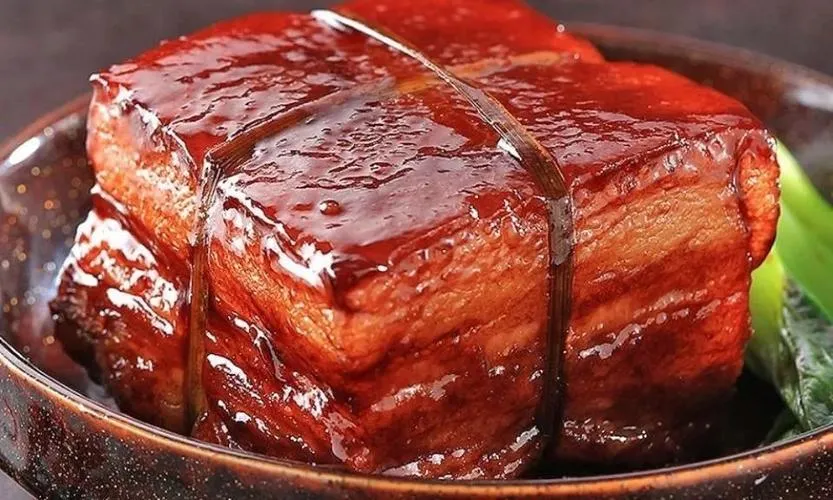
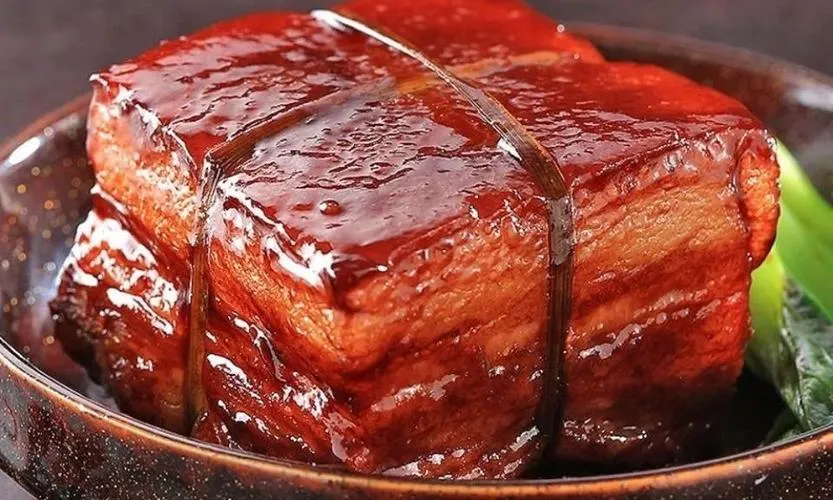 Dongpo Pork — the braised belly glows like polished mahogany, rich but never greasy, dissolving on the tongue.
The Legend
Dongpo Pork has roughly 940 years of history and is one of the most literary dishes in all of Chinese cuisine. It is named after Su Dongpo (Su Shi, 1037–1101), the Song Dynasty poet, calligrapher, painter and all-around polymath who also happened to be a passionate cook.
The story begins around 1080, when Su Shi was exiled to Huangzhou (modern-day Huanggang, Hubei). He cleared land on a hillside east of town (hence his pen name “Dongpo,” meaning “eastern slope”) and wrote his famous “Ode to Pork”: “Fine pork in Huangzhou, cheap as dirt. The rich won’t eat it, the poor don’t know how to cook it. Slow the fire, add less water, and when the time is right, it becomes beautiful on its own.” The poem doubles as a recipe: slow the fire, add less water, and wait.
The dish became iconic in Hangzhou, where Su Shi served as governor from 1089 to 1091. He organized the dredging of West Lake, building the causeway that still bears his name; Su Causeway. Grateful citizens sent him pork and wine as gifts. Su Shi had the meat cut into squares, braised in wine and soy, and returned the finished dish to the people. It spread through Hangzhou and never left.
Three cities now claim cultural ownership of Dongpo Pork: Hangzhou (home of Su Causeway and the restaurant Lou Wai Lou), Meishan in Sichuan (Su Shi’s birthplace), and Huangzhou in Hubei (where he invented it). The dish is a miniature of China’s regional identity wars.
How It’s Made
Skin-on pork belly is cut into large squares, pan-seared golden, then braised for two to three hours in soy sauce, Shaoxing rice wine and rock sugar over the lowest possible flame. The finished cubes glow red as agate. The fat melts without greasiness; the meat dissolves on the tongue.
Where to Try It
- Lou Wai Lou (established 1848, on the shore of West Lake, Hangzhou): the most storied restaurant for this dish.
- Zhiweiguan (Hangzhou): another old-brand favorite where locals eat regularly.
- Price: ¥38–88 ($5.60–13) per portion.
2. Beggar’s Chicken (叫花鸡): Changshu / Hangzhou
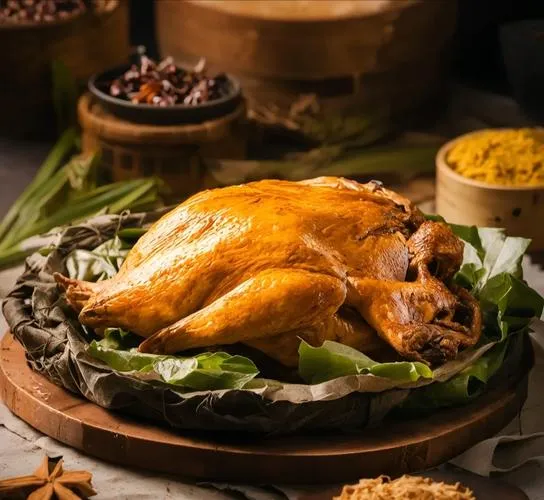 Beggar’s Chicken — the “unboxing” ritual at the table, cracking the baked-clay shell to release waves of lotus fragrance.
The Legend
Beggar’s Chicken is a dish whose preparation is a theatrical performance.
The mainstream legend tells of a beggar who stole a chicken but had no cooking equipment. He wrapped the bird in lotus leaves, packed it in mud and buried it in a fire. When the clay shell cracked and was peeled away, the feathers came off with it, revealing succulent, fragrant meat. The technique spread.
An alternative version involves Zhu Yuanzhang, the founding emperor of the Ming Dynasty. During his rebel years, he was being pursued by enemies and took shelter in a ruined temple, starving, where he encountered a beggar cooking chicken in clay. Zhu found it extraordinary. After ascending the throne, he named the dish “Fortune Beggar’s Chicken” (富贵叫花鸡).
How It’s Made
The process takes four to six hours. A whole chicken is marinated and stuffed with shiitake mushrooms, winter bamboo shoots and Jinhua ham, then wrapped in fresh lotus leaves, encased in clay, and slow-baked in charcoal. At the table, a server cracks the hardened shell with a wooden mallet. The lotus fragrance and meaty aromas rush out simultaneously: the presentation is the best part.
Where to Try It
- Wangsi Jiujia (Changshu, Jiangsu): one of the claimed birthplaces of the dish.
- Shanwaishan (Hangzhou, near West Lake): a classic lakeside version.
- Price: ¥88–188 ($13–28) per chicken.
3. West Lake Vinegar Fish (西湖醋鱼): Hangzhou
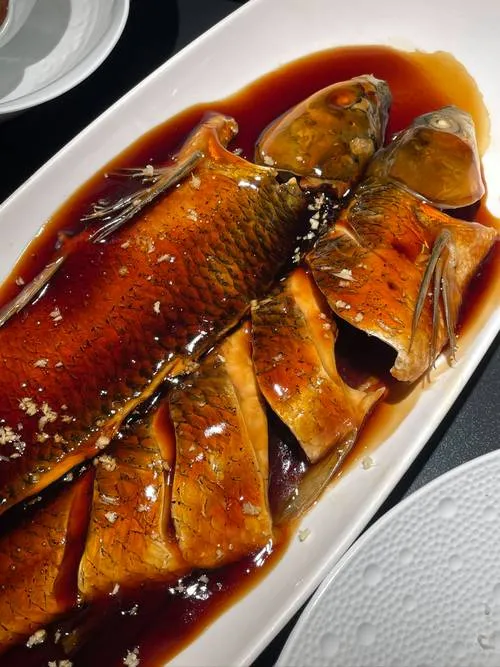 West Lake Vinegar Fish — the sweet hits first, then the sour and the heat, a flavorsome metaphor for “sweetness before hardship.”
The Legend
During the Southern Song Dynasty, two brothers surnamed Song made their living fishing on West Lake. A local villain named Zhao killed the elder brother after becoming obsessed with his wife. The younger brother and his sister-in-law went to the authorities, but were thrown out. Before the younger brother fled town, his sister-in-law cooked him a grass carp in sugar and vinegar. “This fish is both sweet and sour,” she said. “I want you to remember today’s sweetness and bitterness, and one day return for justice.” He did return (having passed the imperial examinations and earned an official post) and punished the villain.
The dish is also known as “Sister-in-Law’s Treasure” (叔嫂传珍), its sweet-and-sour profile carrying a philosophy: taste the sweetness first, then the sourness, because life is sweet before it turns bitter.
How It’s Made
A grass carp (about 1.5 jin / 750 g) is starved in clean water for a day or two to remove any muddy taste. The whole fish is split, poached and dressed with a sauce of sugar, vinegar and soy sauce. The authentic version uses not a single drop of cooking oil: all the flavor comes from the sugar-vinegar glaze.
Where to Try It
- Lou Wai Lou (Gushan Road, West Lake, Hangzhou): the century-old standard.
- Price: ¥68–128 ($10–19) per fish.
4. Scallion Oil Noodles (葱油拌面): Shanghai
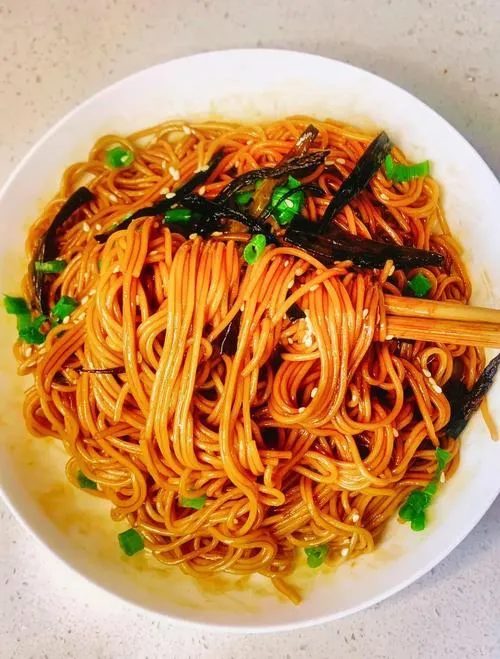 Shanghai Scallion Oil Noodles — minimalist perfection: just noodles, soy sauce and caramelized scallions.
The Story
Scallion oil noodles are Shanghai’s ultimate comfort food, an exercise in culinary minimalism: the entire bowl contains three ingredients: noodles, soy sauce and fried scallions. The dish looks effortless, but achieving “fragrant scallions, rich but not greasy oil, springy noodles” requires serious skill.
For Shanghai locals, scallion oil noodles are an emotional anchor. Coming home late from overtime, stopping at a neighborhood noodle stall for a hot bowl; that memory lives in countless Shanghai childhoods. The simplicity-with-attitude philosophy is pure haipai (Shanghai-style) culture: no flash, but plenty of style.
For more on the city that birthed this dish, see our Shanghai travel guide.
How It’s Made
The technique is all in the scallion oil: small scallions are cut into segments and fried in vegetable oil over medium-low heat for 30 to 40 minutes until they turn deep brown and release a caramelized, almost smoky fragrance. The hot oil is poured over cooked noodles and tossed with light and dark soy sauce.
Where to Try It
- A Da Scallion Pancake (Shanghai): technically a scallion pancake rather than noodles, but a kindred spirit in scallion-oil art.
- Any Shanghainese-style noodle shop across the city.
- Price: ¥12–25 ($1.80–3.70) per bowl.
5. Shengjian Bao (生煎包): Shanghai
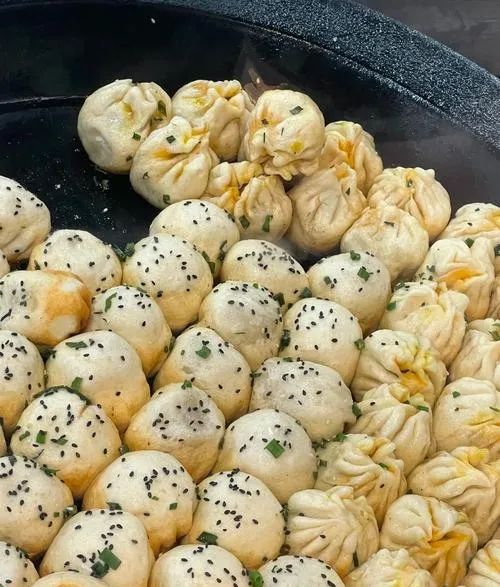 Shengjian Bao — the bottoms are golden and shatteringly crisp. One bite and the soup inside sprays everywhere.
The Story
Shengjian bao (pan-fried soup buns) are one of Shanghai’s defining breakfasts, with a history stretching back over a century. Old Shanghai residents argue about them with near-religious fervor: thick skin or thin? Clear broth or milky? These disputes define rival schools.
The devotion is real. Locals queue in front of legendary shops starting at 4 a.m. This “wake up early and line up for a bite” culture reflects a broader truth about China: people take their food seriously enough to lose sleep over it.
How It’s Made
Pork-filled buns are arranged in a flat pan, pan-fried until the bottoms turn golden and crunchy, then sprinkled with sesame seeds and scallions. The contrast (crisp bottom, pillowy top, scalding soup inside) is the whole point.
Where to Try It
- Xiao Yang Shengjian (multiple Shanghai locations): thin skin, abundant broth.
- Da Hu Chun (Shanghai): thick-skinned, old-school style.
- Price: ¥12–28 ($1.80–4.10) for a portion of 4 to 8 buns.
Southwest: Fire, Smoke and Uncompromising Heat
6. Twice-Cooked Pork (回锅肉): Sichuan
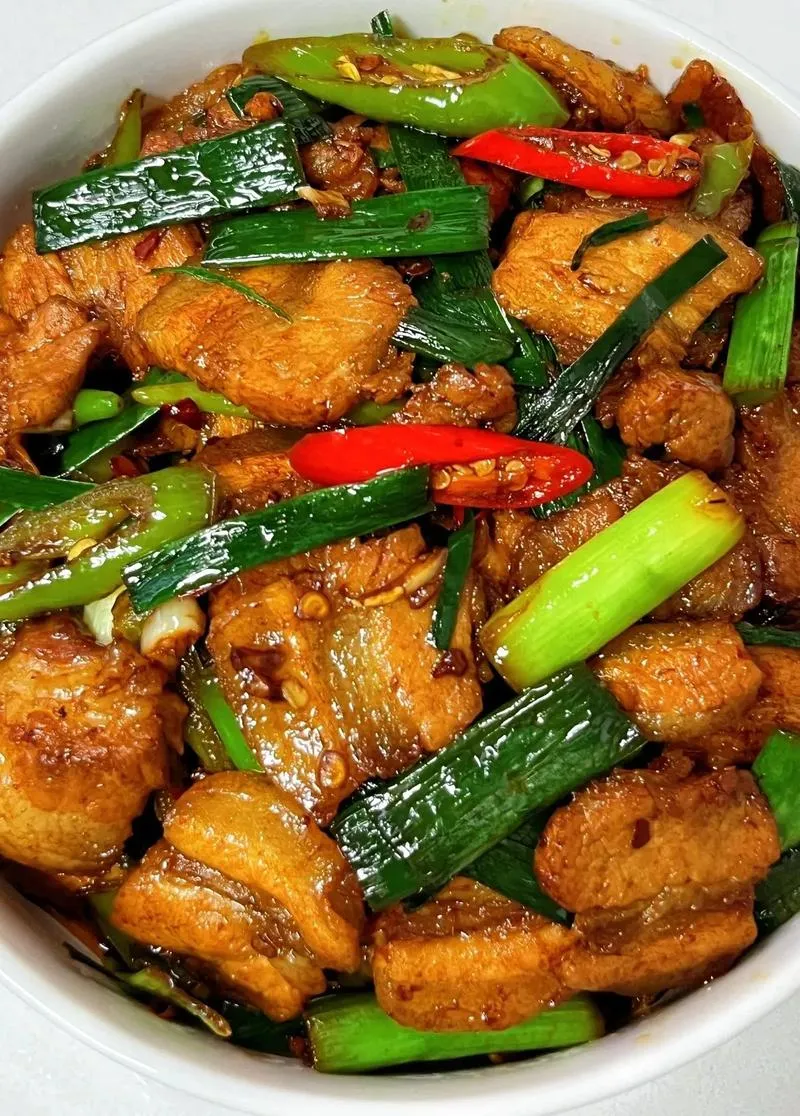 Twice-Cooked Pork — the “soul food” of Sichuan, often called the king of Sichuan home cooking.
The Story
Twice-cooked pork is Sichuan’s forever comfort food, widely regarded as the “king of Sichuan cuisine.” There is a saying: “If you can’t make twice-cooked pork, you can’t cook.” It is not palace cuisine; it is the most ordinary home-cooked dish imaginable, which is exactly why it captures the Sichuan temperament: passionate, direct, no pretense.
Sichuan people bind their nostalgia to this dish. For a migrant worker returning home, the first meal is almost always twice-cooked pork. As one local put it: “When I smell twice-cooked pork, I know I’m home.”
For more on the city that defines this flavor, see our Chengdu travel guide.
How It’s Made
“Hui guo” literally means “return to the wok.” A whole slab of pork belly is boiled to 70 or 80 percent doneness, sliced thin, then returned to the wok and stir-fried over screaming-high heat with Pixian doubanjiang (fermented chili-bean paste) and garlic sprouts or green peppers. The slices curl at the edges, forming a shape called “lamp-wick rolls” (灯盏窝).
Where to Try It
- Available at virtually every Sichuan restaurant. For the best experience, seek out a cangyingguanguan (“fly restaurant”): a small, no-frills family-run place in Chengdu.
- Price: ¥25–50 ($3.70–7.40) per portion.
7. Husband-and-Wife Lung Slices (夫妻肺片): Chengdu
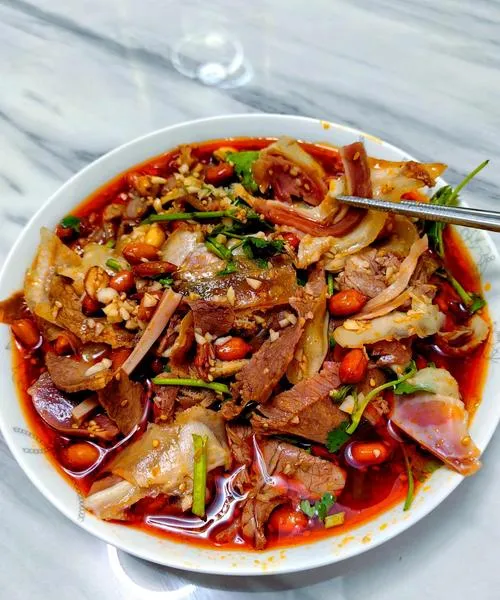 Fuqi Feipian — chili-oil-soaked slices of beef and offal, Chengdu’s most iconic cold appetizer.
The Legend
In 1930s Chengdu, a married couple named Guo Chaohua and Zhang Tianzheng made an extraordinarily good cold tossed dish of thinly sliced beef offal: beef heart, tongue, skin and meat. The slices were cut as thin as paper and seasoned with precision. Customers lined up. One satisfied regular gifted them a gold-painted signboard bearing four characters: “Husband-and-Wife Lung Slices” (夫妻肺片).
Here is the linguistic twist. The dish was originally called “Husband-and-Wife Waste Slices” (夫妻废片): “waste” referring to the scraps and offal that were usually discarded. The character “waste” (废) was deemed unappetizing, so they swapped in its homophone “lung” (肺). The irony: authentic husband-and-wife lung slices do not necessarily contain any lung.
Where to Try It
- Fuqi Feipian General Store (Chengdu): direct lineage from the original.
- Available at most Sichuan restaurants across Chengdu.
- Price: ¥25–48 ($3.70–7.10) per portion.
8. Steamed Fish Head with Chopped Chili (剁椒鱼头): Hunan
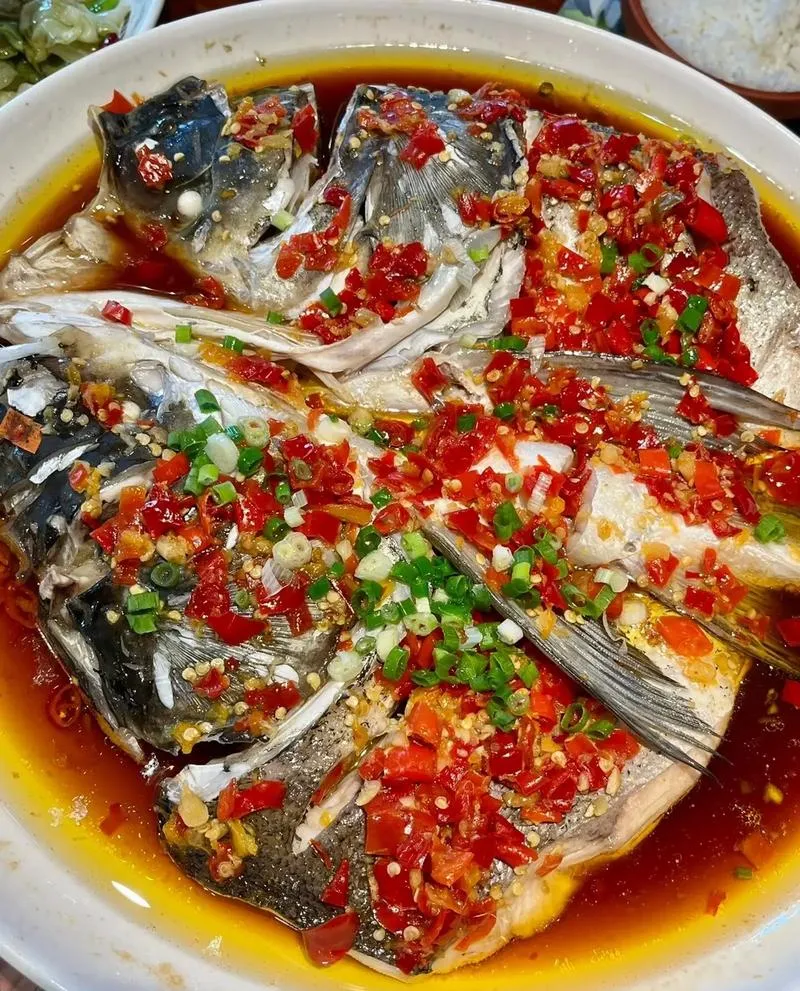 Duojiao Fish Head — smothered in Hunan’s signature fermented chopped chilies, pure uncompromising heat.
The Story
Hunan has a folk saying: “No chili, no dish.” It is the undisputed chili kingdom of China, and steamed fish head with chopped chili is the crown jewel of its fiery cuisine.
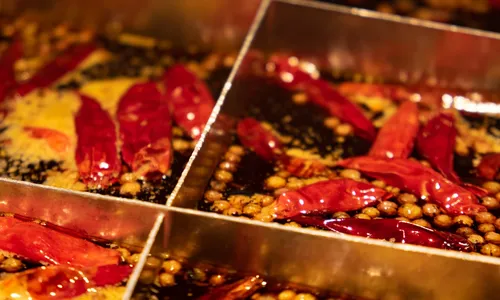
Hunan chili and Sichuan chili are fundamentally different. Sichuan’s is málà: numbing-spicy, the tingling sensation coming from Sichuan peppercorns. Hunan’s is chún là: pure heat, no numbing buffer, a straight shot of fire. Hunan classifies its spiciness in escalating tiers: sour-spicy (suān là), chopped-chili-spicy (duōjiāo là) and black-bean-spicy (dòuchǐ là).
The chopped chili used here is a Hunan specialty: fresh red chilies minced, salted and fermented until they develop a tangy, savory, deeply aromatic character. It is the region’s all-purpose weapon.
How It’s Made
A bighead carp head is split down the middle but left connected, buried under a mountain of Hunan fermented chopped chilies, and steamed over high heat for 12 to 15 minutes. The fish meat is silky and tender, every fiber permeated with the chilies’ sour heat.
Where to Try It
- Any Hunan (Xiang) restaurant in Changsha, Zhuzhou or Xiangtan.
- Price: ¥48–98 ($7.10–14) per portion.
9. Crossing-the-Bridge Noodles (过桥米线): Yunnan
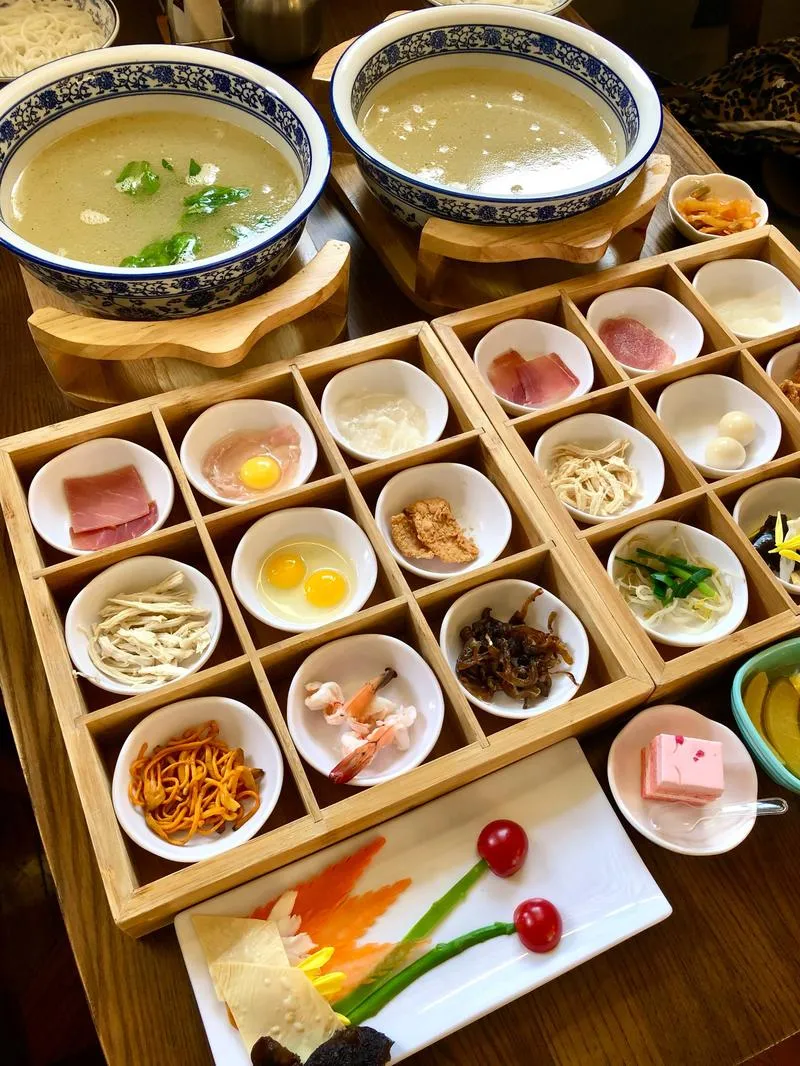 Crossing-the-Bridge Noodles — boiling chicken broth arrives at the table, then you add ingredients one by one, layer by layer.
The Legend
During the Qing Dynasty in Mengzi County, Yunnan, a scholar retreated to a small island in South Lake to study for the imperial examinations. His wife delivered meals daily, but the walk across a long bridge meant the food arrived cold.
One day she brought a pot of chicken soup and noticed that the thick layer of chicken fat floating on top acted as insulation, keeping the broth piping hot. She had an idea: carry the boiling broth in a clay pot across the bridge, with the rice noodles and raw ingredients packed separately. On the island, she added the ingredients one by one: the raw meat sliced so thin it cooked instantly in the broth, the vegetables staying bright and fresh. This “crossing-the-bridge” delivery method evolved into one of China’s most beloved noodle dishes.
The story is also seen as a symbol of the “virtuous wife” ideal in Chinese culture: a woman’s love and ingenuity creating a dish that has lasted centuries.
How It’s Made
The centerpiece is the bowl of boiling chicken broth, its surface sealed under a thick layer of chicken fat that traps heat like a lid. More than a dozen accompaniments are arranged on plates: raw pork slices, chicken slices, quail eggs, tofu skin, chives, bean sprouts, chrysanthemum petals. You add them in order (raw meats first, then vegetables, then the rice noodles last) cooking everything in the superheated broth at your table.
Where to Try It
- Mengzi Crossing-the-Bridge Noodles (Mengzi, Yunnan): the birthplace, most authentic.
- Jianxin Yuan and Qiaoxiang Yuan (Kunming): century-old establishments.
- Price: ¥15–68 ($2.20–10) per bowl, depending on how elaborate the ingredient spread.
South China: Freshness, Precision and the Philosophy of Restraint
10. Buddha Jumps Over the Wall (佛跳墙): Fuzhou
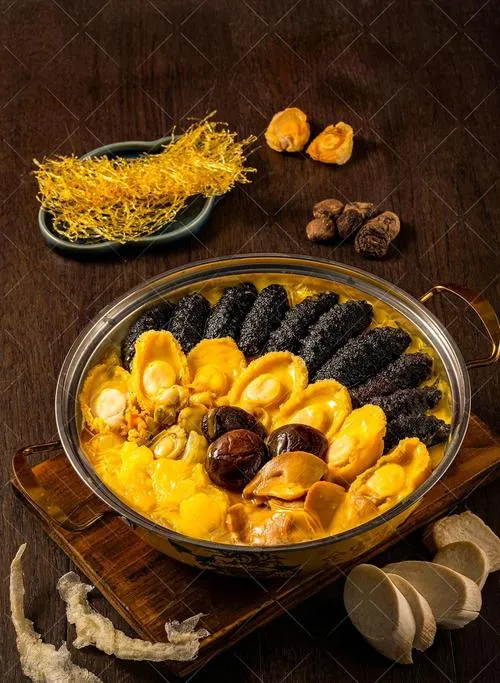 Buddha Jumps Over the Wall — China’s most extravagant soup, over 30 premium ingredients slow-simmered for hours in a sealed wine jug.
The Legend
“The monk smelled the aroma, abandoned meditation and jumped over the wall.” This is one of the most famous naming legends in Chinese cuisine. A Buddhist monk, the story goes, was walking past a house in Fuzhou when an extraordinary fragrance drifted over the wall. Unable to resist, he broke his vegetarian vows, leaped over and devoured the dish. Hence: “Buddha jumps over the wall.”
The true guardian of this dish is Juchunyuan restaurant in Fuzhou, founded in 1865 and the oldest restaurant in Fujian Province. Through eight generations of chefs, its preparation technique was inscribed on China’s National Intangible Cultural Heritage list in 2008 (Project VIII-172).
How It’s Made
This is one of the most complex soups in Chinese cuisine:
- Ingredients: Over 30, including shark fin, abalone, sea cucumber, fish maw, dried scallops, pigeon eggs, shiitake mushrooms and beef tendon.
- Prep: Each ingredient is processed separately: soaked, blanched or fried, then layered in a specific order inside a Shaoxing wine jug.
- Cooking: The jug is sealed and slow-simmered over gentle heat for four to six hours. Inside the sealed vessel, the umami compounds of every ingredient meld and intensify.
- Result: When the jug is opened, the aroma hits first. The broth is golden, concentrated and staggeringly deep, each spoonful revealing layer upon layer of flavor.
Where to Try It
- Juchunyuan (Fuzhou, established 1865): the original, the standard.
- Price: ¥188–888 ($28–131) per portion, depending on ingredient tier.
11. Cantonese Roast Goose (烧鹅) and Siu Mei Culture (烧味): Guangdong
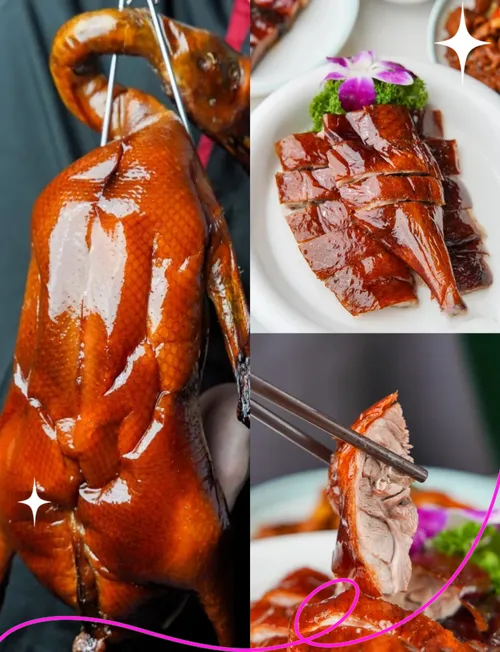 Cantonese Roast Goose — skin crackling like glass, meat dripping with juice, the pinnacle of Guangdong’s roast-meat tradition.
The Story
Cantonese siu mei (烧腊, Cantonese-style barbecue meats) represents the branch of Chinese cooking most obsessed with fire control and knife work. The genre includes roast goose, char siu (barbecued pork), crispy pork belly and white-cut chicken, typically hung in glass-fronted shop windows: the signature streetscape of Guangdong.
Char siu is the most iconic of the bunch: pork strips marinated in honey, soy sauce and red yeast rice, roasted at high heat until the exterior is caramelized and the interior stays juicy. The finished product gleams an inviting red. Cantonese people have a saying: “Having a piece of char siu is better than having you”: a teasing expression of affection that tells you everything about char siu’s status in the Cantonese heart.
How It’s Made
Roast goose demands a specific breed: the dark-feathered Zong goose. It is seasoned, inflated to separate skin from meat, coated with maltose water and air-dried, then roasted over fruitwood charcoal. The skin comes out paper-crisp, the meat juicy. Served with sour plum sauce.
Where to Try It
- Yung Kee (Hong Kong): world-famous “Flying Roast Goose.”
- Sham Tseng Roast Goose (Guangzhou, Shenzhen): Guangdong classic.
- Any siu mei stall on any Guangdong street corner.
- Price: ¥40–120 ($5.90–18) per portion; char siu rice ¥25–45 ($3.70–6.60).
12. Claypot Rice (煲仔饭): Guangdong
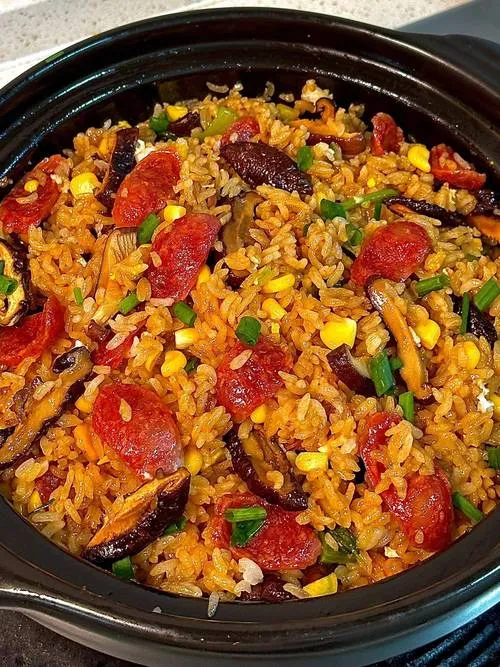 Claypot Rice — slow-cooked in a sand pot with cured meats and a layer of golden, shatteringly crispy rice at the bottom.
The Story
Claypot rice is one of Guangdong’s most beloved winter street foods. “Bo zai” in Cantonese means “small sand pot.” The soul of the dish is the rice crust (fan jiao) at the bottom: golden, crispy, each grain distinct, carrying a subtle smoky char.
The Cantonese obsession with rice crust reveals a fundamental difference between Chinese and Western culinary philosophy. In Western cooking, stuck-on scorched rice at the bottom of a pot is a failure. In Chinese cooking, the perfectly calibrated char (not burnt, just toasted) is considered a sophisticated textural layer, one of the highest achievements of heat control.
Where to Try It
- Claypot rice shops in Guangzhou’s Xiguan old town.
- Huaqiangbei’s old-brand stalls in Shenzhen.
- Price: ¥25–55 ($3.70–8.10) per pot.
For a deeper dive into Cantonese cuisine (dim sum, yum cha and the siu mei window roasts) see our Guangzhou food guide.
13. Hainan Chicken Rice (海南鸡饭): Hainan / Southeast Asia
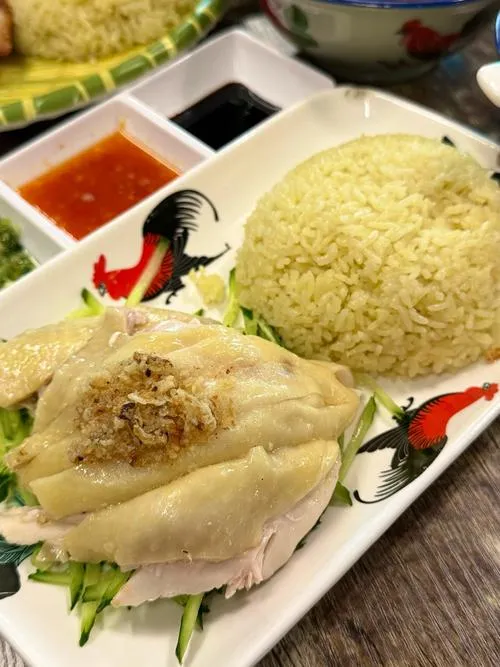 Hainan Chicken Rice — deceptively simple: poached chicken, chicken-fat rice and three sauces. Every element must be perfect.
The Story
Hainan chicken rice originated in Wenchang, Hainan, and traveled south with Hainanese immigrants to Singapore, Malaysia and Thailand. In Singapore it was refined and elevated to the status of “national dish,” a source of diplomatic pride.
The philosophy is “the greatest truths are the simplest.” The dish looks plain (white-cut chicken with rice) but every element is exacting. The chicken must be silky-tender with a crisp skin layer. The rice is cooked in chicken fat and broth, each grain separate and aromatic. Three dipping sauces are served alongside: chili sauce, ginger paste and dark soy.
Where to Try It
- Wenchang Chicken (Wenchang, Hainan): the original, most authentic version.
- Available at most restaurants across Hainan.
- Price: ¥30–68 ($4.40–10) per portion.
Northwest: Silk Road Flavors, Bold and Layered
14. Xinjiang Lamb Skewers and Naan (新疆烤串与馕)
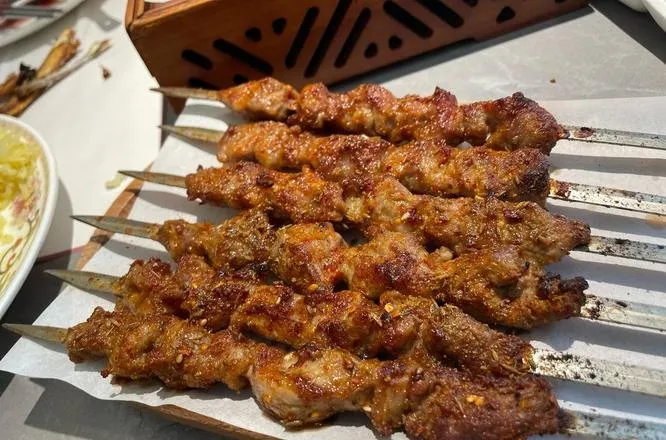 Xinjiang Lamb Skewers — lamb over charcoal with cumin and chili powder, the taste of the Silk Road.
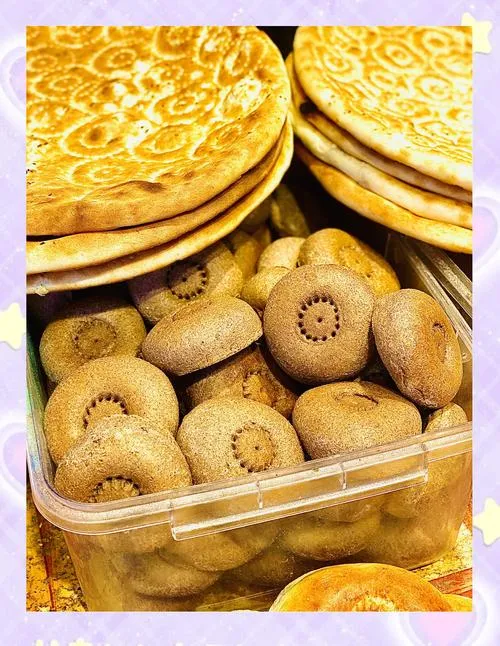 Xinjiang Naan — the Uyghur staple bread, over two thousand years old.
The Story
Xinjiang’s cuisine is the most “exotic” branch of Chinese food, weaving together the cooking traditions of Uyghur, Kazakh and Hui Muslim peoples. Xinjiang lamb skewers (called kawap in Uyghur) thread lamb leg or rib meat onto willow branches or iron skewers, grill them over charcoal and finish with cumin and chili powder.
Naan is the soul food of Xinjiang, with over 2,000 years of history. A Uyghur proverb declares: “Naan is the pillar of life.” Before a long journey, family members prepare naan as provisions. In Uyghur culture, naan symbolizes life and blessing, if a crumb falls to the ground, you pick it up, kiss it to your forehead and replace it, a gesture of respect for food.
Xinjiang’s food embodies the cultural fusion of the ancient Silk Road: the skewers share DNA with Central Asian kebabs, naan has Persian flatbread ancestry, and the hand-grabbed rice (polu) descends from Central Asian pilaf traditions. One bite and you taste China, Central Asia and Persia simultaneously.
For more on the ancient capital at the eastern end of the Silk Road, see our Xi’an travel guide.
Where to Try It
- Urumqi Grand Bazaar: a convergence of every Xinjiang specialty.
- Kashgar Old Town Night Market: the most authentic lamb skewers in China.
- Halal-certified Lanzhou beef noodle shops across China often serve them too.
- Price: ¥3–8 ($0.44–1.20) per skewer; naan ¥3–8 ($0.44–1.20) each.
15. Harbin Red Sausage and Russian Heritage (哈尔滨红肠): Harbin
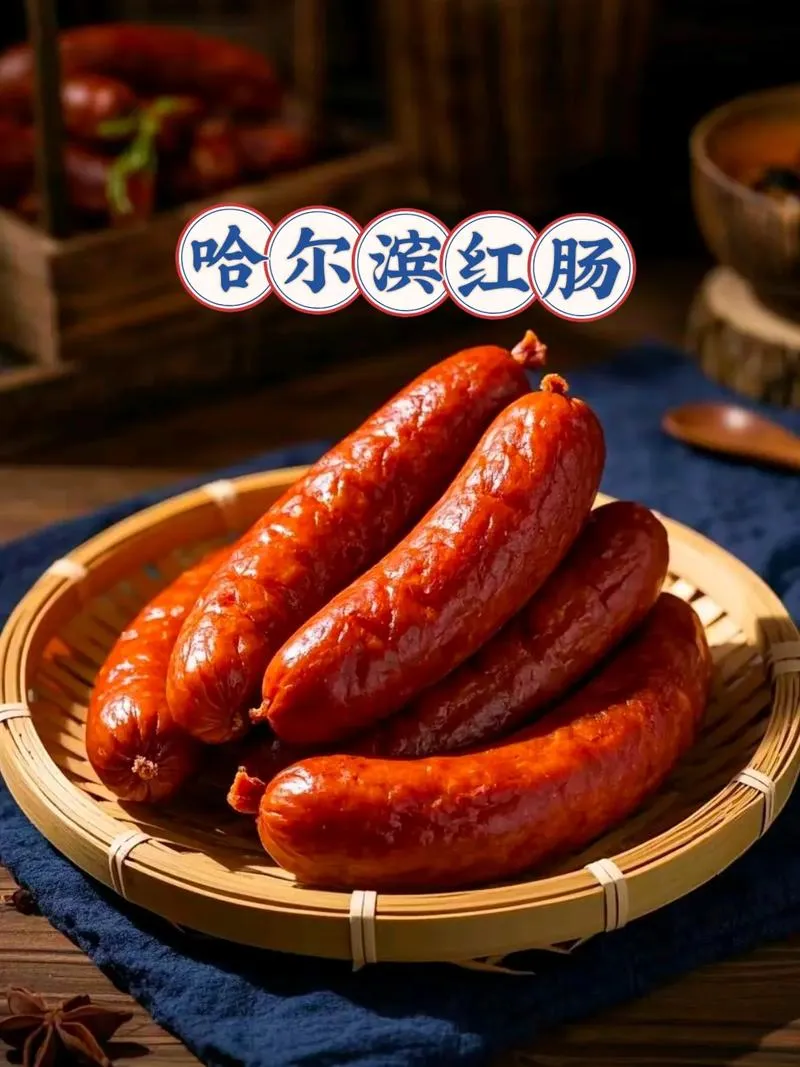 Harbin Red Sausage — a Russian immigrant’s smoky sausage, paired with Dalieba sourdough bread, a Harbin specialty.
The Story
Harbin is one of China’s least “Chinese-looking” cities. Russian-style buildings line the streets. Locals eat red sausage, drink kvass and tear into dalieba (Russian-style sourdough bread). This cultural imprint dates to the early 20th century, when large numbers of Russian immigrants arrived via the Chinese Eastern Railway and brought their food traditions with them.
Harbin red sausage (kobika in Russian transliteration) is made from a blend of pork and beef with garlic, smoked over fruitwood until the casing turns a deep purplish-red. It is traditionally paired with Harbin’s signature dalieba (the Chinese transliteration of the Russian word for bread) and Harbin butter: northeastern China is one of the few regions with a butter-eating tradition, entirely due to Russian influence.
Where to Try It
- Qiulin Company (Central Street, Harbin): century-old shop, the gold standard.
- Central Street (Harbin): Russian architecture and food side by side.
- Price: ¥25–45 ($3.70–6.60) per 500 g of sausage; dalieba ¥15–25 ($2.20–3.70) each.
Central China: Noodles, Ducks and the Memory of Cities
16. Hot Dry Noodles (热干面): Wuhan
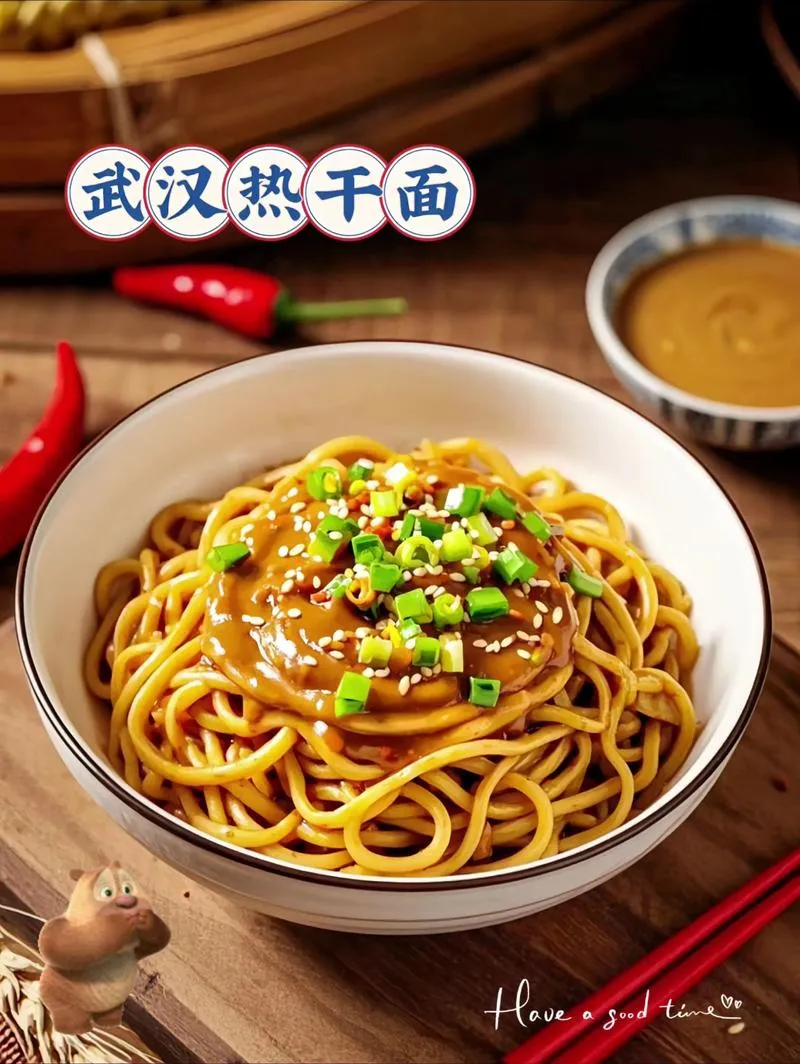 Hot Dry Noodles — Wuhan’s “guo zao” (breakfast) champion, sesame-paste-coated alkaline noodles.
The Story
Hot dry noodles are Wuhan’s soul food. In Wuhan, breakfast is not called “eating breakfast”; it is called guo zao (过早), and hot dry noodles are the first choice. Every morning, the streets of Wuhan’s three boroughs are saturated with the toasty aroma of sesame paste.
The dish’s origin has an accidental charm. In the 1930s, a street vendor named Cai Mingwei sold cold noodles and soup noodles. One day, he accidentally spilled sesame oil over a batch of already-cooked noodles, making them oily and dry. Rather than waste them, he tossed the noodles to coat and let them cool. The next day, he briefly scalded them in boiling water and mixed in sesame paste. This “accidental invention” was a hit.
Hot dry noodles carry meaning far beyond a snack. During the 2020 COVID-19 lockdown, “Hot Dry Noodles, Stay Strong!” became a nationwide rallying cry for Wuhan, the dish standing in for the city in messages of support from across China.
How It’s Made
Alkaline noodles are cooked, tossed with oil and spread to cool (preventing sticking). At service, they are flash-scalded in boiling water and dressed with a generous pour of sesame paste, soy sauce, scallions, pickled radish cubes and sour yardlong beans. You mix aggressively and eat immediately: the sesame paste should coat every strand.
Where to Try It
- Cailinji (multiple Wuhan locations): the brand that claims the original recipe.
- Any breakfast stall in Wuhan with a queue. The longer the queue, the better the noodles.
- Price: ¥5–12 ($0.74–1.80) per bowl.
17. Nanjing Salted Duck (南京盐水鸭)
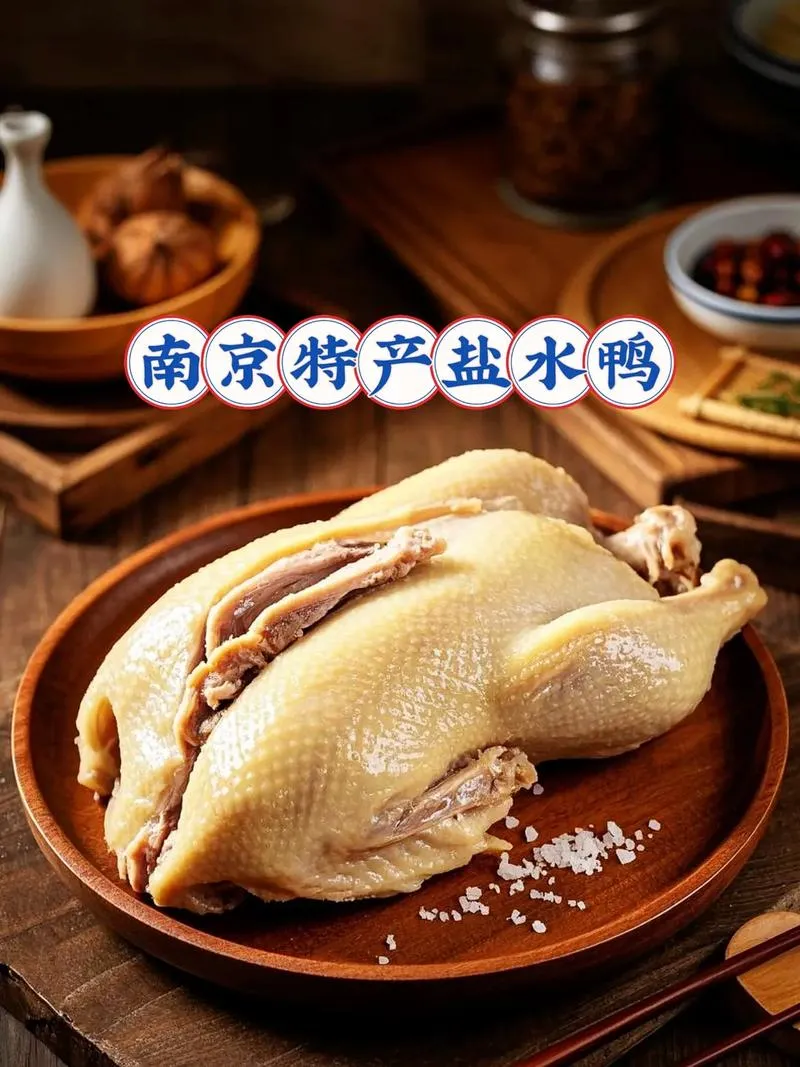 Nanjing Salted Duck — pale skin, tender meat, rich but not heavy. The edible postcard of Nanjing.
The Story
Nanjing is called the “Duck Capital.” A common quip: “No duck leaves Nanjing alive.” The city’s duck-eating history spans over 2,000 years. From duck head, neck, wings and feet to duck-blood vermicelli soup, a single duck is broken down into dozens of distinct dishes.
Salted duck is the most classic of them all. Because it reaches peak flavor during osmanthus-blossom season (around the Mid-Autumn Festival), it is also called Osmanthus Duck (桂花鸭). The cooking philosophy is pure Jiangnan: light, clean, restrained: no aggressive seasoning, just the natural sweetness of duck meat at its best.
Where to Try It
- Han Fuxing (Nanjing): century-old brand.
- Jinling Hotel (Nanjing): the upscale version.
- Any卤味 (luwei, braised-meat) shop across Nanjing.
- Price: ¥35–68 ($5.20–10) per half duck.
18. Guilin Rice Noodles (桂林米粉): Guangxi
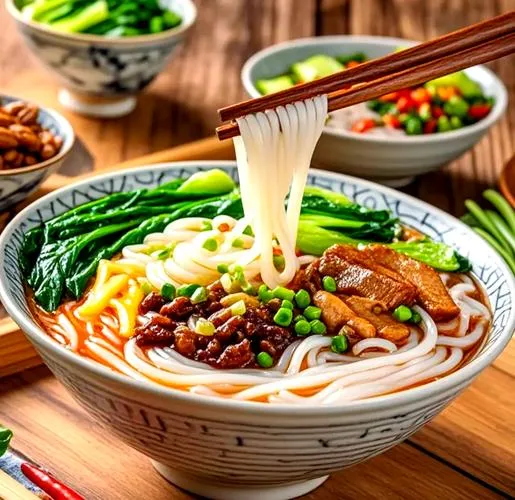 Guilin Rice Noodles — the everyday dish that Guilin locals are prouder of than their own famous landscape.
The Story
There is a Guilin saying: “A Guilin person can go a day without rice, but not a day without rice noodles.” Noodle shops outnumber convenience stores. Many Guilin mornings begin with a bowl.
The heart of the dish is the master stock (lushui): each shop’s recipe is a closely guarded secret, typically involving a dozen-plus aromatics and spices simmered for hours. The noodles themselves are made from pure rice flour, smooth and bouncy.
Legend traces Guilin rice noodles to the Qin Dynasty. When Qin Shi Huang unified southern China, northern soldiers struggled with the local rice diet. Someone invented the technique of grinding rice into flour and extruding it into noodle shapes, and rice noodles were born.
For more on this region, see our Guilin travel guide.
Where to Try It
- Any noodle shop in Guilin with a queue.
- Chongshan Rice Noodles and Minggui Rice Noodles (Guilin chains).
- Price: ¥5–15 ($0.74–2.20) per bowl.
North and the Grasslands: From Breakfast to Feast
19. Taiwanese Beef Noodle Soup (台湾牛肉面)
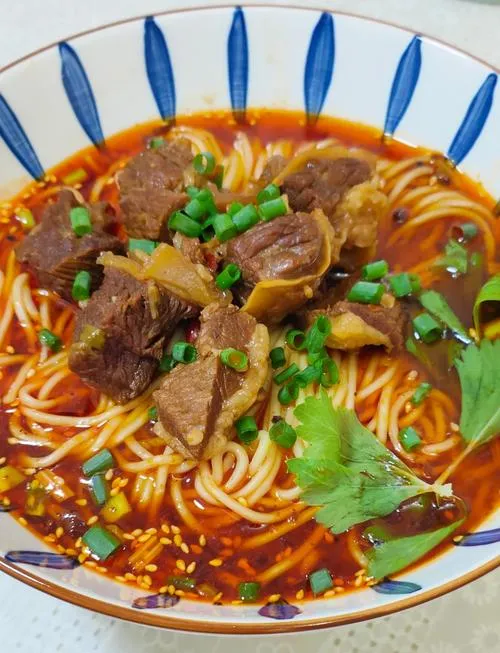 Taiwanese Beef Noodle Soup — a deeply savory broth with chunks of falling-apart beef, Taiwan’s unofficial national dish.
The Story
Taiwanese beef noodle soup carries a bittersweet cross-strait history. In 1949, massive numbers of soldiers and civilians from mainland China arrived in Taiwan, many from beef-noodle-loving provinces like Sichuan and Shandong. These veterans brought their hometown noodle memories and adapted them with local Taiwanese ingredients (adding tomato, fermented bean paste and other local elements) creating the distinctive “Taiwanese red-braised beef noodle soup.”
Today it is Taiwan’s unofficial national dish. Taipei hosts an annual International Beef Noodle Festival to crown the city’s best. The bowl carries the homesickness of those veterans and the fusion of mainland tastes with Taiwanese ingredients.
Where to Try It
- Yongkang Street Beef Noodle Alley, Taipei.
- Lin Dong Fang Beef Noodle Soup (Taipei): Michelin-recommended.
- Price: NT$120–250 (approximately ¥25–55 / $3.70–8.10).
20. Inner Mongolian Roast Whole Lamb (烤全羊)
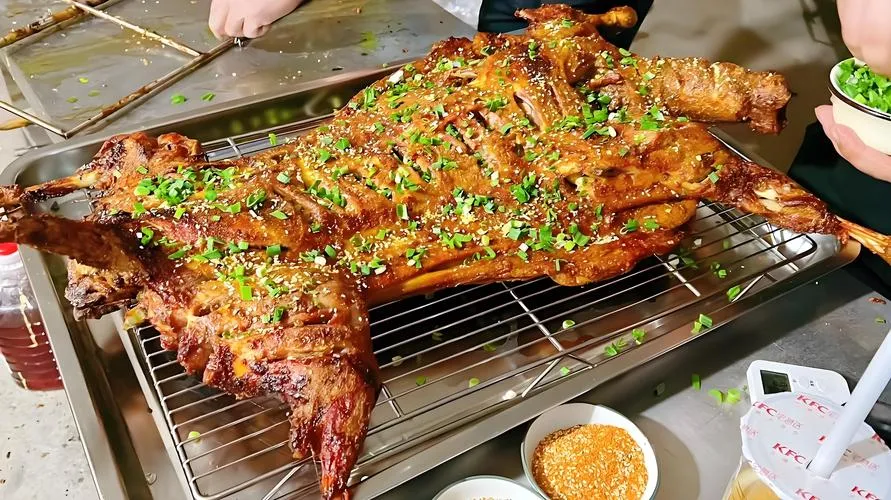 Inner Mongolian Roast Whole Lamb — the most honored guest ritual on the grassland, an entire lamb slow-roasted over charcoal.
The Story
Roast whole lamb is the highest honor a Mongolian host can offer. On the Inner Mongolian steppe, it is not just a dish; it is a ceremony. The finished lamb is decorated with red silk and carried to the table by Mongolian singers performing traditional drinking songs. The guest of honor cuts the first piece with a Mongolian knife, then the lamb is divided according to rank.
Mongolian food philosophy diverges sharply from Han Chinese tradition. The nomadic principle is: “Food comes from heaven and earth; no part may be wasted.” A single sheep feeds a gathering head to hoof: roast whole lamb, hand-grabbed mutton, offal soup, blood sausage. Every piece is used, reflecting the herdsman’s reverence for nature.
Where to Try It
- Yurt restaurants on the Hulunbuir Grassland, Inner Mongolia.
- Gerile Ama Milk Tea House (Hohhot): Mongolian food in the city.
- Price: ¥800–2,000 ($118–295) per lamb, meant to serve 6 to 10 people.
21. Tibetan Butter Tea and Tsampa (酥油茶与糌粑)
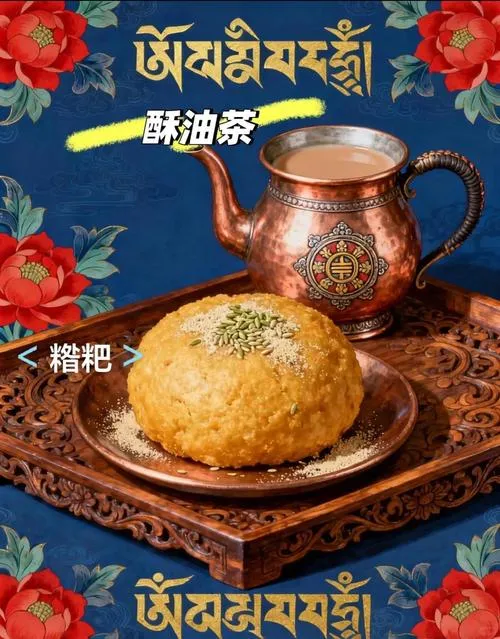 Butter Tea — the daily drink of Tibetans, a surprising combination of yak butter and strong tea.
The Story
Tibetan food culture is entirely distinct from the rest of China, shaped by the high-altitude plateau environment and Tibetan Buddhism.
Butter tea (po cha) is made by boiling brick tea until it is intensely strong, then churning it with yak butter and salt in a specialized wooden tea churn. For Tibetans, butter tea is not a beverage; it is a survival tool. The high calorie and fat content combats cold and altitude sickness.
Tsampa is the Tibetan staple: roasted highland barley ground into flour, eaten by mixing it with butter tea and shaping it into balls with your fingers. In Tibetan Buddhism, scattering tsampa into the sky is a blessing ritual.
The cultural contrast is striking. In the rest of China, tea is delicate and refined. In Tibet, tea is thick, salty and loaded with butterfat. It is a clear case of geography deciding the diet.
Where to Try It
- Sweet tea houses along Barkhor Street, Lhasa.
- Guangming Gangqiong Sweet Tea House (Lhasa): the most atmospheric, full of local character.
- Price: ¥5–10 ($0.74–1.50) per pot of butter tea.
Beyond the Dishes: The Philosophy of Chinese Food
Chinese Tea Culture and Its Dialogue with Food
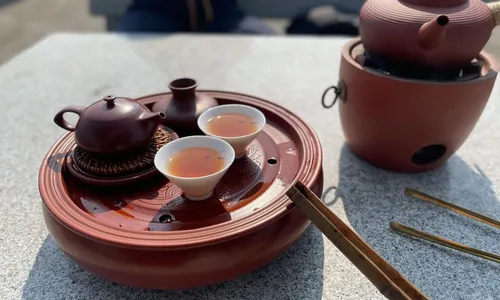
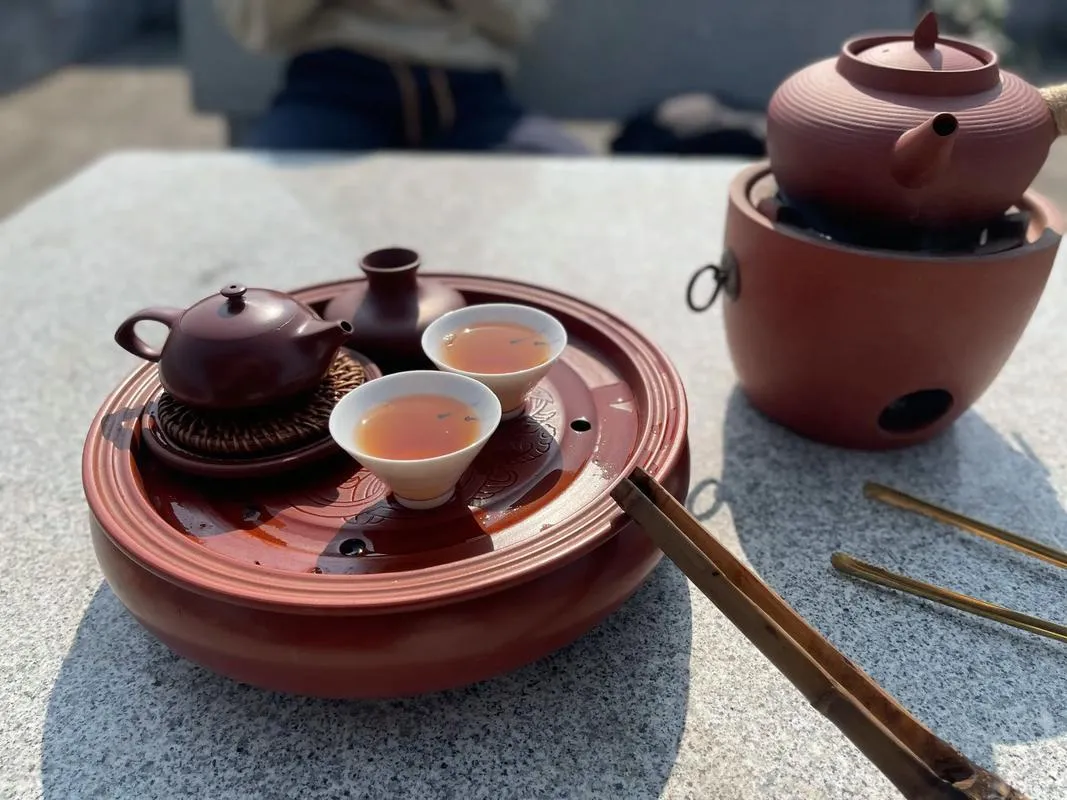 Gongfu Tea — Chinese tea ceremony focuses on steep time, water temperature and pour technique for every single infusion.
Tea culture in China is far more than a “mealtime beverage”:
-
Cantonese Yum Cha (饮茶): Weekend family yum cha is the most important social ritual in Guangdong. A pot of pu’er or tieguanyin accompanied by dozens of delicate dim sum items: shrimp dumplings, siu mai, char siu buns, rice noodle rolls: eaten from morning into afternoon. This is not “eating.” It is a way of life.
-
Gongfu Tea: Originating in Chaozhou (Chaoshan), this brewing method uses tiny pots and cups, focusing on water temperature, steep time and how the flavor evolves across infusions. A good tea can be steeped a dozen or more times, each cup tasting different: embodying the Chinese aesthetic of “finding variation within repetition.”
-
Tea as Ingredient: Longjing shrimp (Hangzhou), tea eggs (nationwide), pu’er-braised pork ribs (Yunnan): tea is not just a drink. It is a seasoning.
Chinese Night Market Culture
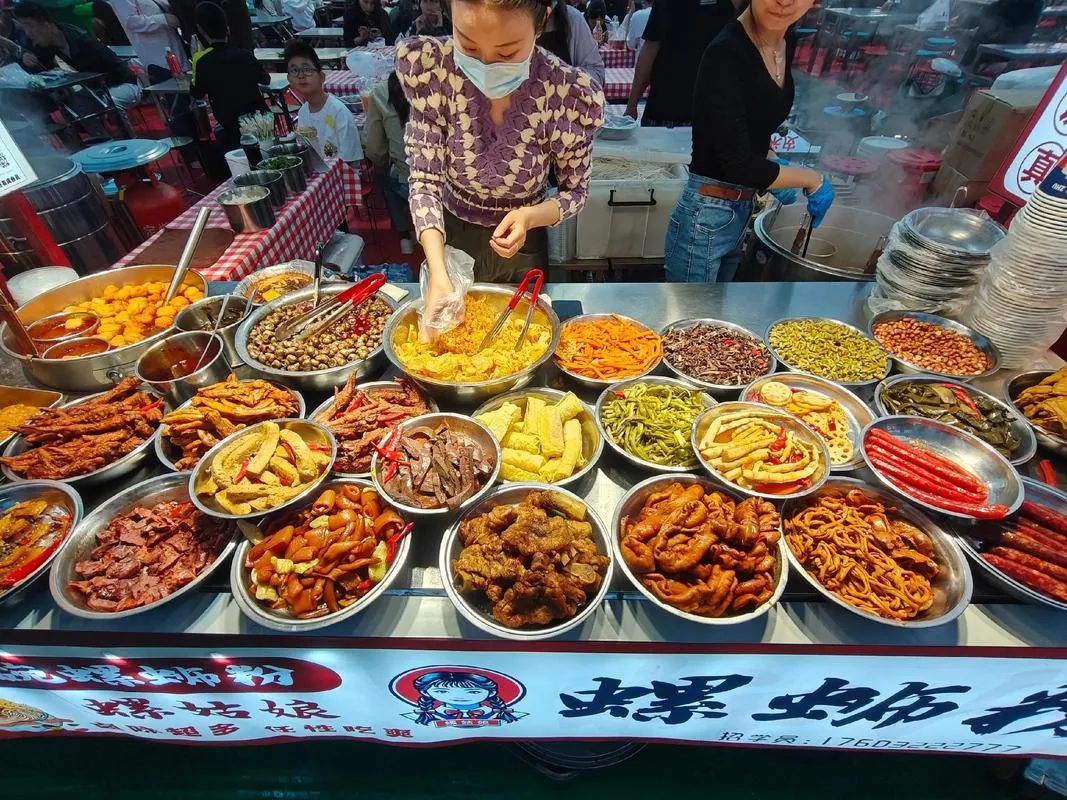 China’s Night Markets — the liveliest, most human scenes in any Chinese city, alive with smoke, noise and flavor.
Chinese night markets are the single most important window into the country’s street-level culture:
-
Chengdu Jinli / Kuanzhai Alley: The soul of Sichuan night markets is chuanchuan: skewered ingredients boiled in a numbing-spicy broth. You pay by the skewer, a few cents each, and can sample dozens of different items. See our Chengdu travel guide for more.
-
Changsha Taiping Street: Changsha’s night market culture is defined by fire: stinky tofu, tangyou baba (sugar-oil glutinous rice cakes), spicy crayfish. Night snacks are a social event here; the streets still heave at 2 or 3 a.m.
-
Xi’an Muslim Quarter: Beneath the ancient city walls, Muslim vendors hawk lamb paomo (pita soaked in lamb broth), lamb skewers and pomegranate juice. The atmosphere feels unchanged from the market streets of Tang Dynasty Chang’an. See our Xi’an travel guide.
-
Taiwan Night Markets: Shilin, Raohe, Fengjia: Taiwan’s night market culture is the most mature and internationally recognized. From oyster omelets to sausage-wrapped-in-rice, from bubble tea to mango shaved ice, Taiwan’s night markets constitute an entire “people’s food system” independent of restaurants.
A Breakfast Map of China
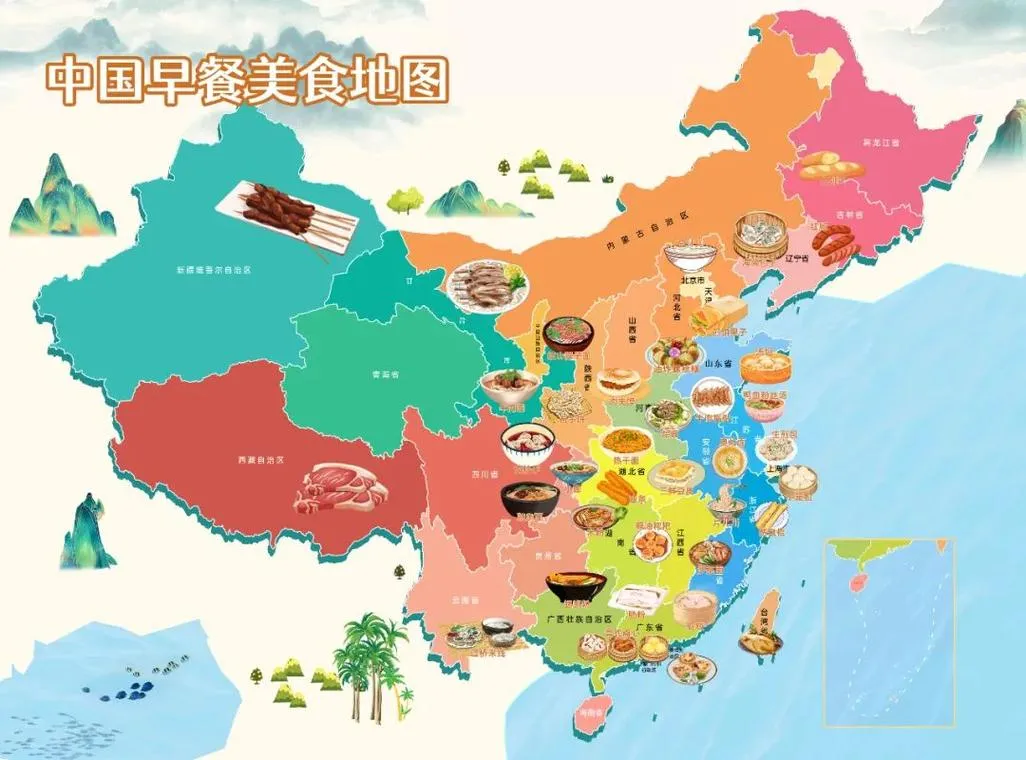 China’s Breakfast Map — from northern soy milk and youtiao to southern dim sum, breakfast is where regional differences show most clearly.
Chinese breakfast varies so dramatically by region that it constitutes its own culinary journey:
| Region | Signature Breakfast | Character |
|---|---|---|
| Beijing | Soy milk, youtiao, chaogan, douzhir | Old-Beijing intensity. Douzhir (fermented mung bean juice) is a polarizing drink: people either love it or gag. See our Beijing travel guide. |
| Shanghai | Scallion oil noodles, shengjian bao, cifan tuan | Refined and efficient, built for a fast-paced city. |
| Wuhan | Hot dry noodles, douban, mianwo | The guo zao culture: breakfast variety is enormous. |
| Guangzhou | Yum cha dim sum, rice noodle rolls, congee | Slow weekend ritual. One pot of tea can stretch from morning to noon. |
| Chengdu | Chaoshou (wontons), feichang fen, guokui | The málà heat starts at breakfast. |
| Xi’an | Hu la tang (pepper soup), meatball hu la tang, cured beef roujiamo | Intense pepper and chili from Hui Muslim tradition. |
| Tianjin | Jianbing guozi, guobacai, laodoufu | The quintessential northern street breakfast. |
| Fujian | Shacha noodles, peanut soup, misua | Sweet and savory coexisting, Minnan (southern Fujian) style. |
Chinese Banquet Etiquette: What Every Foreigner Should Know
In China, a meal is not just sustenance. It is a social ritual and a form of cultural expression:
-
Seating has rules. The seat facing the entrance is the zhuwei (host seat), reserved for the most honored guest or eldest person. The opposite seat is the deputy host, taken by the person paying or organizing. Do not sit in the host seat uninvited.
-
Dishes are shared. Chinese meals are communal: all dishes go in the center and everyone shares. If you are new to this, order three to four dishes for two people and split them. It is a far better way to experience variety than ordering individually.
-
Use serving chopsticks. Using gongkuai (communal chopsticks) to transfer food from shared plates to your own is basic etiquette. Many restaurants now use a “black-and-white” system: black chopsticks for personal use, white for serving.
-
“Gan bei” means finish your glass. When someone says gan bei (literally “dry cup”), you are expected to empty your glass. Taking only a sip might prompt the joke: “Are you raising fish in there?” (你在养鱼吗?)
-
No tipping. China has no tipping culture. If you leave change on the table, a server will chase you down the street to return it.
-
Chopstick taboos. Never stick your chopsticks vertically into a bowl of rice: it resembles incense sticks at a funeral offering. When not eating, rest them on a chopstick rest or across the top of your bowl.
Seasonal Eating: The Chinese Calendar on a Plate
Chinese culinary tradition insists on bu shi bu shi (不时不食): “don’t eat what’s out of season.” Every ingredient has its peak moment:
| Season | Dishes | Why Now |
|---|---|---|
| Spring (Mar–May) | Spring bamboo shoots, qingtuan (green glutinous rice balls), Longjing shrimp | Bamboo shoots are at their most tender; qingtuan is the Qingming Festival treat. |
| Summer (Jun–Aug) | Crayfish, liangpi (cold skin noodles), bingfen (ice jelly) | The soul of summer night markets: ice-cold beer with fiery crayfish. |
| Autumn (Sep–Nov) | Hairy crab, mooncakes, osmanthus cake | Yangcheng Lake hairy crab is autumn’s most anticipated delicacy. Mooncakes belong to the Mid-Autumn Festival, China’s harvest-moon holiday. |
| Winter (Dec–Feb) | Hot pot, dumplings, cured meats | The Chinese way to survive cold: crowd around a boiling pot together. |
A note on hairy crab: Yangcheng Lake hairy crab (near Shanghai) is China’s most seasonally obsessed food. By the lunar calendar, female crabs peak in month nine (their roe is fullest) and males peak in month ten (their meat is sweetest): “nine females, ten males.” Traditionally, crab is paired with Shaoxing rice wine, because Chinese medicine considers wine’s “warming nature” to balance the crab’s “cooling nature.”
Sources: Fujian Provincial Government, CNN Travel, Serious Eats, SCMP, The Culture Trip, ThinkChina.sg, Ohio State University (“A Bite of China” film analysis), Shanghai International Services Portal, Michelin Guide, BBC Travel, Google Arts & Culture, Smithsonian Magazine, WildChina, Untour Food Tours.
Sources & Verification
This guide was last verified on 2026-08-06. Key Chinese-language sources:
- Fujian Provincial Government / 福建省人民政府 (fujian.gov.cn): provides the National Intangible Cultural Heritage designation for Juchunyuan’s Buddha Jumps Over the Wall technique (Project VIII-172, inscribed 2008).
- Shanghai International Services Portal / 上海国际服务门户: provides cultural context for Shanghai dishes such as scallion oil noodles and shengjian bao.
- National Intangible Cultural Heritage records / 国家级非物质文化遗产名录: documents the eight-generation technique behind Buddha Jumps Over the Wall at Juchunyuan, Fuzhou.
- For restaurant establishment dates, prices and locations (Lou Wai Lou, Zhiweiguan, Cailinji, Juchunyuan and others), this guide relies on standard authoritative Chinese-language sources including 大众点评 (Dianping), 携程 (Ctrip) and the restaurants’ own official histories, since the original text does not cite a single master registry.