Beijing Travel Guide - Imperial Capital for First-Time Visitors (3-4 Days)
Beijing has been China’s political center for more than eight centuries. The Forbidden City still anchors the middle of town, while glass towers and the 798 art galleries push out toward the ring roads. North of the city, the Great Wall follows the mountain ridges toward Inner Mongolia.
The itinerary below fits three to four days. It pairs the Forbidden City and the Great Wall with a copper-pot hot pot dinner and a walk through the hutong alleys.
How we verified this: SinoWander reads Chinese-language sources that English guides cannot, including official scenic-area booking platforms, the Palace Museum WeChat mini-program, Dianping, and the Michelin Guide Beijing. We cross-check them before writing. We have not personally visited every location. Each guide is date-stamped when last verified: 2026-08-06. See our methodology.
When to Visit
Autumn (September-November) is the best season. The skies clear up, humidity drops, and the air quality reaches its annual peak. Golden ginkgo trees line the avenues, while red maple leaves blanket the hills around the Great Wall. Temperatures hover between 10-25 degrees C (50-77 degrees F).
Spring (March-May) is the runner-up. Flowers bloom across the city’s parks, and temperatures gradually climb from 10 to 25 degrees C (50-77 degrees F). Spring can also bring dust storms and willow catkins, so pack a mask if you are sensitive.
Summer (June-August) is hot (25-35+ degrees C / 77-95+ degrees F), humid, and crowded with domestic tourists on school holidays. Winter (December-February) is cold (-10 to 5 degrees C / 14-41 degrees F) but offers thin crowds and snow on the palace roofs.
Local Tip: The temperature in Beijing can swing 15 degrees C between day and night. Dress in layers (“onion style”) so you can add or remove clothing throughout the day.
3-4 Day Itinerary
Day 1: The Imperial Axis
| Time | Activity | Duration |
|---|---|---|
| Early Morning | Tiananmen Square (flag-raising ceremony) | 1 hour |
| Morning-Afternoon | The Forbidden City (Palace Museum) | 4-5 hours |
| Late Afternoon | Jingshan Park (panoramic view of the Forbidden City) | 1 hour |
| Evening | Wangfujing Street or Qianmen Street (dinner and shopping) | 2-3 hours |
Start your day at Tiananmen Square (free admission; reservation required via the official platform up to 7 days in advance), one of the largest public plazas in the world. The flag-raising ceremony at dawn draws a large crowd, though it requires an early start.
From the square, walk north to the Forbidden City (Gu Gong). Enter through the Meridian Gate (Wu Men) on the south side and exit through the Gate of Divine Prowess (Shen Wu Men) on the north. The central axis takes you through the Three Great Halls: Hall of Supreme Harmony (Taihe Dian), Hall of Central Harmony (Zhonghe Dian), and Hall of Preserving Harmony (Baohe Dian). Past them, the route branches into the Eastern and Western Palaces and the Imperial Garden.
Practical details for the Forbidden City:
- Ticket: Peak season (April 1-October 31) 60 yuan (
$9); off-season 40 yuan ($6). The Treasure Gallery and Clock Gallery each cost an additional 10 yuan (~$1.50). - Reservation: Mandatory. Book 1-7 days in advance through the “Palace Museum” WeChat mini-program. Tickets are released at 20:00 nightly. Afternoon slots are easier to snag than morning ones.
- Time needed: 4-5 hours minimum. You will easily walk 20,000+ steps.
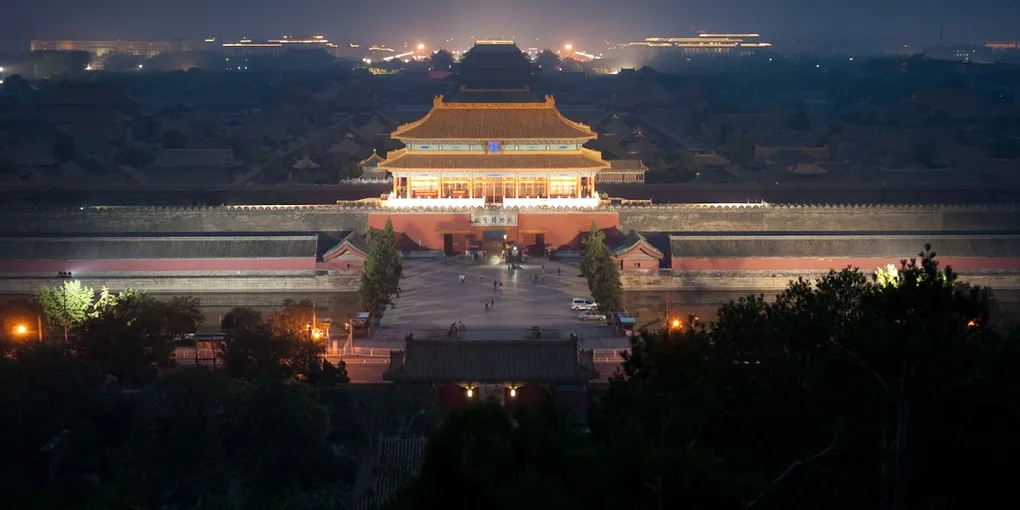
Immediately north of the Forbidden City exit, Jingshan Park (2 yuan / ~$0.30) offers the best photograph of the entire palace complex from its hilltop Wanchun Pavilion. The climb takes about 10 minutes.
End your day on Wangfujing Street or the more historic Qianmen Street for dinner and people-watching. Both are within a short taxi or subway ride.
Day 2: The Great Wall + Olympic Park
| Time | Activity | Duration |
|---|---|---|
| Full Day | Great Wall (Mutianyu or Badaling) | 6-8 hours including round trip |
| Evening | Olympic Park (Bird’s Nest and Water Cube night view) | 1-2 hours |
Most international visitors go to the Mutianyu section. It sees far fewer tourists than Badaling, the wall runs along wooded, steep ridgelines, and you can ride a cable car up and toboggan down. The round-trip journey from downtown Beijing takes about 1.5-2 hours each way by private transfer or tourist shuttle. A combo ticket (including one-way cable car or toboggan) runs about 140 yuan (~$20).
Badaling Great Wall is the most famous section and the easiest to reach by public transit (S2 train from Beijing North or Qinghe Station, about 1.5 hours, roughly 6 yuan / ~$1; or bus 877 from Deshengmen, about 2 hours, 12 yuan / $2). However, it is significantly more crowded, especially on weekends and holidays. Peak-season tickets are 40 yuan ($6).
🎫 Guided tour: Book a Great Wall day tour from Beijing with an English-speaking guide (Mutianyu or Badaling, with transport from the city).
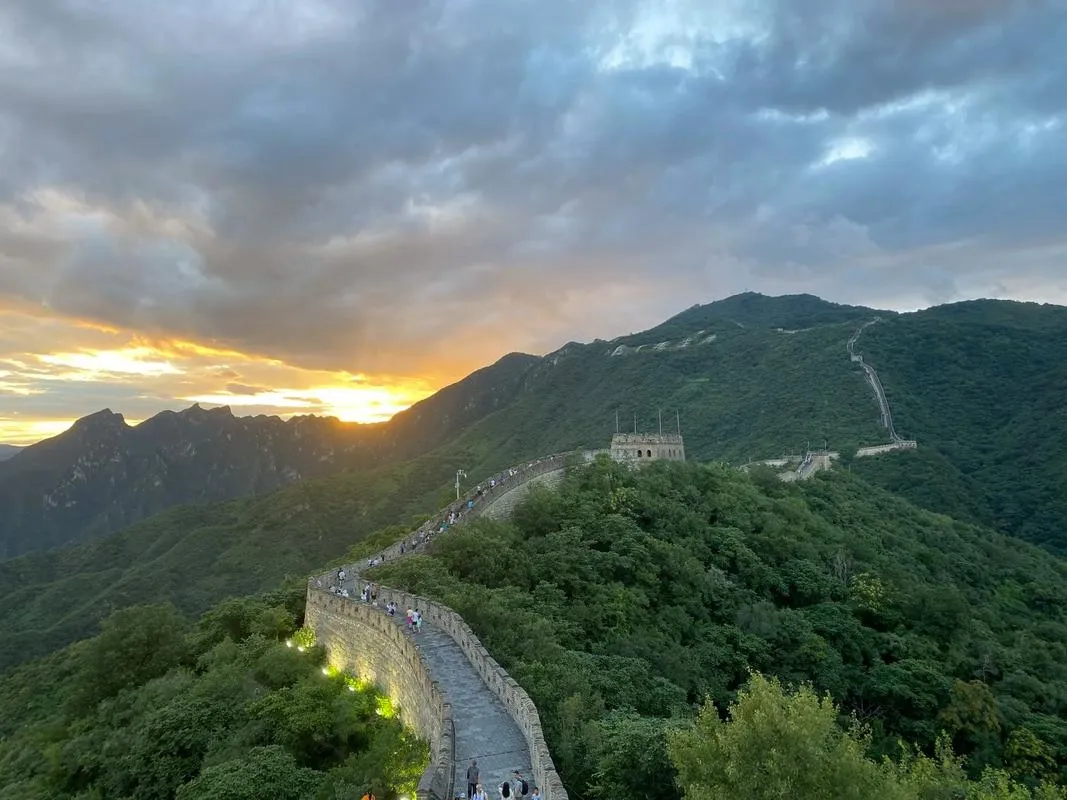 The Mutianyu section of the Great Wall. Fewer crowds than Badaling, with a cable car up and a toboggan down.
Local Tip: Book a small-group day tour or private transfer to Mutianyu through Klook or Trip.com. It eliminates navigation stress and the drivers know the best arrival times to beat crowds.
After returning to the city, take Metro Line 8 to Olympic Park to see the Bird’s Nest and Water Cube illuminated at night, a free way to end the day.
Day 3: Imperial Gardens + Hutong Culture
| Time | Activity | Duration |
|---|---|---|
| Morning | Summer Palace (Yiheyuan) | 3-4 hours |
| Midday | Old Summer Palace ruins (optional) | 1-2 hours |
| Afternoon | Temple of Heaven (Tiantan) | 2-3 hours |
| Evening | Nanluoguxiang or Shichahai (hutong culture and nightlife) | 2-3 hours |
The Summer Palace is China’s largest and best-preserved imperial garden, a UNESCO World Heritage Site. The highlight is the Long Corridor (Chang Lang), a 728-meter (2,389-foot) covered walkway painted with over 14,000 colorful scenes from Chinese mythology and literature. Do not miss the Marble Boat on Kunming Lake and the Seventeen-Arch Bridge. Peak-season combo tickets are 60 yuan ($9); off-season 50 yuan ($7).
The Temple of Heaven is where Ming and Qing emperors performed annual prayers for good harvests. The iconic Hall of Prayer for Good Harvests (Qinian Dian) is one of Beijing’s most recognizable structures. The Echo Wall (Huiyin Bi), a circular wall with remarkable acoustic properties, is a favorite with visitors. Combo tickets are 34 yuan (~$5) in peak season.
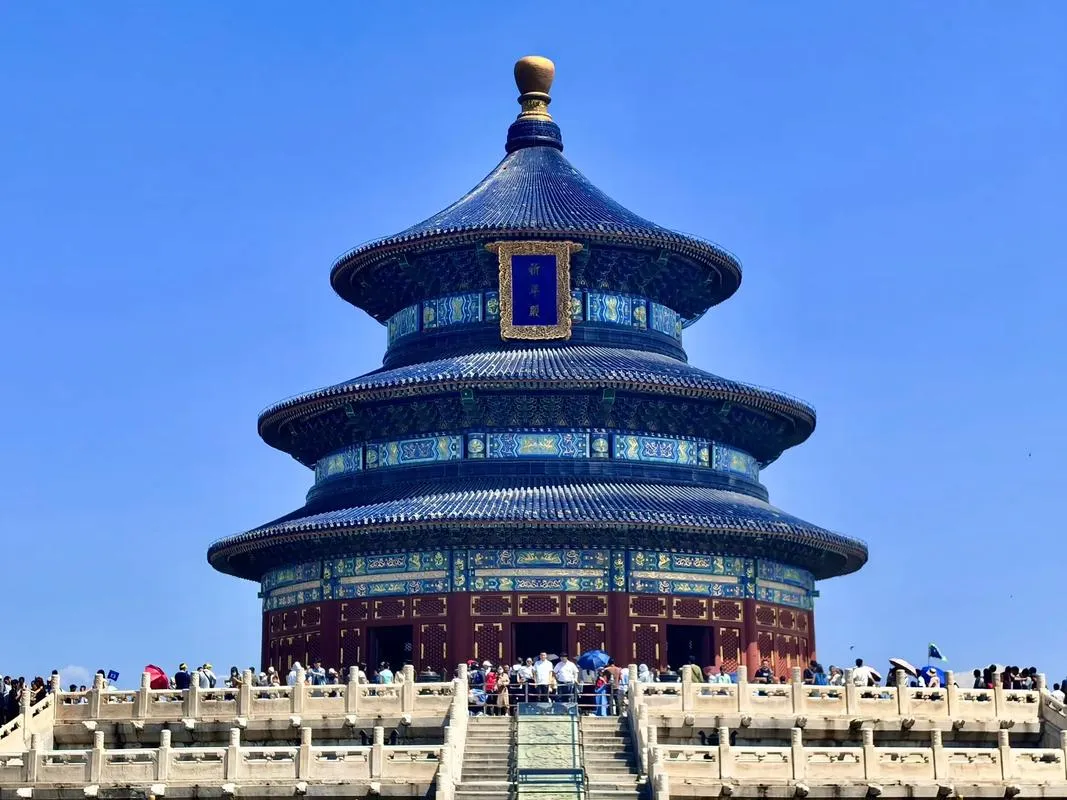 The Hall of Prayer for Good Harvests (Qinian Dian) at the Temple of Heaven.
Local Tip: Visit the Temple of Heaven early in the morning to watch local residents practicing tai chi, singing opera, and playing chess in the surrounding park. It is a close look at daily Beijing life.
Spend your evening exploring Nanluoguxiang, a renovated hutong (traditional alleyway) lined with boutiques and cafes, or Shichahai, where lakeside bars and restaurants come alive after dark.
Day 4 (Optional): Deeper Culture
| Time | Activity | Duration |
|---|---|---|
| Morning | 798 Art District or National Museum of China | 2-3 hours |
| Midday | Guijie (Ghost Street): crayfish and Sichuan food | 1-2 hours |
| Afternoon | Prince Gong’s Mansion + Shichahai hutong rickshaw tour | 2-3 hours |
| Evening | Sanlitun (international nightlife district) | Flexible |
The 798 Art District is a sprawling complex of contemporary galleries and studios housed in a former East German-designed factory. For history buffs, the National Museum of China (free, reservation required) houses 1.4 million artifacts spanning 5,000 years of Chinese civilization.
Where to Eat
Peking Duck (Must-Try #1)
| Restaurant | Style | Price per Person | Notes |
|---|---|---|---|
| Sijiminfu | Open-oven roast duck | 150-200 yuan ($22-30) | Extremely popular; the branch near the Forbidden City offers views of the Corner Tower. Reserve ahead. |
| Quanjude | Open-oven; 150-year-old brand | 200-300 yuan ($30-44) | The classic, historic choice |
| Da Dong | Innovative haute cuisine duck | 300-500 yuan ($44-74) | For a special occasion |
| Bianyifang | Closed-oven roast duck | 150-200 yuan ($22-30) | Different technique from Quanjude; equally historic |
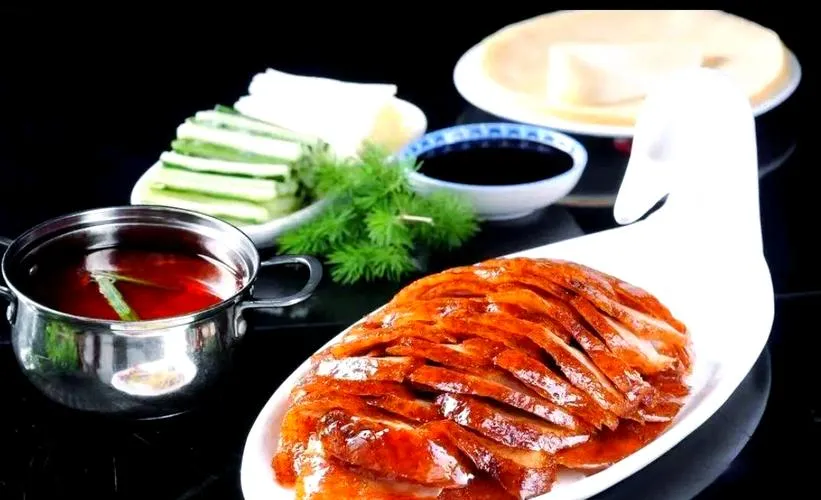 Peking duck: crispy skin sliced tableside, wrapped in a thin pancake with scallion, cucumber and sweet bean sauce.
Zhajiang Noodles (Beijing’s Signature Noodle Dish)
- Fangzhuanchang 69 Zhajiang Noodles (Nanluoguxiang location): Ranked #1 on Dianping for six consecutive years and listed in the 2025 Michelin Guide Beijing. This is the gold standard.
- Old Beijing Zhajiang Noodles King (Chaoyangmen location): Hearty and affordable at about 36 yuan (~$5) per person.
Copper Pot Hot Pot (Mutton)
Beijing hot pot is distinct from the spicy Sichuan style. It uses a copper chimney pot with a clear broth, where you cook paper-thin slices of mutton and dip them in sesame paste.
- Manfulou: Listed on the 2025 Dianping “Must-Eat” list
- Donglaishun: A century-old institution
- Jubaoyuan: Beloved by locals
Old Beijing Snacks
Venture beyond the restaurants and try douzhi (fermented mung bean drink, an acquired taste) with jiaoquan (fried dough rings) at Yin San Douzhi. For traditional sweets, Huguosi Snacks offers aiwowo (steamed rice cakes), ludagun (glutinous rice rolls), and wandouhuang (pea flour cake).
Local Tip: Food streets worth exploring include Guijie (Ghost Street) for late-night crayfish and Sichuan food, and Qianmen Street for historic restaurants.
Avoid: Do not eat at restaurants touting English menus right outside major tourist sites. Walk a few blocks away for better food at half the price.
Where to Stay
Best area for first-time visitors: Dongcheng District (Wangfujing / Qianmen area). You will be within walking distance of the Forbidden City, Tiananmen Square, and major dining streets, with excellent subway access.
| Budget | Price Range (per night) | Examples |
|---|---|---|
| Budget | 200-400 yuan ($30-59) | Tianlun Songhe Hotel, international youth hostels, Jinjiang Inn / Hanting chains |
| Mid-range | 400-800 yuan ($59-118) | Beijing Kelly’s Hotel (traditional courtyard), Country Inn by Radisson (near Universal Studios) |
| Luxury | 800+ yuan ($118+) | Waldorf Astoria (Wangfujing), Grand Hyatt (Dongcheng), Nu Hotel (Wangfujing, a century-old landmark) |
If you plan to visit Universal Studios Beijing, consider staying in the Tongzhou District near the park. For business travelers, the Chaoyang CBD area (Guomao) is most convenient.
Getting Around
Metro (Highly Recommended)
Beijing’s metro system has 29 lines and 523 stations. It is clean, cheap, and covers virtually every major attraction. Fares start at 3 yuan (~$0.44).
Crucial update for international visitors: You can now tap your Visa or Mastercard directly at the metro turnstile, with no app download or ticket purchase required. This makes the Beijing metro one of the most foreigner-friendly transit systems in China. Alternatively, download the Yitongxing (Easy Pass) International Edition app, which accepts foreign phone numbers, or use Alipay / WeChat Pay transit QR codes after linking an international card.
Key metro stations for tourists:
| Attraction | Metro Line | Station |
|---|---|---|
| Forbidden City / Tiananmen | Line 1 | Tian’anmen East or West |
| Summer Palace | Line 4 | Beigongmen or Xiyuan |
| Temple of Heaven | Line 5 | Tiantan Dongmen |
| Nanluoguxiang | Line 6 | Nanluoguxiang |
| Shichahai | Line 8 | Shichahai |
| Bird’s Nest / Water Cube | Line 8 | Olympic Park |
| 798 Art District | Line 14 | Jiangtai |
Taxis and Ride-Hailing
- Base fare: 13 yuan (
$2) for the first 3 km (1.9 miles), then 2.3 yuan ($0.34) per additional km - Didi (China’s Uber equivalent) is the easiest ride-hailing app; accessible via Alipay’s mini-program
- Drivers rarely speak English, so have your destination written in Chinese or show the address on your phone
Airport Transportation
| Airport | Mode | Cost | Time |
|---|---|---|---|
| Beijing Capital (PEK) | Airport Express train | 25 yuan ($3.70) | ~30 min to Dongzhimen |
| Beijing Daxing (PKX) | Daxing Airport Express | 35 yuan ($5.20) | ~20 min to Caoqiao |
Getting to the Great Wall
| Destination | Mode | Cost | Time |
|---|---|---|---|
| Badaling | S2 train (Beijing North / Qinghe) | ~6 yuan ($1) | 1.5 hours |
| Badaling | Bus 877 (Deshengmen) | ~12 yuan ($2) | 2 hours |
| Mutianyu | Tourist shuttle / private transfer / day tour | 100-300 yuan ($15-44) | 1.5-2 hours |
Practical Information
Ticket Reservations (Critical)
Beijing’s major attractions now require online real-name reservations in advance. There are no walk-up ticket sales.
| Attraction | Booking Platform | How Far Ahead | Notes |
|---|---|---|---|
| Forbidden City | WeChat mini-program “Palace Museum” | 1-7 days | Tickets released at 20:00 nightly |
| Tiananmen Square | Official reservation platform | Up to 7 days | Free but mandatory reservation |
| National Museum of China | Official website / mini-program | 1-7 days | Free; closed Mondays |
| Badaling Great Wall | Official WeChat account | 1-7 days | — |
| Mutianyu Great Wall | Klook / Hopetrip / official channels | 3+ days recommended | — |
| Prince Gong’s Mansion | WeChat mini-program | 1-7 days | — |
Avoid: Do not buy tickets from scalpers outside attractions. All official tickets are sold at fixed prices through the platforms listed above.
Budget Estimates (3-4 days, excluding flights)
| Category | Budget | Mid-Range | Luxury |
|---|---|---|---|
| Accommodation (3 nights) | 600-1,200 yuan ($88-177) | 1,200-2,400 yuan ($177-354) | 2,400+ yuan ($354+) |
| Admission tickets | 200-300 yuan ($30-44) | 300-500 yuan ($44-74) | 300-500 yuan ($44-74) |
| Food | 300-500 yuan ($44-74) | 500-1,000 yuan ($74-148) | 1,000+ yuan ($148+) |
| Local transport | 50-100 yuan ($7-15) | 100-200 yuan ($15-30) | 200-500 yuan ($30-74) |
| Total | ~1,150-2,100 yuan ($170-310) | ~2,100-4,100 yuan ($310-605) | ~3,900+ yuan ($575+) |
Essential Preparations
- Visa: Apply for a Chinese visa in advance. Citizens of 57 countries are eligible for the 240-hour visa-free transit policy if transiting through Beijing. Many nationalities also qualify for the 30-day unilateral visa waiver.
- Payment: Set up Alipay and WeChat Pay and link your international credit card before arrival. Mobile payment is nearly universal.
- Communication: Buy a Chinese SIM card at the airport or activate international roaming. Google services (including Google Maps) are blocked. Download Amap (Gaode) or Baidu Maps instead.
- Translation: Download Google Translate with offline Chinese language pack, or Baidu Translate.
- Identification: Carry your passport at all times. It is required for attraction entry.
- Insurance: Your home country health insurance gives zero coverage in China. Carry a travel insurance plan that covers medical costs and evacuation.
Emergency Numbers
| Service | Number |
|---|---|
| Police | 110 |
| Ambulance | 120 |
| Fire | 119 |
| Consular protection (foreigners) | 12308 |
Cultural Notes
- Shoes: You will walk 20,000+ steps per day, so bring comfortable athletic shoes.
- Chopsticks: If you are not adept, carry a fork or practice beforehand. Most restaurants do not automatically provide cutlery.
- Bargaining: Expected at markets and street stalls, but not in restaurants, malls, or taxis.
- Photography: Most historical sites allow photography, but flash photography is prohibited inside the Forbidden City’s exhibition halls.
- Toilets: Public restrooms are widely available but almost universally squat-style. Carry your own tissues and hand sanitizer.
Avoid: Do not visit during the May Day holiday (first week of May) or National Day Golden Week (first week of October) unless you enjoy extreme crowds. Summer Palace and Forbidden City tickets sell out within minutes during these periods.
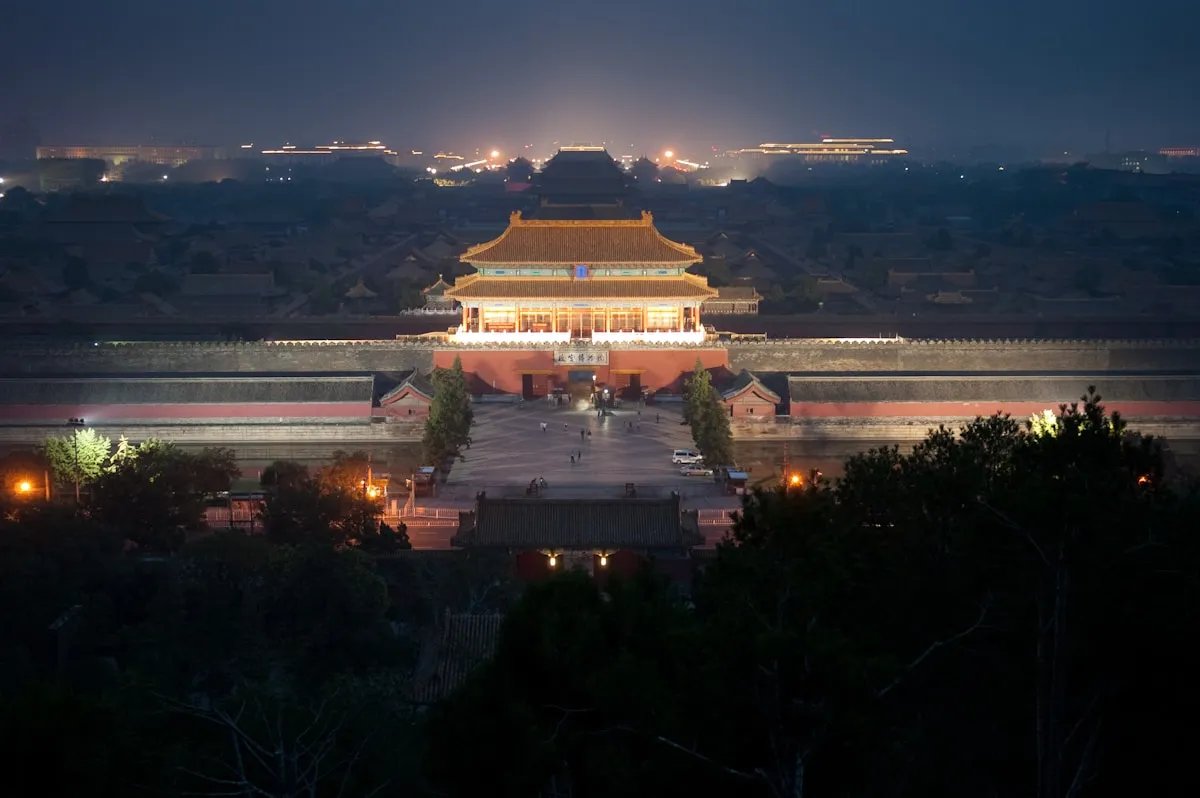 The Forbidden City seen from the hilltop Wanchun Pavilion in Jingshan Park at golden hour.
Sources & Verification
This guide was last verified on 2026-08-06. Key Chinese-language sources:
- Palace Museum WeChat mini-program (故宫博物院, dpm.org.cn): The official channel this guide cites for Forbidden City ticket reservations, releasing tickets at 20:00 nightly, 1 to 7 days ahead.
- Dianping (大众点评, dianping.com): China’s dominant review platform, named here for the Fangzhuanchang 69 noodle ranking and the Manfulou copper-pot hot pot “Must-Eat” list.
- Michelin Guide Beijing (2025 edition): Cited as the source listing Fangzhuanchang 69 Zhajiang Noodles as a Beijing standout.
- Official reservation platforms for major attractions: The booking channels this guide points to for Tiananmen Square, the National Museum of China, Badaling Great Wall, and Prince Gong’s Mansion, all of which now require advance real-name reservation.
See our full verification methodology.
Related Articles
- Great Wall Hiking Guide (2026) — Which section is right for you
- 2 Weeks in China Itinerary — Beijing as the starting point of a classic route
- How to Buy China Train Tickets (2026) — Booking trains out of Beijing