
China Independent Travel Guide 2026: Do You Need a Guide?
The question shows up in every China travel forum: do I need a guide, or can I go on my own? The answer for most of the country in 2026 is no, you do not need a guide. Visa-free entry, foreign-card mobile payments, English-language navigation apps, and a low violent crime rate have made independent travel in China more feasible than it has ever been for foreign visitors.
What you need breaks down into six things: a visa basis, a payment setup, navigation apps, a language workaround, a read on safety, and a clear sense of where a guide is still required.
Quick answer: For most of China in 2026, no guide and no travel agency are required. Citizens of 55 countries enter on 240-hour visa-free transit, or 50 countries on 30-day visa-free entry, with no invitation letter and no tour booking. Set up Alipay and WeChat Pay, download Amap and DiDi, and you can move through China on your own. The main exception is Tibet, which requires a Tibet Travel Permit obtained through a licensed travel agency. See our 240-hour transit guide and visa-free countries list.
How we verified this: SinoWander reads Chinese-language sources that English guides cannot, including China Railway 12306, Amap (Gaode), the Tibet Tourism Bureau, and Trip.com (Ctrip). We cross-check them before writing. We have not personally visited every location. Each guide is date-stamped when last verified: 2026-08-06. See our methodology.
The Visa-Free Basis for Independent Travel
For decades, the practical barrier to independent China travel was the visa. A standard L tourist visa often required an invitation letter or hotel bookings routed through a Chinese travel agency, which pushed visitors toward group tours. That barrier is gone.
The 240-hour visa-free transit policy lets citizens of 55 countries enter China from any of 65 designated ports across 24 provinces, for up to 10 days, with no visa and no agency. Separately, China offers 30-day unilateral visa-free entry to citizens of around 50 countries. Neither route requires a tour booking, an invitation letter, or a travel agency. You book your own flights and hotels and enter on your own passport. Full rules are in our 240-hour transit guide and visa-free countries list.
The UK Foreign Office travel advice for China confirms this: it lists no requirement for a tour guide, travel agency, or invitation letter for visa-free entry.
Payment: Cashless Without a Chinese Bank Account
The biggest daily question for an independent traveler in China is how to pay. Cash is accepted but rare in cities. Foreign credit cards work almost nowhere outside international hotels. The answer is mobile payment.
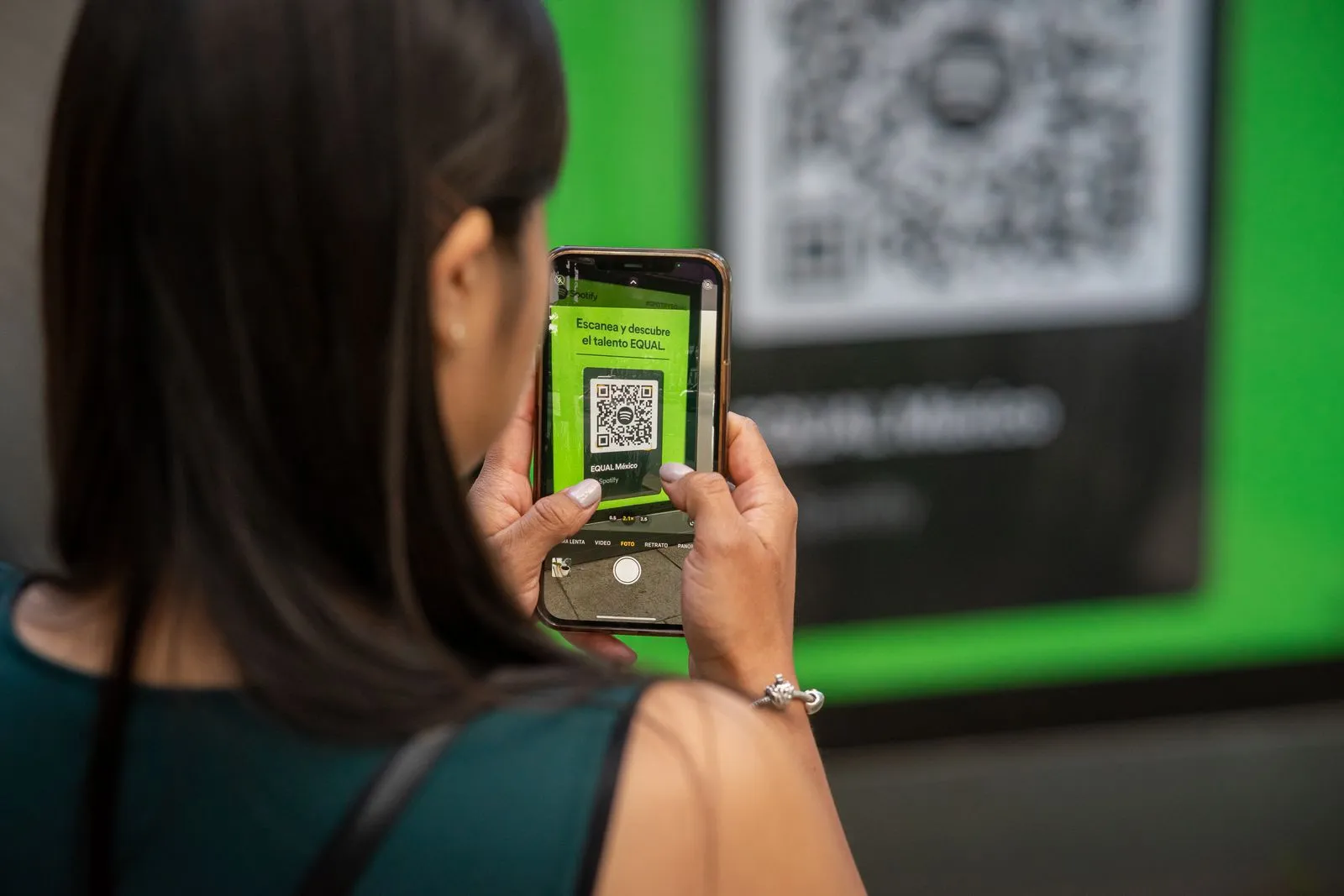 Scanning a QR code to pay, the default transaction in urban China.
Both Alipay and WeChat Pay now let foreign visitors link an international Visa or Mastercard and pay by scanning a QR code, with no Chinese bank account. Setup takes about ten minutes before you fly. Once set up, you pay for everything from street food to high-speed rail tickets the same way a local does. Carry some cash as backup for small vendors and rural areas.
Getting Around Without a Guide
China’s navigation infrastructure is built for independent movement, if you have the right apps.
 A cyclist passes a red wall in a Chinese city park, the kind of street-level scene you navigate on your own.
- Amap (Gaode): The domestic mapping app, with an English interface for walking, transit, and driving directions. More accurate in China than Google Maps.
- DiDi: The ride-hailing app, with an English interface and international card payment. See our DiDi guide.
- China Railway 12306: The official high-speed rail booking app, in English, with passport registration. Book your own tickets. See our train tickets guide and high-speed rail guide.
- Metro apps: Most major cities have transit-code mini-programs inside Alipay or WeChat. See our subway guide.
The consensus among foreign travelers who have done it, on forums like r/travelchina, is that with these apps and some planning, getting around China independently is straightforward.
The Language Question
You do not need to speak Mandarin to travel China independently. You do need the right tools.
 Neon signs over a busy Chinese street at night. Independent travel means choosing your own hours.
- Translation apps: Google Translate (with the offline Chinese pack) and Baidu Translate handle spoken, written, and camera-translate. Download the right apps before you arrive.
- English signage: Tier-1 cities (Beijing, Shanghai, Guangzhou, Shenzhen) and major tourist sites have English signs. Smaller cities have less.
- Key phrases: Hello (nǐ hǎo), thank you (xièxie), how much (duōshao qián), where is the toilet (cèsuǒ zài nǎlǐ). A small phrase list goes a long way.
The firsthand reports from foreign travelers on Reddit are consistent: traveling China without Mandarin is “easily doable.” It takes patience and a translation app.
Is Independent Travel in China Safe?
On the metric that matters most for travelers, violent crime, China is one of the safest countries in the world. The intentional homicide rate is 0.502 per 100,000 (UNODC data), roughly one-eleventh of the global average. Numbeo’s safety index rates walking alone in China at 82.79 out of 100 during daylight (Very High) and 72.82 at night (High).
That does not mean zero risk. The concerns for independent travelers are practical: tourist scams and rip-offs (see our guide), traffic, and passport safety. Common sense and a few precautions cover most of it.
Booking Your Own Hotels and Trains
Independent travel means booking your own accommodation and transport.
- Hotels: Book through Trip.com or Booking.com with a passport. A 2024 government policy prohibits hotels from refusing foreigners over a missing “foreign-reception qualification.” See our hotel booking guide.
- Trains: Book through the 12306 app or Trip.com with a passport number. See our train tickets guide.
- Itineraries: Use our 7-day, 10-day, or 2-week routes as a starting point.
When You Actually Need a Guide
Independent travel works for most of China. It does not work everywhere.
- Tibet: Foreign visitors need a Tibet Travel Permit (TTP) in addition to a Chinese visa, and the TTP must be obtained through a licensed local travel agency. The Tibet Tourism Bureau does not accept individual applications. This makes Tibet the main place where independent travel is not an option and a tour arrangement is required.
- Deep cultural and historical context: At sites like the Forbidden City, the Terracotta Army, or major museums, a guide or audio guide adds depth that a translation app cannot. Independent entry is fine; a guide enriches it.
- Zero Mandarin and zero appetite for friction: If you have no Chinese at all and do not want to manage apps, payments, and navigation yourself, a tour removes the friction. This is a preference.
For Beijing, Shanghai, Xi’an, Chengdu, Guilin, the high-speed rail network, and most major destinations, a guide is optional. For Tibet, it is required.
The Verdict
China in 2026 is one of the easiest large countries to travel independently, if you set up the tools before you arrive. Get your visa-free entry sorted, link a card to Alipay and WeChat Pay, download Amap and DiDi and a translation app, and book your own hotels and trains. The infrastructure is built for it. The safety data supports it. The only hard exception is Tibet, where a licensed tour is part of the entry requirement. Everywhere else, the question “do I need a guide?” has a simple answer: no.
Sources & Verification
This guide was last verified on 2026-08-06. Key Chinese-language sources:
- China Railway 12306 (中国铁路12306, 12306.cn): The official high-speed rail booking platform referenced for passport-based independent train booking in the navigation section.
- Amap / Gaode (高德地图, amap.com): The domestic mapping app referenced for walking, transit, and driving directions inside China.
- Tibet Tourism Bureau (西藏自治区旅游局): The authority that administers the Tibet Travel Permit and does not accept individual applications, the basis for the Tibet exception in this guide.
- Trip.com (携程, trip.com): The international arm of Ctrip, referenced for independent hotel and train booking with a passport.
See our full verification methodology.
Related Articles
- 240-Hour Visa-Free Transit China — The visa basis for independent entry
- China Visa-Free Countries 2026 — Who can enter without a visa
- How to Set Up Alipay in China — Payment on your own
- How to Use WeChat Pay as a Foreigner — The other half of payment
- Apps to Download Before Going to China — Amap, DiDi, translation
- How Foreigners Book Hotels in China — Independent accommodation
- China Travel Scams and Tourist Traps — What to watch for
- China High-Speed Rail Guide — Independent transport